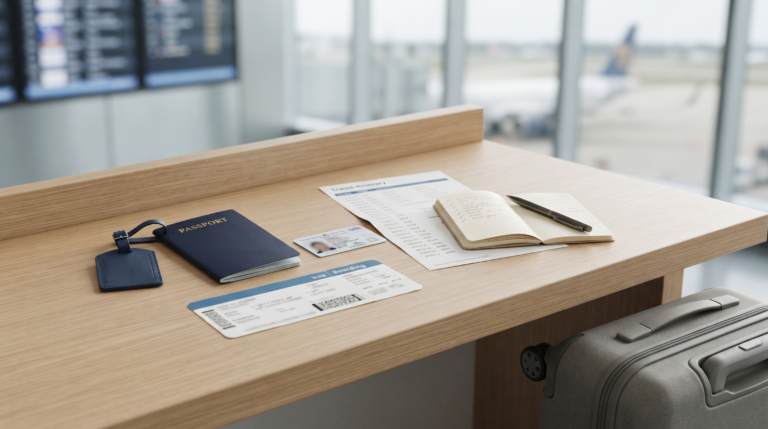

The red eye flight meaning is simple. A red-eye is an overnight flight that leaves late at night and arrives the next morning. You travel during hours when you would normally be sleeping. This can help you keep more daytime for work, sightseeing, or other plans.
For budget travelers, however, the airfare is only one part of the decision. A red-eye may cost less or help you avoid a hotel night. But poor sleep, an early arrival, limited transport, or waiting hours for hotel check-in can reduce those savings. The best choice depends on money, time, comfort, and what happens after you land.
Red Eye Flight Meaning: What Does It Mean?
The red eye flight meaning refers to a commercial passenger flight that departs late at night and arrives the next morning.
There is no single worldwide clock time that defines every red-eye. The term generally describes an overnight flight that replaces a normal night of sleep with air travel.
The name comes from the tired or bloodshot eyes passengers may have after spending the night on a plane.
For example, you may leave Los Angeles late at night and arrive in New York early the next morning. Instead of using much of the next day for travel, you complete the journey overnight.
This is why red-eye flights are often attractive to travelers who want to protect their daytime hours.

Why Do Red Eye Flights Exist?
Red-eye flights make use of nighttime hours.
For travelers, they can make a long journey fit more easily into a schedule. You may work or explore during the day, travel overnight, and arrive the next morning.
They are especially useful on longer routes across time zones. West-to-east flights across the United States are common examples because the time difference works well with overnight travel.
Airlines can also use nighttime schedules to keep aircraft operating for more hours of the day.
However, a red-eye is only useful if the arrival time works with the rest of your trip.
Are Red Eye Flights Cheaper?
Red-eye flights can be cheaper, but they are not always the lowest-priced option.
Understanding the red eye flight meaning also helps explain why price is only one part of the decision.
Late-night departures may attract less demand because many travelers prefer to fly during the day. This can sometimes lead to lower fares.
However, airfare changes based on:
- Route
- Travel date
- Season
- Demand
- Airline
- Available seats
- Booking time
A busy overnight flight can still be expensive.
This is where budget travelers should look beyond the ticket price.
Compare the Real Trip Cost
Imagine a daytime flight costs $240.
A red-eye costs $270.
At first, the daytime flight looks cheaper.
But suppose the daytime schedule also requires a $140 hotel night, while the red-eye lets you travel overnight instead.
Your estimated totals would be:
| Cost | Daytime Flight | Red-Eye Flight |
|---|---|---|
| Airfare | $240 | $270 |
| Extra hotel night | $140 | $0 |
| Total trip cost | $380 | $270 |
| Difference | — | $110 less |
Illustrative example only: These figures are used to explain the comparison and are not current airfare prices.

In this example, the red-eye airfare costs $30 more, but the overall trip costs $110 less.
These are illustrative numbers, not current airfare prices.
The lesson is simple:
The cheapest airfare is not always the cheapest trip.
Are Red Eye Flights Usually Full?
Not necessarily.
Some overnight flights may have lower demand than popular daytime departures. However, you should not expect every red-eye to have empty seats.
Business routes, holiday periods, and popular city pairs can still be busy or full.
A seat map can help you choose where to sit. However, it does not reliably show how many passengers will actually be on the flight.
Some passengers receive seats later, while airlines may also block or change seat assignments.
Benefits of Red Eye Flights
Cheaper Fares
A red-eye may sometimes offer a lower fare than a daytime flight.
The saving matters most when the price difference is large enough to justify traveling overnight.
If the difference is only a few dollars, compare comfort and arrival time before choosing the red-eye.
Saves Money on Accommodation
An overnight flight may replace one hotel night.
Instead of staying in a hotel and flying the next morning, you may be able to sleep during the flight.
This can reduce the total cost of a trip.
However, check your arrival plan first.
If your hotel will not let you check in until the afternoon, you may still need somewhere to rest or store your luggage.
Less Nighttime Congestion
Airports and airspace can sometimes be quieter late at night than during busy daytime periods.
This may mean fewer crowds around security, gates, or baggage areas.
However, a red-eye can still be delayed by:
- Weather
- Maintenance
- Crew problems
- A late-arriving aircraft
- Other operational issues
Do not assume that every overnight flight will be more punctual.
Better Airport Experience
A quieter airport may make check-in and boarding easier.
However, fewer airport services may also be available late at night.
Restaurants, shops, lounges, public transport, and other services may have limited hours.
Check these details before booking if you will arrive or depart at an unusual time.
Enjoy More of Your First Day
One of the biggest benefits of a red-eye is time.
You travel during the night instead of using several daytime hours for the journey.
This can be useful on a short trip where each day matters.
However, this benefit depends on how well you sleep.
Arriving at 6 a.m. gives you more hours at your destination. But those hours have less value if you are too tired to enjoy them.
Red Eye Flight Pros and Cons
| Pros | Cons |
|---|---|
| May offer a lower fare | Sleeping can be difficult |
| May replace a hotel night | You may arrive tired |
| Preserves daytime hours | Early hotel check-in may not be available |
| Airport may be quieter | Overnight airport services may be limited |
| Useful on long routes | Poor sleep can affect your first day |
The main trade-off is therefore:
money and time vs. sleep and comfort.
Best Red Eye Flight Routes in the U.S.
Red-eye flights are common on longer routes where the flight time works well with overnight travel.
West-to-east transcontinental flights are common examples.
Routes may include trips such as:
- Los Angeles to New York
- San Francisco to Boston
- Hawaii to the U.S. mainland
Actual schedules depend on the airline, date, and season.
A longer nonstop flight can also give you more uninterrupted time to rest.
A very short overnight flight may save daytime, but it may not give you enough time to sleep properly.
How to Find and Book Red Eye Flights
If you want to compare flexible dates, nearby airports, and different fares, see our guide on how to use Google Flights.
Search for Flights
Start with a normal flight search.
You can also compare late-night departures using Google Flights.
Enter your:
- Origin
- Destination
- Travel date
Then look for departures late in the evening or around midnight.
Many flight search tools allow you to filter results by departure time.
Compare Flight Times
Do not compare airfare alone.
Also check:
- Departure time
- Arrival time
- Flight duration
- Number of stops
- Baggage rules
- Seat options
- Airport transport
- Hotel check-in time
A slightly more expensive nonstop red-eye may offer better value than a cheaper flight with an overnight connection.
How to Get the Best Deal
Compare the red-eye with nearby daytime departures.
Also check flexible dates if your schedule allows it.
The same route can have very different fares on different days.
Then compare the complete trip cost, not only the flight.
Include possible:
- Hotel costs
- Airport transfers
- Baggage fees
- Food
- Ground transport
This gives you a more realistic comparison.
Timing can also affect airfare, so check our guide on the best time to book an international flight before you buy.
Red Eye Flight Tips
A good red-eye plan starts before you reach the airport.
Ask yourself:
- Can I normally sleep on planes?
- What time will I arrive?
- Can I check into my hotel?
- Will transport be available?
- What will I do with my luggage?
- Do I have important plans that morning?
These questions can help you decide whether the overnight schedule is actually useful.
Before the Flight
Choose a Suitable Red Eye Flight
A nonstop flight is usually easier for sleep than an overnight trip with a connection.
Check how much uninterrupted flight time you will have.
Also look at the arrival time.
Landing very early may sound useful, but it can create problems if your hotel and local transport are not ready yet.
Pack Smart
Keep important overnight items in your personal bag.
Useful items may include:
- Eye mask
- Earplugs or headphones
- Travel pillow
- Comfortable layer
- Personal travel items
Do not place everything you may need during the flight inside checked luggage.
Wear Comfortable Clothing
Wear clothing that is comfortable for several hours of sitting.
Layers are useful because cabin temperatures can change during the night.
Pre-Book Your Seat
Seat choice can make a difference on an overnight flight.
A window seat can be useful if you want to sleep. You have a wall to lean against, and other passengers do not need you to move when they want to leave their seats.
During the Flight
Stay Hydrated
Drink water during the flight.
Try not to rely only on caffeine if you want to sleep.
In-Flight Entertainment
Movies and other entertainment can make the flight easier if you cannot sleep.
However, if sleeping is your priority, stop using bright screens early enough to give yourself time to rest.
How to Sleep on a Red Eye Flight
Try to create a simple sleep routine.
Use an eye mask to reduce light.
Earplugs or headphones can reduce noise.
Wear comfortable clothing and organize the items around your seat before you try to sleep.
The goal is not perfect sleep. It is to get enough rest to make the following day manageable.

What to Do After a Red Eye Flight
Adjust to Local Time
Once you arrive, begin following the local schedule.
Eat and plan your activities based on the destination’s time.
Avoid building an extremely demanding first morning if you know you struggle to sleep on planes.
Plan for Early Hotel Check-In
A red-eye may arrive several hours before normal hotel check-in.
Check your hotel policy before traveling.
If your room will not be ready, find out whether the hotel can hold your luggage.
This can prevent you from carrying bags around for several hours.
Check Morning Transport
Do not assume every transport option will be available early in the morning.
Check airport trains, buses, rideshare availability, rental car hours, or other transport before your trip.
Plan Your First Few Hours
Think about what you will do between landing and hotel check-in.
You may want a simple breakfast, luggage storage, a quiet place to sit, or a light activity.
Avoid filling the first few hours with difficult plans if you expect to be tired.
Rest and Recover
Be realistic about how much sleep you actually got.
If you slept poorly, a lighter morning may be more useful than forcing yourself through a full schedule.
The goal of a red-eye is to use your travel time better, not to lose the next day completely.
Is a Red Eye Flight Worth It?
Once you understand the red eye flight meaning, the next step is deciding whether overnight travel fits your budget, sleep habits, and schedule.
A red-eye may work well if:
- You can sleep reasonably well on planes
- It offers a meaningful fare saving
- It replaces a hotel night
- You want more daytime at your destination
- Your morning schedule is flexible
It may be less suitable if:
- You are a light sleeper
- You need to be fully rested after arrival
- You have an important meeting or event that morning
- Your hotel does not allow early check-in
- Early transport options are poor
- The airfare saving is very small
For more ways to reduce airfare, accommodation, and transport costs, see our budget travel tips guide.
A Simple Decision Rule
Before booking, compare five things:
Airfare + hotel costs + transport + sleep + usable travel time
If the red-eye performs well across most of those areas, it may offer good value.
If it only wins on airfare but creates problems everywhere else, a daytime flight may be the better choice.
Frequently Asked Questions
What is the meaning of a red eye flight?
A red-eye flight is an overnight flight that leaves late at night and arrives the next morning. The name refers to the tired or bloodshot eyes passengers may have after traveling overnight.
What time is considered a red eye flight?
There is no universal time range. The term normally describes flights that leave late in the evening or around midnight and arrive the following morning.
Are red eye flights cheaper than daytime flights?
They can be, but not always. The final price depends on the route, date, season, airline, and demand.
Are red eye flights usually full?
Not always. Some may have lower demand, while popular business routes and holiday flights can still be full.
Is a red-eye flight the same as an overnight flight?
A red-eye is a type of overnight passenger flight that usually leaves late at night and arrives the next morning.
Can a red-eye flight save a hotel night?
It can. If you travel overnight instead of staying in a hotel before a morning flight, you may avoid one accommodation night. However, check your arrival and hotel check-in times first.
Are red eye flights safe?
Red-eye flights are normal scheduled commercial flights. Flying overnight does not by itself make the flight unsafe.
Are red eye flights more likely to be delayed?
Not necessarily. Nighttime may have less congestion, but weather, maintenance, aircraft positioning, and other operational issues can still cause delays.
How do you sleep on a red eye flight?
Choose a comfortable seat, reduce light and noise, wear comfortable clothing, and give yourself time to rest.
What should I do if my red-eye lands before hotel check-in?
Check whether your hotel offers early check-in or luggage storage. Also plan transport, food, and a simple activity for the hours before your room is ready.
Who should avoid a red eye flight?
A red-eye may not be ideal for light sleepers or travelers who need to be fully rested immediately after landing. A daytime flight may offer better value if poor sleep would affect your entire first day.
What are common red eye routes in the U.S.?
Long west-to-east routes are common examples, including travel between the West Coast and East Coast. Actual overnight schedules depend on the airline and date.
Final Thoughts
For budget travelers, understanding the red eye flight meaning is useful because an overnight schedule can affect both cost and comfort.Understanding the red eye flight meaning is only the first step. The bigger question is whether the flight gives you better overall value.
A red-eye can make sense when it saves money, removes a hotel night, and gives you more usable daytime. However, you should also consider sleep, hotel check-in, morning transport, and your plans after landing.For budget travelers, the best approach is to compare the whole trip instead of the airfare alone. If the money and time savings are worth the lost sleep, a red-eye can be a useful option. If arriving rested matters more, a daytime flight may offer better value.