Is TSA PreCheck worth it? For many travelers, it can be. The strongest value usually goes to people who fly several times a year, use busy U.S. airports, or want a simpler security process. The value can be even higher if a credit card covers the enrollment fee.
But TSA PreCheck is not automatically worth paying for. An occasional traveler who uses a quiet airport may save very little time. The best way to decide is to compare the five-year cost with how often you fly, the airports you use, your normal security wait, and how much you value convenience.
Quick Takeaway
TSA PreCheck tends to offer the most value if you fly several times a year, use busy U.S. airports, or want a simpler airport security process.
It may be less useful if you rarely fly or your usual airport already has short security lines. If your credit card covers the enrollment fee, the value can be much stronger.
What TSA PreCheck Actually Gets You
TSA PreCheck is an expedited airport security screening program for eligible travelers.
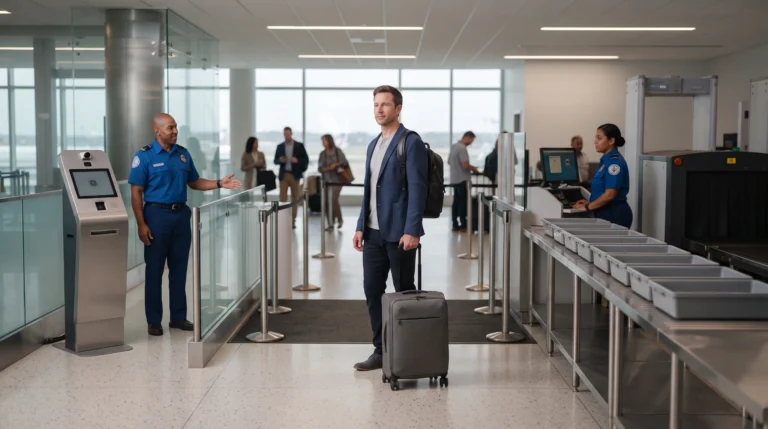
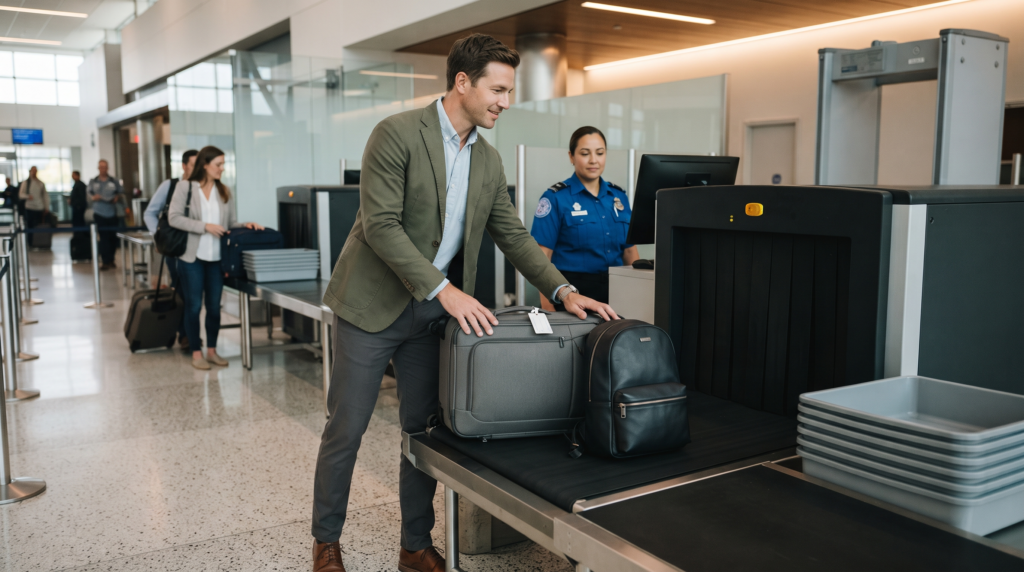
Approved travelers can use TSA PreCheck screening at participating airports and airlines. During normal PreCheck screening, you can usually leave your laptop and TSA-compliant 3-1-1 liquids inside your carry-on bag. Belts and light jackets can normally stay on as well.
The program is designed to reduce the amount of unpacking and repacking you need to do at security.
One well-known benefit has changed. Keeping your shoes on is no longer unique to TSA PreCheck. TSA ended the general shoes-off requirement at U.S. airport checkpoints in July 2025.
So the value today comes mainly from expedited screening, dedicated screening lanes at participating checkpoints, and less work at security.
For the latest eligibility, cost, and enrollment details, check the official TSA PreCheck information.
What Are the Advantages of TSA PreCheck?
The biggest advantage is convenience.
For many travelers, airport security is one of the least predictable parts of a flight. TSA PreCheck can make the process simpler because you generally need to remove fewer items from your bag and clothing.
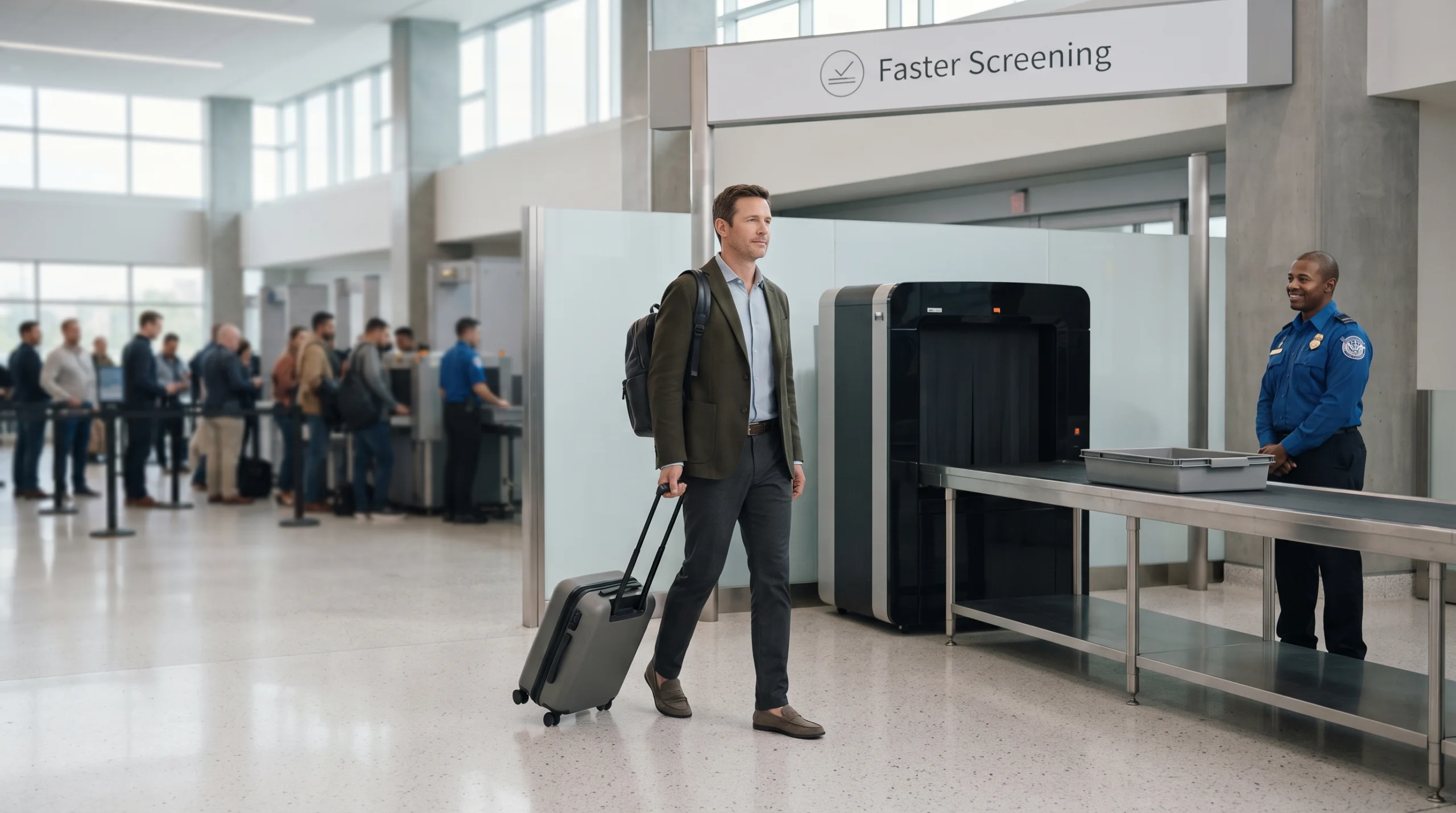
DHS says most TSA PreCheck travelers get through screening in five minutes or less. Actual wait times can still vary by airport, day, and travel period.
This matters more if you fly often.
A traveler who uses airport security twice a year may not notice enough benefit to care. Someone taking several round trips each year has many more chances to save time and reduce hassle.
TSA PreCheck can also be useful for families. Children 17 and under may be able to use TSA PreCheck with an eligible adult when the required TSA PreCheck indicator appears on their boarding pass. Current rules depend on the child’s age and travel situation.
That does not mean every family needs PreCheck. But a simpler security process can be more useful when you are managing children, carry-on bags, and other travel items.
The Real Wait Time Difference
A major reason people search “is TSA PreCheck worth it” is to find out how much time it actually saves.
There is no single answer.
At a quiet airport, regular security may already take only a few minutes. In that situation, the difference between standard screening and TSA PreCheck may be small.
At a large airport during a busy travel period, the difference can be much more useful.
This creates an important rule:
The value of TSA PreCheck depends partly on your airport.
If your home airport usually has short standard security lines, do not assume TSA PreCheck will suddenly save you 30 minutes on every trip.
If you regularly fly from busy airports during peak periods, even smaller repeated savings can add up over a five-year membership.
PreCheck lines can also become busy. You are paying for access to an expedited screening process, not a guarantee that there will never be a line.
That expectation matters when deciding whether the program is worth paying for.
What Are the Monetary and Time Costs of TSA PreCheck?
TSA PreCheck enrollment lasts for up to five years after a successful application. Enrollment prices vary by authorized provider. TSA requires applicants to pay the applicable provider fee, and pricing can change. Transportation Security Administration
For example, IDEMIA currently lists a five-year new enrollment at $76.75, with lower prices for some renewal methods. Its site also warns that new UES fees take effect October 1, 2026, so current pricing should always be checked before applying. TSA Enrollment by Idemia
The more useful question is not just:
“How much does TSA PreCheck cost?”
It is:
“How much does it cost me per trip?”
This makes the frequent-traveler angle clearer.
Someone who takes one round trip each year is spreading the membership cost across only five trips.
Someone taking six round trips each year could use it around 30 times over the same five-year period.
That does not prove the second traveler should buy it. But the cost per trip becomes much easier to justify.
Renewal pricing may also be lower than first-time enrollment. For example, IDEMIA currently lists a lower online renewal fee than its new-enrollment fee. TSA Enrollment by Idemia

Credit Cards That Cover TSA PreCheck for Free
Before paying, check the travel benefits on credit cards you already have.
Some cards reimburse TSA PreCheck or Global Entry application fees.
If your existing card covers the full fee, the value calculation changes significantly. Instead of asking whether the program is worth roughly $80, you are mainly deciding whether the enrollment process is worth your time.
Do not apply for an expensive credit card only because it offers a TSA PreCheck credit without comparing the card’s annual fee and other benefits.
Card benefits can also change. Check your issuer’s current terms before applying.
For the ICP of this article, this is an important step:
Check whether you already have the benefit before paying out of pocket.
Is TSA PreCheck Worth It for You?
Whether TSA PreCheck is worth it depends on the type of traveler you are.
A frequent domestic traveler may get strong value. If you take several trips each year, the cost per trip falls quickly and you get repeated use from the easier security process.
A business traveler may also place a higher value on predictability and convenience, especially when flying during busy periods.
Families may value having fewer items to remove and repack while going through security.
The calculation is different for an occasional traveler.
If you take only one flight every year or two, your normal airport has short lines, and your credit card does not cover the fee, TSA PreCheck may provide limited value.
Your home airport also matters.
Someone who regularly uses a major busy airport may benefit more than someone whose local airport rarely has long standard-security lines.
A simple way to evaluate is TSA PreCheck worth it for you is to compare these factors:
| Factor | TSA PreCheck May Offer More Value When… | It May Offer Less Value When… |
|---|---|---|
| Travel frequency | You fly several times each year | You rarely fly |
| Airport | You regularly use busy airports | Standard security is usually very short |
| Travel periods | You often fly during peak times | You normally travel at quiet times |
| Credit card | Your existing card covers the fee | You pay the full fee yourself |
| Family travel | Easier screening reduces family hassle | You rarely travel with children |
| International travel | You may compare it with Global Entry | You only need occasional domestic screening |
| Personal preference | You strongly value convenience | Airport security does not bother you |
This is a better decision method than giving every traveler the same answer.
If saving money is just as important as saving time, see our budget travel tips for more ways to lower your total trip cost.
What Changed With TSA PreCheck?
TSA PreCheck still provides expedited screening, but recent changes affect how travelers should judge its value.
The Shoe Rule Is Gone for Everyone
Keeping your shoes on used to be one of TSA PreCheck’s best-known advantages.
That difference is now much smaller because TSA ended the general shoes-off requirement at U.S. airport checkpoints in July 2025.
This does not make TSA PreCheck useless.
The program still focuses on expedited screening and normally allows members to keep items such as laptops and 3-1-1 compliant liquids inside their bags.
So the current value should be judged on the whole security experience, not the old shoe benefit alone.
PreCheck Lines Can Still Get Busy
More convenient screening does not mean an empty line every time.
A TSA PreCheck checkpoint can still be busy during holidays, morning rush periods, or at high-volume airports.
This is why you should not calculate value based on an unrealistic promise such as:
“PreCheck will always save me 20 minutes.”
Instead, ask whether it gives you a consistently easier security experience across many trips.
TSA ConfirmID and REAL ID
TSA PreCheck does not replace acceptable identification requirements.
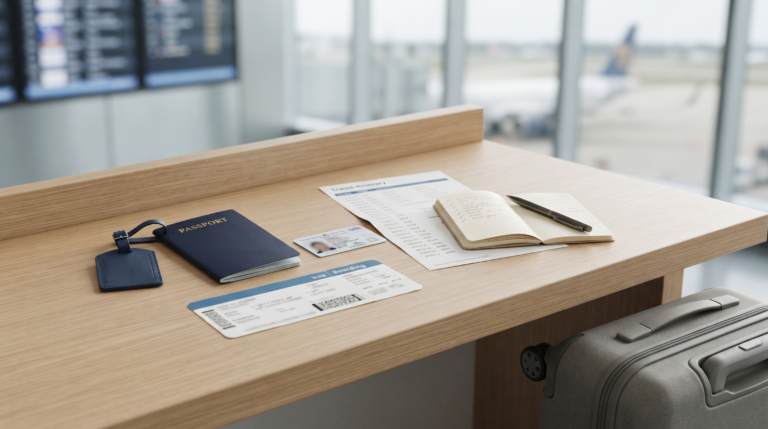
Travelers should still carry a REAL ID-compliant state identification card or another accepted form of identification when required.
This means TSA PreCheck and REAL ID solve different problems.
TSA PreCheck = expedited security screening.
REAL ID or another accepted ID = proving your identity at the checkpoint.
Do not assume that paying for PreCheck removes the need for acceptable identification.
Before traveling, check TSA’s list of acceptable identification to make sure your ID meets current airport requirements.
The Enrollment Process
Another part of the “worth it” decision is enrollment effort.
The process is not only about paying a fee.
Step 1: Online Pre-Enrollment
You can start the application online through an authorized TSA PreCheck enrollment provider.
You provide basic information and can schedule an enrollment appointment.
Step 2: Complete the In-Person Enrollment
First-time applicants complete an in-person enrollment step.
The provider checks required identity and citizenship or immigration documents. Applicants also provide fingerprints, a photo, and payment.
IDEMIA says appointments are recommended because walk-in service may not always be available when enrollment centers are busy. TSA Enrollment by Idemia
For most travelers, this is the main time cost beyond the application fee.
Step 3: Wait for Approval
If approved, you receive a Known Traveler Number, or KTN.
IDEMIA says most approved applicants receive their KTN within about three to five days, although some applications can take up to 60 days. TSA Enrollment by Idemia
So do not apply the night before an important trip and assume the benefit will be ready.
Your Known Traveler Number: How to Actually Use It
Getting a KTN is not the final step.
You need to add your Known Traveler Number to your airline reservation.
You can usually enter it when booking a flight or save it inside your airline frequent-flyer profile for future trips.
IDEMIA says the KTN must be entered in the Known Traveler Number field when booking with a participating airline. TSA Enrollment by Idemia
Then check your boarding pass.
The TSA PreCheck indicator should appear when you are eligible for PreCheck screening on that trip. Having a KTN by itself does not mean you should enter the PreCheck lane if the indicator is missing. TSA guidance for trusted-traveler credentials similarly says the boarding pass needs the TSA PreCheck indicator for access to the lane. Transportation Security Administration
This is a common practical detail that first-time users can miss.
TSA PreCheck vs. Global Entry
Some travelers asking “is TSA PreCheck worth it?” may actually be better served by Global Entry.
The programs solve different problems.
The better option depends mainly on whether you travel mostly within the U.S. or also travel internationally.