

Hidden travel costs can turn a trip that looked affordable into one that costs much more than expected. Flights, hotels, and food are easy to remember, but baggage, airport transfers, local taxes, parking, mobile data, payment charges, and small daily expenses can push the final total higher. Many of these costs are not truly unpredictable. They are simply easy to miss when you first build your budget.
A better approach is to use a simple system: Find → Verify → Add → Protect. Find overlooked costs that may apply to your trip, verify them before you commit money, add predictable expenses to your normal travel budget, and protect separate money for events you genuinely cannot predict. This gives you a much clearer picture of what your trip will actually cost.
For a step-by-step explanation of estimating total trip cost, cost per person, and cost per day, see our trip budget calculation guide.
What Are Hidden Travel Costs?
Hidden travel costs are expenses that are easy to miss when estimating a trip.
They may:
- sit outside the first price you compare
- depend on choices such as baggage or parking
- vary by airline, hotel, destination, or payment method
- occur before you leave home
- appear only after you select optional services
- seem small but repeat throughout the trip
A cost does not have to be intentionally concealed to be “hidden” from your budget.
You may know that your flight costs $300 and your accommodation costs $700. But the trip may also involve airport transportation, baggage, local taxes, mobile data, tips, parking, and other extras.
That is why the first estimate is often lower than the amount you eventually spend.
Hidden Travel Costs vs Unexpected Travel Expenses
These two types of expenses should not be treated the same way.
Predictable but Overlooked Costs
These are expenses you can reasonably identify before traveling.
Examples include:
- checked baggage
- airport transfers
- tourist taxes
- hotel parking
- mobile data
- tips
- tolls
- luggage storage
These belong in your normal travel budget.
Truly Unexpected Expenses
These happen because something changes or goes wrong.
Examples include:
- a missed connection
- an unexpected medical need
- replacement transportation
- a lost or damaged item
- an unplanned hotel night
These are better handled with contingency money.
| Type of Cost | Example | Best Budget Approach |
|---|---|---|
| Known | Flight | Use the exact amount |
| Predictable but overlooked | Airport transfer | Estimate before travel |
| Variable | Local transport | Add a realistic allowance |
| Unexpected | Missed connection | Protect contingency money |
The key lesson is:
Do not use emergency money to cover expenses you could reasonably have planned before the trip.
Why Hidden Travel Costs Make Your First Trip Estimate Too Low
A basic travel budget often starts with:
Flight + Accommodation + Food = Trip Cost
That is useful, but incomplete.
Travelers may forget:
- transportation between airports and hotels
- baggage and other optional flight services
- parking and tolls
- mobile data
- local transportation
- tips
- payment and ATM charges
- pre-trip purchases
- small recurring expenses
Another common problem is comparing base prices instead of total usable costs.
A flight may look cheaper until you add the baggage you need and the cost of reaching a distant airport. A hotel may have a lower room price but require expensive parking or more local transportation.
So instead of asking:
“Which option has the lowest starting price?”
ask:
“What will this option actually cost for my trip?”
How to Calculate Hidden Travel Costs Before You Book
Use this simple formula:
Real Travel Cost Formula
Seat selection is optional, so do not add it if you would happily accept the included seating arrangement.
The purpose of this formula is not to attach every possible fee to every booking. It is to compare options based on what you will actually buy and need.
For flights sold in the United States, advertised airfare already has to include mandatory government taxes, fees, and carrier surcharges. Optional services such as baggage and advance seat selection can still be separate, so those are the extras most relevant to this calculation.
Hidden Costs to Check Before You Book
Some overlooked costs exist before you make your major reservations.
Passport and Visa-Related Costs
For international travel, check entry requirements early.
Depending on your destination and circumstances, you may need to pay for:
- a passport application or renewal
- photographs
- document delivery
- a visa or travel authorization
- related document services
Not every country requires the same documents. The U.S. State Department recommends checking destination-specific entry, visa, and passport-validity requirements during trip planning.
Travel Insurance
If you plan to buy travel insurance, include it in your trip budget instead of treating it as a last-minute extra.
Price and coverage vary by policy, traveler, and trip, so compare what the policy actually covers rather than assuming all travel insurance is the same.
Transportation to and From Airports
Remember both ends of the journey.
Possible costs include:
- taxi or rideshare
- train or bus
- fuel
- tolls
- airport parking
- transportation between the destination airport and your accommodation
These costs can change which flight is actually cheaper overall.
Costs at Home While You Travel
A trip can also create expenses at home.
Depending on your situation, these might include:
- pet boarding
- pet sitting
- house sitting
- airport parking
- temporary care arrangements
Not everyone will have these expenses, but they still belong in the total trip cost when they apply.
Hidden Travel Costs in Flights Beyond the Ticket Price
Flights can create several optional costs beyond the fare itself.
Checked and Carry-On Baggage
Baggage allowances and fees vary by airline and fare.
Before booking, check:
- personal-item allowance
- carry-on allowance
- checked baggage
- weight limits
- size limits
If you know you need a checked bag, compare flights after including that cost.
Seat Selection
Some fares include a seat assignment or selection. Others may charge for specific seats.
If choosing your seat matters to you, include the expected cost. If it does not, do not add an optional fee simply because the airline offers it.
Other Optional Services
Depending on the airline and fare, optional services may include:
- priority boarding
- additional baggage
- onboard food
- Wi-Fi
- extra space
- more flexible fare conditions
The U.S. Department of Transportation classifies services such as baggage, advance seat selection, onboard food, Wi-Fi, and priority services as examples of optional airline services.
Airport Choice
A cheaper fare from a distant airport may create a more expensive journey.
For example:
| Option | Flight | Airport Transfer | Real Cost |
|---|---|---|---|
| Flight A | $180 | $50 | $230 |
| Flight B | $210 | $10 | $220 |

Hidden Travel Costs in Hotels and Accommodation
Accommodation pricing needs a little more care because disclosure rules differ by market and type of charge.
Mandatory Lodging Fees
For short-term lodging sold in the United States, businesses advertising a price generally must now display a total that includes mandatory fees they can calculate upfront. This includes mandatory resort fees and mandatory cleaning fees. Government charges such as taxes and optional services can be excluded from that initial total but must be disclosed appropriately before payment.
This makes comparison easier, but you should still check exactly what the displayed total includes—especially when booking outside the United States, where different rules may apply.
Tourist and City Taxes
Some destinations impose tourism, city, or accommodation taxes.
Whether they are included in the first displayed amount depends on the destination and booking setup.
Check the final payment breakdown rather than assuming the nightly rate contains every government charge.
Optional Accommodation Costs
Depending on the property, you may choose to pay for:
- parking
- breakfast
- late checkout
- additional services
- upgrades
These are not necessarily hidden fees. They become part of your real trip cost when you decide to use them.
Deposits and Card Holds
Hotels may also request a deposit or authorization for incidental spending.
This is different from a normal fee.
A Card Hold Can Affect Your Budget Without Being a Final Cost
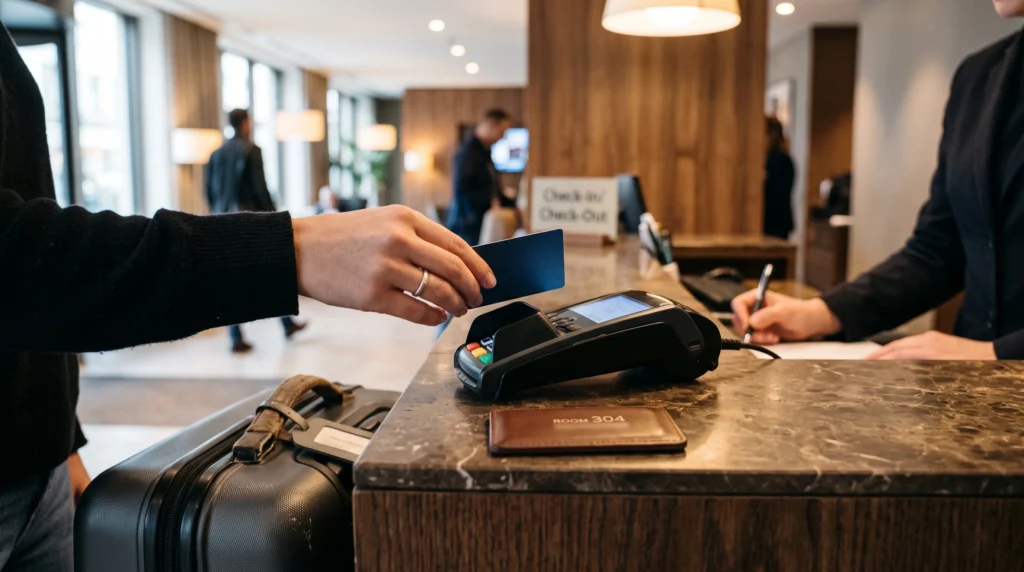
A hotel or rental company may temporarily authorize an amount on your credit or debit card.
Suppose a hotel places a:
$250 authorization hold
That does not necessarily mean you spent $250.
Banks explain that hotels may authorize the expected stay amount plus an estimate for incidentals. An authorization hold can reduce the money or credit available to you until the transaction is finalized or the hold is released.
Therefore:
Do not automatically add a refundable authorization hold to your final trip cost, but make sure you have enough available funds or credit to handle it temporarily.
A temporary hold and an actual fee are not the same thing.
Hidden Rental Car and Road Trip Costs
The daily rental rate may be only part of the total road-trip cost.
Insurance and Coverage
Rental companies may offer additional coverage.
What you need can depend on your rental agreement, destination, existing insurance, and other coverage you may already have.
For international driving, the U.S. State Department specifically recommends checking whether additional auto insurance or an International Driving Permit is required.
Fuel
Estimate:
Expected Driving Distance + Vehicle Fuel Needs + Local Fuel Prices
You do not need a perfect forecast. A reasonable estimate is enough to prevent fuel from disappearing from your budget.
Parking and Tolls
Remember possible charges at:
- hotels
- attractions
- city centers
- airports
- toll roads
- bridges or tunnels
A small daily parking charge can become a significant expense over a longer road trip.
Rental Extras
Depending on your booking, possible additional charges may relate to:
- extra drivers
- one-way rentals
- child seats
- equipment
- late returns
Check your specific rental terms rather than assuming these charges always apply.
Hidden Payment and Currency Costs Abroad
International travel can create extra costs when you pay or withdraw cash.
Foreign Transaction Fees
Some card issuers charge fees for foreign transactions while others do not.
The CFPB notes that foreign-transaction charges can apply to purchases outside the United States or transactions with foreign merchants, depending on the card agreement.
Check your own card terms before traveling.
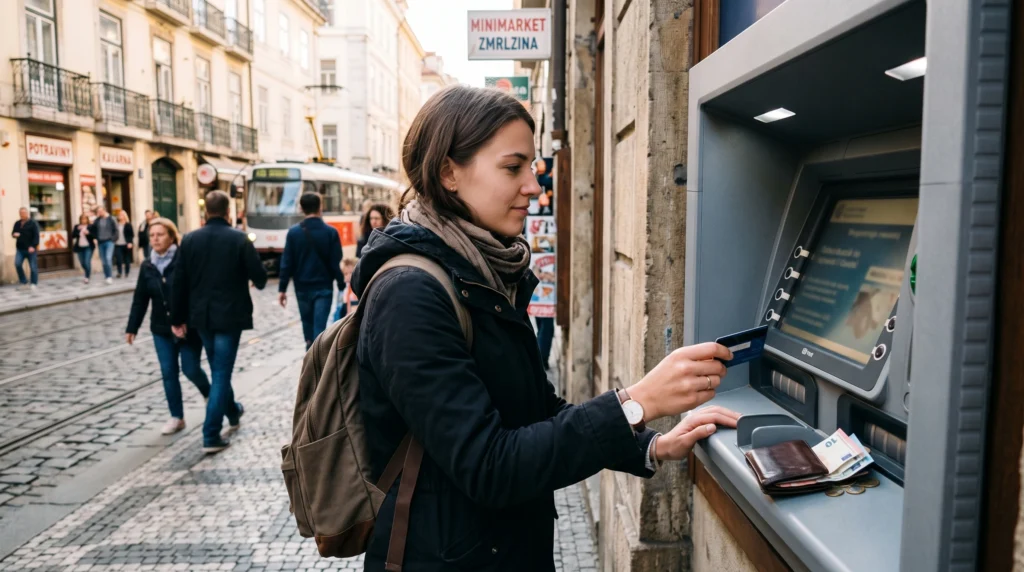
ATM Fees
An ATM withdrawal may involve charges from:
- the ATM operator
- your own bank or card issuer
- currency conversion
Repeated small withdrawals can therefore cost more than expected.
Dynamic Currency Conversion
A merchant or ATM may offer to convert the purchase or withdrawal into your home currency.
This is called dynamic currency conversion (DCC).
Visa explains that DCC can involve its own exchange rate and additional fees or markup. You should be shown the exchange rate and relevant conversion charges before deciding whether to accept it.
The budgeting lesson is simple: do not look only at the number displayed in your home currency. Understand what conversion method is being used.
Mobile Data and Connectivity Costs
Connectivity can also become an overlooked expense.
Options may include:
- international roaming
- a carrier travel package
- local SIM
- eSIM
- paid Wi-Fi
No single option is automatically cheapest.
The right choice depends on your destination, trip length, data use, phone compatibility, and convenience needs.
Check the expected connectivity cost before departure and add your chosen option to the budget.
Small Hidden Travel Expenses That Add Up
Small purchases can matter when they repeat.
| Small Expense | Why It Adds Up |
|---|---|
| Tips | May happen many times |
| Bottled water | Can become a frequent purchase |
| Snacks and coffee | Easy everyday spending |
| Luggage storage | Common on transfer days |
| Lockers | May be needed at stations or attractions |
| Laundry | More relevant on longer trips |
| Paid restrooms | May apply in some destinations |
| Small transit fares | Repeated throughout the trip |
| Convenience purchases | Often made when plans change |
A $4 purchase does not look important.
But:
$4 × 2 purchases per day × 10 days = $80
Frequency can matter more than the size of one transaction.
One-Time vs Recurring Hidden Travel Costs
It also helps to separate one-time expenses from costs that repeat.
| Cost | Type | Why It Matters |
|---|---|---|
| Checked baggage | One-time | Raises total flight cost |
| Airport transfer | One-time | Easy to forget |
| Visa-related cost | Usually one-time | May occur before travel |
| Tourist tax | Varies | May depend on destination or stay |
| Tips | Recurring | Small amounts can accumulate |
| Local transport | Recurring | Used throughout the trip |
| Parking | Potentially recurring | Can become significant |
| ATM fees | Repeated if used often | Multiple charges accumulate |
A recurring $5 cost for 10 days becomes:
$5 × 10 = $50
When checking overlooked travel expenses, ask both:
How much does this cost?
and:
How often will I pay it?
Arrival and Departure Days Can Cost More Than Expected
Partial travel days are not always cheap.
An arrival day might involve:
- airport transportation
- luggage storage
- convenience food
- a late-night taxi
- public transportation
A departure day may involve:
- airport transportation
- airport meals
- baggage
- early-morning transport
- final purchases
Convenience often becomes more valuable when you are tired, carrying luggage, or working around flight times.
Include these days when estimating your trip costs.
Hidden Costs During Multi-City Trips
Moving between destinations can create extra expenses beyond the main train, bus, or flight ticket.
You may need:
- transport between hotels and stations
- multiple airport transfers
- luggage storage
- food during long journeys
- local transit in each destination
- accommodation taxes at multiple stays
A transfer day may therefore cost more than a normal sightseeing day.
Budget for moving between destinations, not only the ticket connecting them.
How to Find Hidden Travel Costs Before Booking
You do not need to predict every possible expense. You need a repeatable checking process.
Check the Final Price
Compare the amount you expect to pay after selecting the options you actually need.
For flights, check baggage and other chosen services.
For accommodation, check the full stay price, taxes, parking, and optional services that matter to you.
For rental cars, check the rental terms and likely road costs.

Read What Is Included
Depending on the booking, check:
- baggage
- taxes
- parking
- breakfast
- cleaning
- cancellation terms
- transfers
- rental equipment
A lower price may simply include less.
Check the Costs Around the Booking
Ask:
- How will I reach the airport?
- How will I reach my accommodation?
- Is a cheaper hotel far from the places I want to visit?
- Will a rental car require parking and tolls?
A cheap booking can create expensive related costs.
Check Destination-Specific Requirements
For international travel, use official destination information for:
- visas and entry requirements
- passport requirements
- local driving rules
- health requirements
Requirements differ by destination, so avoid relying on a rule from another country.
Add Confirmed Costs Immediately
Once you find a predictable expense, put a number in your budget.
If baggage will cost $45, write:
Baggage: $45
Do not write:
Remember baggage.
A travel budget becomes useful when information is converted into actual estimated costs.
What Goes in Your Budget and What Belongs in a Buffer?
Put predictable expenses in your normal budget.
How Much Extra Should You Budget for Hidden Travel Costs?
There is no universal percentage that works for every trip.
Instead of automatically adding 10%, 15%, or another fixed figure:
- List your main bookings.
- Identify predictable extras.
- Estimate variable costs.
- Add those amounts to your normal budget.
- Keep separate contingency money for uncertainty that remains.
Your original budget was missing:
$45 + $35 + $60 + $25 = $165
Add the $165 to the planned trip cost.
Do not hide a known $165 expense inside a generic emergency percentage.
Hidden Travel Costs Checklist
Before finalizing your budget, check whether any of these apply.
Flights
- baggage
- optional seat/add-on costs you plan to buy
- airport transportation
Accommodation
- government taxes
- optional property services
- parking
- deposits or authorization holds
Ground Transportation
- airport transfers
- rental extras
- fuel
- tolls
- parking
- local transport
International Spending
- foreign transaction fees
- ATM charges
- currency conversion
- mobile data
- destination-specific taxes
Everyday Spending
- tips
- drinks and snacks
- luggage storage
- lockers
- laundry
- convenience purchases
Before Departure and at Home
- passport or visa-related costs where applicable
- travel insurance
- transportation to the airport
- pet or home care
- necessary travel accessories
You will not need every item.
Ask:
Does this cost apply to my trip?
If the answer is yes, put a realistic amount in the budget.
Common Hidden Travel Cost Mistakes
Comparing Starting Prices Instead of Real Costs
A cheaper starting price does not always produce the cheapest trip.
Compare what you will actually pay.
Assuming a Booking Covers Everything
Read what is included before deciding that a flight, hotel, or rental car is fully accounted for.
Treating Predictable Costs as Emergencies
Expected baggage, airport transportation, parking, and known taxes belong in your normal plan.
Ignoring Small Recurring Expenses
A few dollars repeated every day can become meaningful during a longer trip.
Forgetting Arrival and Departure Days
These days may involve transfers, meals, storage, baggage, and convenience spending.
Treating Every Authorization Hold as a Fee
An authorization hold can reduce available funds temporarily without becoming a final charge.
Know the difference between a temporary hold and an actual expense.
Frequently Asked Questions
What Are the Most Common Hidden Travel Costs?
Common overlooked costs include baggage, airport transfers, accommodation-related charges, parking, rental-car extras, mobile data, foreign transaction or ATM fees, tips, luggage storage, and small recurring purchases. The exact costs depend on your trip.
How Can I Avoid Hidden Travel Fees?
You cannot necessarily avoid every cost. Check the final price, understand what is included, compare complete costs, remove optional extras you do not value, and budget for charges that are necessary for your trip.
Are Hotel Deposits and Card Holds Hidden Fees?
Not necessarily. An authorization hold may be temporary and later released. It can still reduce your available funds or credit while active, so leave enough financial room to handle it.
What Hidden Costs Should I Expect When Traveling Internationally?
Depending on the destination, overlooked costs may include visas or travel authorizations, local taxes, foreign transaction and ATM charges, currency conversion, local transportation, and connectivity.
How Much Extra Money Should I Bring for Unexpected Travel Expenses?
There is no universal amount. Consider the complexity of the trip, what is prepaid, insurance, booking flexibility, destination, number of connections, and access to backup funds. Keep genuinely uncertain expenses separate from costs you can already estimate.
Are Tourist Taxes Included in Hotel Prices?
It depends on the destination and booking rules. In the United States, government charges can be excluded from the initial total displayed under the FTC’s lodging fee rule, but they must be disclosed before payment. Rules elsewhere vary, so check the final booking breakdown.
What Travel Costs Do People Forget Most Often?
Airport transportation, baggage, accommodation extras, local transport, parking, payment charges, mobile data, tips, and small repeated purchases are commonly overlooked because they may not be part of the traveler’s first estimate.
Final Thoughts on Hidden Travel Costs
Most hidden travel costs become much less surprising when you stop looking only at starting prices. Check the full cost of flights, accommodation, transportation, payments, connectivity, and everyday spending before committing money. Predictable expenses such as baggage, airport transfers, parking, and planned mobile data belong in your normal travel budget rather than being left for later.
Use the simple process Find → Verify → Add → Protect. Find overlooked expenses, verify whether they apply to your trip, add predictable costs to the budget, and protect separate contingency money for events you genuinely cannot predict. That gives you a clearer idea of what the trip will really cost before small extras have a chance to become a large surprise.

WRITTEN BY
Maya Carter
Maya Carter is the pen name used by WanderClarity’s site owner. The site focuses on practical destination guides, trip budgeting, and affordable travel planning.