Iceland Trip Cost: How Much Does a Trip to Iceland Really Cost?
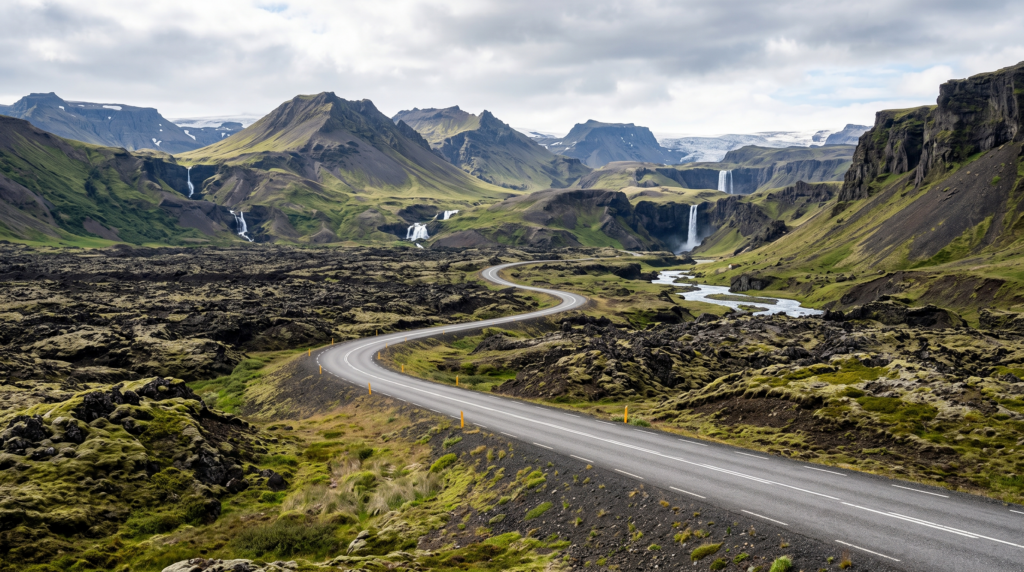
Your Iceland trip cost can change a lot depending on how you travel, how far you drive, and where you stay. For example, two travelers sharing a small rental car and simple guesthouses may spend far less than a solo traveler using hotels, a large SUV, and several guided tours. A short ReykjavÃk and South Coast trip can also cost much less than driving the full Ring Road.
This guide explains what a trip to Iceland really costs, including accommodation, food, rental cars, fuel, road fees, parking, and activities. In addition, you will find realistic 7-day and 10-day budgets, car-versus-campervan advice, solo-versus-couple costs, and practical ways to save without missing the experiences that make Iceland worth visiting.
Quick Takeaways
- A value-focused Iceland trip can cost about 20,000–30,000 ISK per person per day when two travelers share major expenses.
- A comfortable trip may need around 35,000–50,000 ISK per person per day.
- International airfare is not included in these daily planning ranges.
- Iceland’s official kilometre fee is 6.95 ISK per kilometre for normal passenger cars and SUVs up to 3.5 tonnes.
- Couples often spend less per person because they can split rooms, rental cars, fuel, insurance, and parking.
- A campervan can save money in some cases, but it is not automatically cheaper than a small rental car and simple accommodation.
- Many waterfalls, beaches, viewpoints, and hiking areas cost little or nothing to visit. However, guided activities can increase the budget quickly.
- Your route matters. Driving the Ring Road usually costs more overall than focusing on ReykjavÃk, the Golden Circle, and the South Coast.
How Much Does an Iceland Trip Cost?
Budget Your Trip reports about 31,842 ISK per person/day from traveler-reported trips; this is not an official national average or a quote. The ranges below are illustrative planning scenarios. Solo travelers may spend more because they cannot split a room or vehicle.
| Style | Per person/day | Illustrative basis |
|---|---|---|
| Lean | 20,000–30,000 ISK | Shared costs, simple rooms, groceries, small car, mostly free sights |
| Comfortable | 35,000–50,000 ISK | Better rooms, mixed dining, rental car, selected activities |
| Higher-end | 55,000+ ISK | Premium stays, larger vehicle, frequent restaurants, several tours |
Actual costs vary by dates, route, booking choices, and party size.
What Makes Iceland So Expensive?
Iceland can be expensive, but understanding where the money goes makes the budget easier to control.
Accommodation and transportation are often the biggest costs. In addition, a self-drive trip may include rental insurance, fuel, road charges, parking, and campsite or hotel costs.
Food can also become expensive if you eat at restaurants for every meal.
However, Iceland has one major advantage for budget travelers: many of its best-known experiences are natural sights instead of expensive ticketed attractions.
As a result, Iceland can have expensive logistics but relatively affordable sightseeing.
Fixed Costs vs Daily Costs in Iceland
It helps to separate the budget into costs you book for the whole trip and costs that change each day.
| Trip-Level Costs | Daily or Usage-Based Costs |
|---|---|
| International airfare | Accommodation |
| Travel insurance | Food |
| Rental-car booking | Fuel |
| Optional rental coverage | Kilometre fee |
| Some pre-booked tours | Parking |
| Airport transfer | Campsites |
| Activities |
This distinction matters.
For example, saving 1,000 ISK on lunch will not make up for renting an oversized vehicle that costs thousands more each day.
Car vs Campervan vs Tours: Which Is Best for Your Budget?
Transportation is one of the biggest decisions in an Iceland travel budget.
A rental car, campervan, or ReykjavÃk-based tour trip can all work. However, each option moves money into different parts of the budget.
| Travel Setup | Best For | Main Advantage | Main Cost Risk |
|---|---|---|---|
| Small car + guesthouses | Couples wanting comfort | Flexible and easy to share | Accommodation is separate |
| Campervan + campsites | Flexible road trips | Combines transport and sleeping | Rental and campsite costs |
| ReykjavÃk + day tours | Travelers who do not want to drive | No rental-car responsibility | Several tours can become expensive |
| 4×4 + hotels | Routes or conditions that require it | More capability | Higher rental and fuel costs |
Small Rental Car + Guesthouses
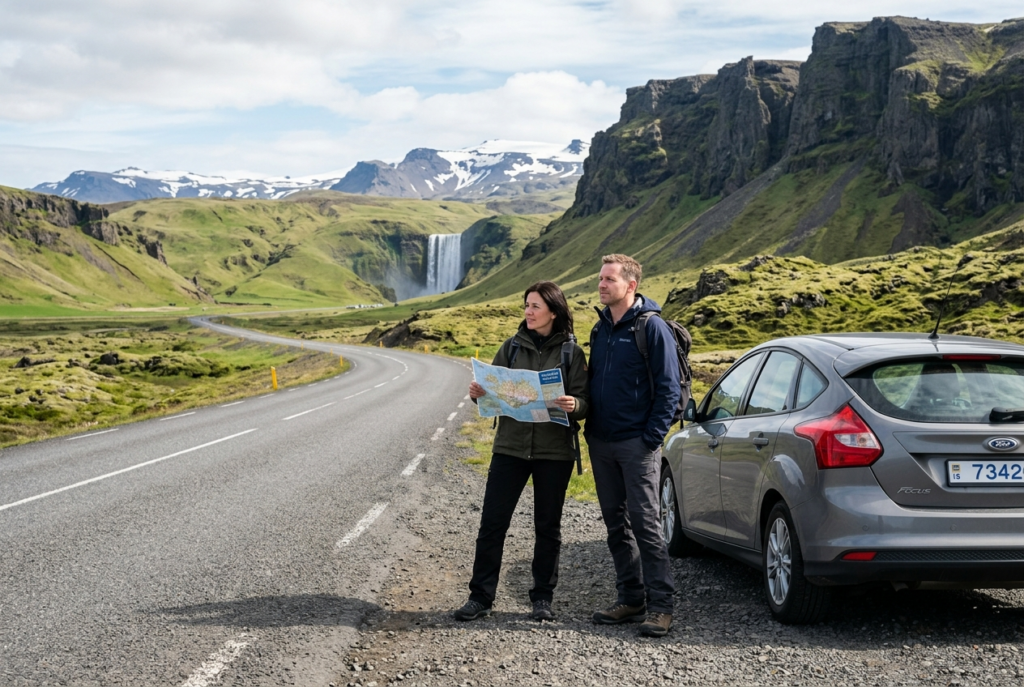
For many first-time couples, a small rental car and guesthouses offer a good balance.
You get flexibility without paying for a large vehicle that you may not need. In addition, two travelers can split the rental, insurance, fuel, road fees, and parking.
However, accommodation remains a separate expense.
Campervan + Campsites
A campervan combines your vehicle and sleeping space.
That sounds automatically cheaper, but the full calculation is more complicated. You still need to pay for campsites, insurance, fuel, road charges, parking, and food.
For example, Þingvellir National Park’s campsite page lists 1,800 ISK for adults ages 18–66 and 900 ISK for visitors aged 67+ or disabled visitors, plus a 400 ISK accommodation tax per camping unit. Campsite availability varies by season; Nyrðri-Leirar is listed as open year-round. Check the park’s rates and availability for your dates.
Campervan travelers also cannot simply park anywhere and sleep. Iceland’s Environment Agency says overnight stays in campervans outside organized campsites or urban areas require permission from the landowner or rights holder.
Therefore, compare the full trip cost, not only the campervan’s daily rental price.
ReykjavÃk + Guided Day Tours
This setup can work well for travelers who do not want to drive.
You avoid rental-car responsibility, fuel planning, insurance decisions, and parking.
On the other hand, several full-day tours can become expensive. You also lose some flexibility because your schedule depends on tour departure and return times.
4×4 + Hotels
Do not rent a 4×4 simply because you are visiting Iceland.
Visit Iceland states that a 4×4 is not required for the normal Ring Road.
However, some highland routes and seasonal conditions can require more capable vehicles.
Therefore, pay for the vehicle your route and conditions actually require, not the biggest vehicle available.
Do You Need a 4×4 in Iceland?
For many normal South Coast and Ring Road itineraries, a 4×4 is not automatically necessary.
Instead, consider three questions:
- Which roads are on your itinerary?
- What time of year are you visiting?
- What are the current road and weather conditions?
A regular 2WD car may be enough for a straightforward trip on normal paved roads.
By contrast, highland travel can have different vehicle requirements.
The best budget decision is also the safest one: choose the correct vehicle for the route rather than paying extra without a reason.
The Real Cost of Driving in Iceland
A rental-car quote is only the beginning.
The real driving cost is:
Rental + Insurance + Fuel + Kilometre Fee + Parking + Tolls + Extras
Rental Price
Car-rental prices can change significantly by season, vehicle type, booking date, and company.
For the sample budgets later in this guide, I use a small-car planning assumption rather than treating one rental-company quote as a national price.
Therefore, check your exact travel dates before building the final budget.
Insurance
The cheapest rental quote may include only basic coverage.
Additional protection can increase the daily price. However, insurance decisions should consider the actual coverage and your planned route, not cost alone.
Before booking, check:
- deductible or excess
- gravel protection
- wind damage rules
- sand and ash coverage
- excluded roads
Fuel
Fuel prices change. Check N1’s live fuel-price display for current pump prices; this dynamic page does not establish a historical price. The examples below use 254.6 ISK/L only as an illustrative calculation input.
The examples use an illustrative fuel-price input of 254.6 ISK/L and assume a small car using 7 L/100 km. Formula: distance (km) × 7 ÷ 100 × fuel price per litre ÷ 2 travelers. At that illustrative input, 900 km is about 16,040 ISK total or 8,020 per person; 1,600 km is about 28,515 total or 14,260 per person. Replace the example rate and consumption with your actual vehicle and current pump price.
Kilometre-Based Road Fee
The passenger-car rate previously verified for vehicles up to 3.5 tonnes is 6.95 ISK/km. The examples calculate distance × rate and divide by two. Rental contracts may use a different collection method: the official daily-fee alternative for eligible rental cars up to 3.5 tonnes under contracts of 30 days or less was 1,390 ISK per started day. See the official kilometre-fee page and rental daily-fee conditions. Do not count both daily and per-kilometre charging for the same rental. These official pages were inaccessible during this check, so reconfirm current terms.
Parking
Parking charges vary by site, zone, vehicle, and date. The sample tables use only hypothetical paid-parking allowances, not quoted tariffs or assumptions about a specific route or number of stops. Check current site-operator rates. Route-dependent tolls and other road charges are excluded until a route is specified; add them only if applicable.
How Your Route Changes Your Iceland Trip Cost
Driving distance changes several costs at the same time.
More distance usually means:
- more fuel
- a larger kilometre fee
- more rental days
- more accommodation nights
- more time on the road
ReykjavÃk + Golden Circle + South Coast
For a first 5–7 day trip, focusing on ReykjavÃk, the Golden Circle, and South Coast can make budgeting easier.
You can still see waterfalls, geothermal areas, black-sand beaches, cliffs, glaciers, and small towns without circling the whole country.
As a result, you reduce driving and can spend more time at each stop.
Full Ring Road
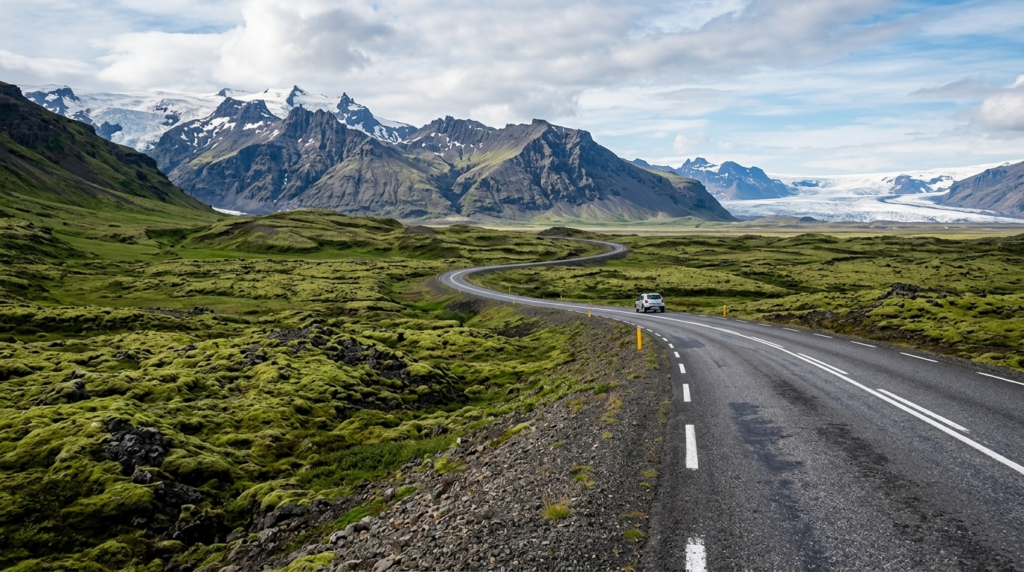
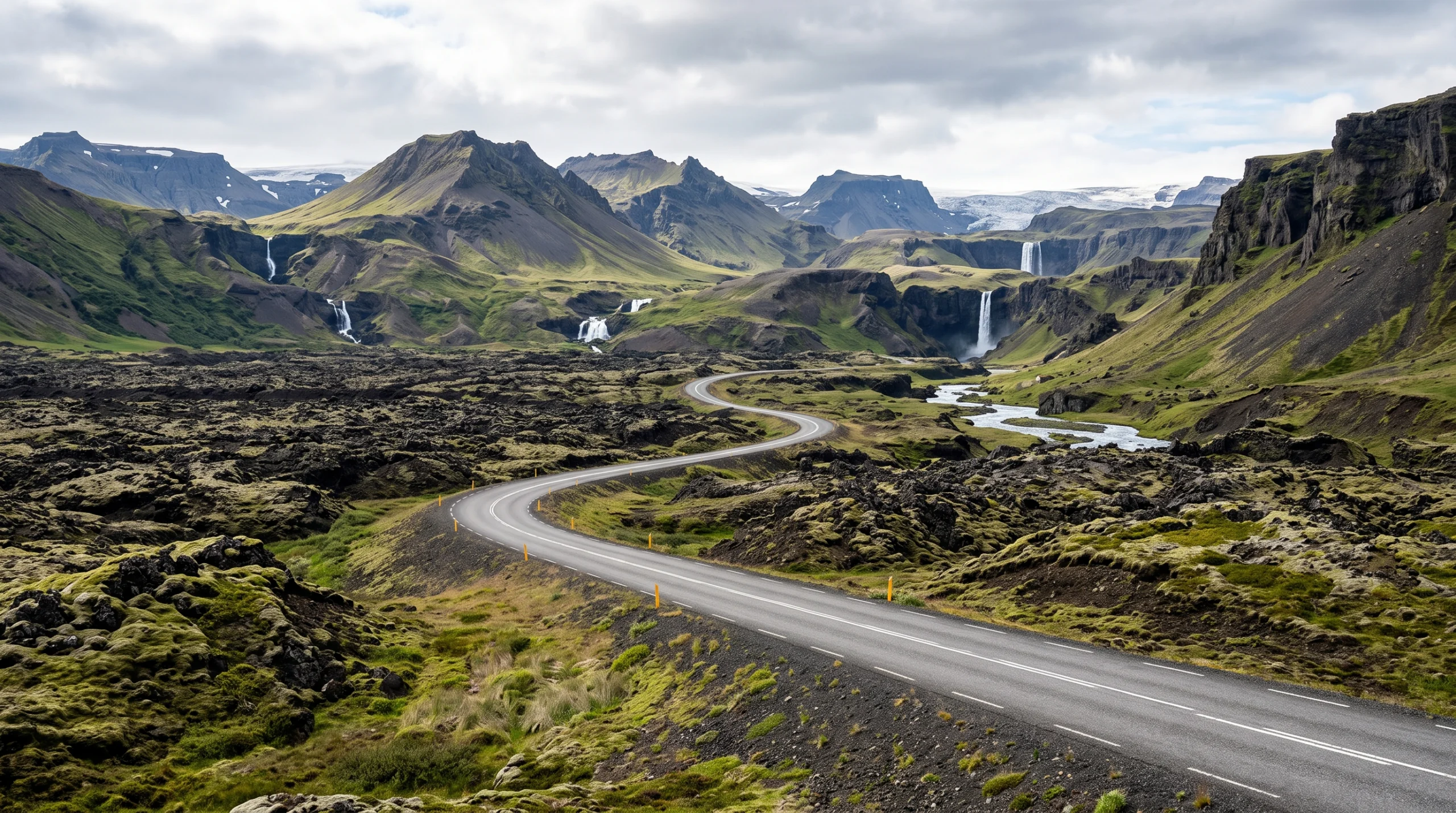
Iceland’s Road and Coastal Administration currently lists Route 1, the Ring Road, at about 1,309.7 km.
However, that number covers the road itself.
A real sightseeing trip will drive farther because hotels, waterfalls, viewpoints, towns, and attractions require detours.
Therefore, our 10-day example later uses roughly 1,600 km of total driving rather than assuming that the Ring Road’s official length is the whole trip.
Accommodation Costs in Iceland
Accommodation is usually one of the largest parts of an Iceland trip cost.
Prices can change sharply based on season, location, room type, and how early you book.
For practical planning, you can use broad room ranges such as:
| Accommodation Style | Planning Range Per Room |
|---|---|
| Simple/private guesthouse | 14,000–20,000 ISK |
| Mid-range room | 20,000–33,000 ISK |
| Premium or high-demand stay | 34,000 ISK+ |
These are planning ranges rather than guaranteed booking prices.
ReykjavÃk Accommodation
ReykjavÃk gives travelers more choices than many smaller towns.
For example, you can compare hostels, guesthouses, apartments, and hotels across different neighborhoods.
Staying slightly outside the most central streets may also give you better value.
Ring Road Guesthouses and Hotels
Smaller towns usually have fewer rooms.
As a result, waiting too long can leave you with expensive or inconvenient options, especially when your itinerary requires an overnight stay in a specific area.
For a Ring Road trip, securing practical accommodation can matter more than saving a small amount on each room.
Campsites
Camping can reduce accommodation spending, but it is not free.
At Þingvellir National Park, the listed camping rate is 1,800 ISK for adults ages 18–66 (900 ISK for visitors aged 67+ or disabled visitors), plus 400 ISK tax per camping unit. Campsite openings vary by season, so check the official availability for your travel dates.
Therefore, campsite costs need to be included when comparing a campervan against guesthouses.
Iceland Lodging Tax
Iceland also charges a lodging tax.
The current official rates are:
- 800 ISK per lodging unit per night for hotels, guesthouses, and similar accommodation.
- 400 ISK per lodging unit per night for campsites and motorhome or caravan pitches.
The important point is that this is based on the lodging unit, not simply multiplied by the number of travelers.
For example, two people sharing one hotel room do not each add another 800 ISK to the same room tax.
How Much Does Food Cost in Iceland?
Food is one of the easiest parts of the budget to adjust.
The amount you spend depends heavily on whether you cook, mix groceries with restaurants, or eat out for most meals.
Groceries and Self-Catering
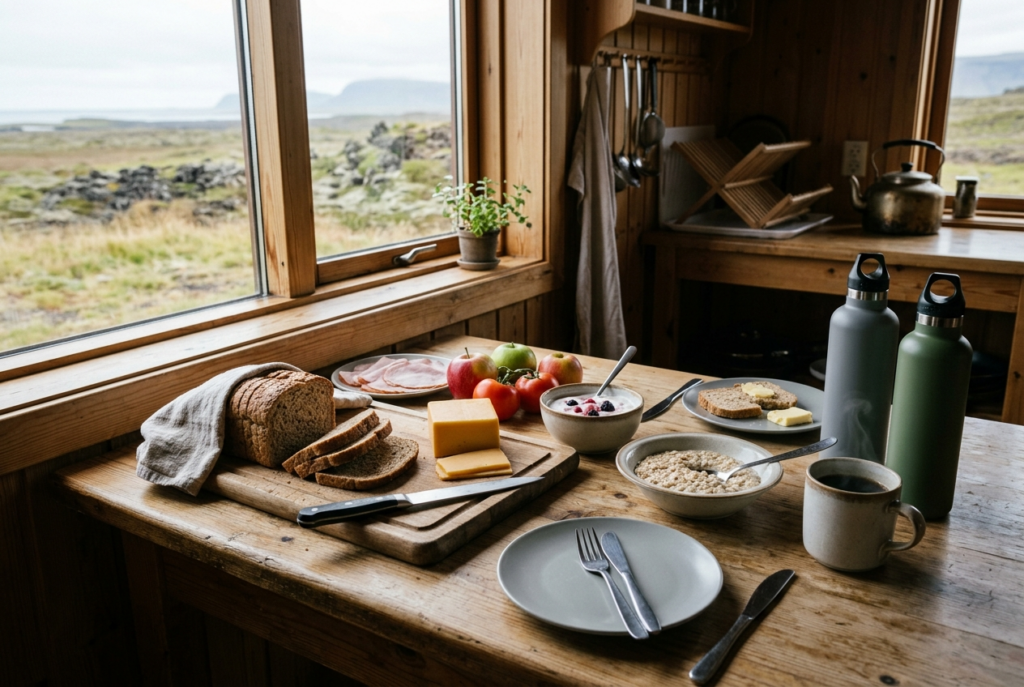
For planning, a mostly self-catering traveler can allow roughly 2,500–7,000 ISK per person per day.
Actual spending depends on what you buy and how often you cook.
Accommodation with kitchen access can therefore save more money than spending time searching for the cheapest restaurant each day.
Mix of Groceries and Restaurants
For many travelers, this is the best balance.
A planning range of around 7,000–13,000 ISK per person per day gives more room for cafés, simple meals, snacks, groceries, and selected restaurant dinners.
For example, you could prepare breakfast, pack a road-trip lunch, and eat dinner at a restaurant.
Restaurant-Heavy Travel
Eating out for most meals can increase the daily budget quickly.
Instead of avoiding restaurants completely, choose which meals matter most.
For example, paying for one memorable Icelandic dinner may feel more worthwhile than buying expensive convenience food several times a day.
Free Iceland vs Paid Iceland
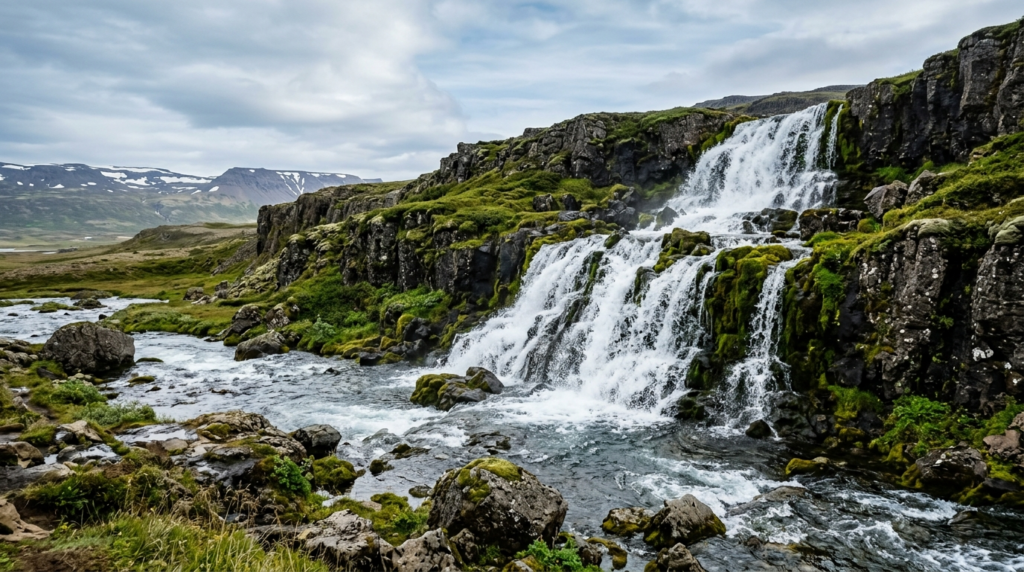
One of Iceland’s biggest budget advantages is that many famous natural sights do not require expensive admission tickets.
| Free or Low-Cost Experiences | Budget-Changing Experiences |
|---|---|
| Waterfalls | Glacier hike |
| Black-sand beaches | Ice cave tour |
| Scenic viewpoints | Whale watching |
| Many hiking areas | Premium geothermal lagoon |
| Northern lights independently | Guided northern-lights tour |
| Scenic road stops | Snowmobiling |
Geothermal bathing shows the difference clearly.
Under Reykjavík’s municipal pool fee schedule, effective May 5, 2026, a single adult admission costs 1,500 ISK. Check the current schedule before visiting.
By contrast, the Blue Lagoon booking page lists Comfort admission from 11,990 ISK. Advance booking is essential, and the price varies by date and time.
Both can be enjoyable experiences, but they serve very different budgets.
Therefore, you do not need to remove every premium activity. Instead, choose one or two paid experiences that matter most.
How Season Changes Your Iceland Trip Cost
Season affects both price and the type of trip you can realistically take.
Peak Summer
Summer gives travelers very long daylight hours and easier road-trip planning.
However, demand for accommodation and rental vehicles is high.
As a result, waiting too long can leave you with fewer affordable options.
If summer is important to you, book the major fixed costs before worrying about smaller daily savings.
Shoulder Season
Late spring and early fall can offer a useful balance.
You may find better value while still having enough daylight for a road trip.
However, conditions can change quickly. Therefore, keep some flexibility in your itinerary.
Winter
Winter can sometimes bring lower accommodation and rental demand.
On the other hand, shorter daylight, snow, strong winds, and road conditions may make driving harder.
Therefore, a cheaper hotel or rental-car quote does not automatically make winter the cheapest practical trip for every traveler.
Hidden Costs to Add to Your Iceland Travel Budget
Hotels, cars, food, and tours get most of the attention, but smaller expenses also matter.
Common hidden costs include rental insurance, kilometre fees, parking, airport transfers, campsite fees, luggage charges, and last-minute itinerary changes.
For example, Strætó Route 55 lists an adult one-way fare of 2,400 ISK between KEF Airport and Garðabær/Reykjavík; the fare to Fjörður in Hafnarfjörður differs. Check the timetable because not every trip serves BSÍ.
In addition, you may need to pay for parking at several stops or change plans because of weather.
For this reason, keeping a 5–10% buffer is sensible.
A Realistic 7-Day Iceland Trip Cost
Hypothetical example: one person, 7 days/6 nights; two adults share one qualifying hotel/guesthouse room and one small rental vehicle equally. Assumed distance: 900 km, without specifying a route. Fuel uses the illustrative input of 254.6 ISK/L and assumes 7 L/100 km consumption. This is not a historical or current-price claim. Airfare is excluded. Except for the cited lodging tax and calculated road/fuel inputs, values are illustrative allowances, not market quotes. Accommodation is pre-tax and assumes a qualifying licensed hotel/guesthouse; check actual room totals and mandatory fees.
| Expense | Lean | Comfortable |
|---|---|---|
| Accommodation (6-night shared allowance; tax excluded) | 48,000 ISK | 72,000 ISK |
| Lodging tax (800 × 6 nights ÷ 2; qualifying hotel/guesthouse tax rules) | 2,400 ISK | 2,400 ISK |
| Rental vehicle (7-day shared allowance) | 28,000 ISK | 35,000 ISK |
| Insurance allowance | 14,000 ISK | 14,000 ISK |
| Kilometre fee (900 × 6.95 ÷ 2) | 3,130 ISK | 3,130 ISK |
| Fuel (900 × 7 ÷ 100 × 254.6 ÷ 2) | 8,020 ISK | 8,020 ISK |
| Paid-parking allowance (hypothetical/person) | 2,500 ISK | 3,500 ISK |
| Food allowance (7 days/person) | 31,500 ISK | 66,500 ISK |
| Activities allowance/person | 15,000 ISK | 40,000 ISK |
| Incidentals buffer/person | 15,000 ISK | 20,000 ISK |
| Hypothetical subtotal/person | 167,550 ISK | 264,550 ISK |
| Daily equivalent (subtotal ÷ 7) | 23,936 ISK | 37,793 ISK |
Subtotals exclude airfare, route-dependent tolls/charges, and any lodging, rental, or parking fees outside these assumptions. Parking is not a toll allowance.
A Realistic 10-Day Iceland Ring Road Cost
Hypothetical example: one person, 10 days/9 nights; two adults share one qualifying hotel/guesthouse room and one small rental vehicle equally. Assumed distance: 1,600 km, without specifying tolls. Fuel uses the illustrative input of 254.6 ISK/L and assumes 7 L/100 km consumption. This is not a historical or current-price claim. Airfare is excluded. Except for cited lodging tax and calculated road/fuel inputs, amounts are illustrative allowances, not market quotes. Accommodation is pre-tax; check actual room totals and mandatory fees.
| Expense | Lean | Comfortable |
|---|---|---|
| Accommodation (9-night shared allowance; tax excluded) | 72,000 ISK | 108,000 ISK |
| Lodging tax (800 × 9 nights ÷ 2; qualifying hotel/guesthouse tax rules) | 3,600 ISK | 3,600 ISK |
| Rental vehicle (10-day shared allowance) | 40,000 ISK | 75,000 ISK |
| Insurance allowance/person | 20,000 ISK | 30,000 ISK |
| Kilometre fee (1,600 × 6.95 ÷ 2) | 5,560 ISK | 5,560 ISK |
| Fuel (1,600 × 7 ÷ 100 × 254.6 ÷ 2) | 14,260 ISK | 14,260 ISK |
| Paid-parking allowance (hypothetical/person) | 3,600 ISK | 5,000 ISK |
| Food allowance (10 days/person) | 45,000 ISK | 95,000 ISK |
| Activities allowance/person | 20,000 ISK | 50,000 ISK |
| Incidentals buffer/person | 20,000 ISK | 25,000 ISK |
| Hypothetical subtotal/person | 244,020 ISK | 411,420 ISK |
| Daily equivalent (subtotal ÷ 10) | 24,402 ISK | 41,142 ISK |
Subtotals exclude airfare, route-dependent tolls/charges, and fees outside the assumptions. The Ring Road label does not imply inclusion of a toll or any particular route.
Is a Campervan Cheaper Than a Car and Hotels?
Sometimes, but not always.
A campervan removes the need for a separate hotel room. That can save a meaningful amount when accommodation prices are high.
However, you still need to add:
- campsite fees
- lodging tax
- insurance
- fuel
- kilometre fees
- parking
- food
In addition, a campervan may cost considerably more to rent than a small car.
Therefore, the correct question is not:
Which vehicle has the cheapest daily rate?
Instead, ask:
Which setup has the lowest total cost for my dates, route, and comfort level?
A campervan may win for one trip while a small car and simple guesthouses may be better value for another.
Iceland Trip Cost for Solo Travelers vs Couples
Iceland can be especially expensive for solo travelers because many of the largest expenses are attached to a room or vehicle.
| Expense | Solo Traveler | Couple |
|---|---|---|
| Hotel room | Pays full room cost | Splits room cost |
| Rental car | Pays full cost | Splits cost |
| Insurance | Pays full cost | Splits cost |
| Fuel | Pays full cost | Splits cost |
| Kilometre fee | Pays full cost | Splits cost |
| Parking | Pays full cost | Splits cost |
| Food | Per person | Per person |
| Tours | Per person | Per person |
For example, a 24,000 ISK hotel room costs a solo traveler the full 24,000 ISK. For two people sharing, the cost becomes only 12,000 ISK per person.
Therefore, always check whether an Iceland budget you see online assumes one traveler or two people sharing major costs.
Where to Save and Where to Spend in Iceland
The best Iceland budget strategy is not to make every part of the trip cheap.
Instead, save on expenses that add little value and spend where safety, comfort, or a memorable experience matters.
| Save On | Consider Spending On |
|---|---|
| Oversized 4×4 you do not need | Vehicle suited to your route |
| Restaurant food every meal | One memorable Icelandic dinner |
| Paid activity every day | One signature guided experience |
| Several premium lagoons | One geothermal experience |
| Unnecessary driving | A better-paced route |
| Bottled water | Reusable bottle and tap water |
| Premium room every night | Better location when it matters |
For example, paying for a suitable vehicle is more important than cutting costs that affect safe travel.
By contrast, paying for a large SUV on a simple summer South Coast trip may offer little extra value.
Is $150 a Day Enough for Iceland?
$150 per person per day is possible, but it is a tight Iceland budget.
At recent exchange rates, $150 is below the lean planning range used in our sample self-drive trips.
However, it can work when two travelers share major costs, choose hostels, campsites, or basic rooms, prepare most meals, and focus heavily on free natural sights.
A hotel-based self-drive traveler should usually plan closer to $200 or more per person per day for a safer margin.
Solo travelers will find $150 much harder because they cannot divide the largest room and vehicle expenses.
Therefore, treat $150 as a budget target under specific conditions rather than a normal price for every Iceland vacation.
Is Iceland Expensive to Visit?
Yes, Iceland can be expensive.
Accommodation, transportation, restaurant meals, insurance, and guided activities can all increase the total quickly.
However, Iceland also gives travelers unusual control over sightseeing costs. Waterfalls, black-sand beaches, landscapes, scenic roads, and many outdoor stops can fill an itinerary without an expensive admission ticket.
As a result, your Iceland trip cost depends heavily on how you choose to travel rather than simply on the destination itself.
Iceland Trip Cost FAQs
How much does a trip to Iceland cost?
For two people sharing major expenses, a useful planning range is about 20,000–30,000 ISK per person per day for a value-focused trip and 35,000–50,000 ISK for a comfortable trip. International airfare is extra.
How much does Iceland cost per day?
A realistic daily budget depends on your group size, vehicle, accommodation, food choices, and activities. For most first-time travelers sharing major costs, roughly 20,000–50,000 ISK per person per day covers a wide range from lean to comfortable travel.
How much does a 7-day Iceland trip cost?
The illustrative 7-day/6-night subtotal is 167,550 ISK lean or 264,550 ISK comfortable per person, assuming two adults share a room and vehicle and drive 900 km. Airfare and route-dependent charges are excluded.
How much does a 10-day Iceland trip cost?
The illustrative 10-day/9-night subtotal is 244,020 ISK lean or 411,420 ISK comfortable per person, assuming two adults share a room and vehicle and drive 1,600 km. Airfare and route-dependent charges are excluded.
Is $150 a day enough for Iceland?
It can be, but the budget is tight. Sharing accommodation and transport, preparing meals, and limiting expensive tours will make the biggest difference.
Is a campervan cheaper than a rental car and hotels?
Sometimes. However, you need to compare the complete cost of the campervan, campsites, insurance, fuel, road fees, and parking against the complete cost of a rental car and accommodation.
How much does it cost to drive Iceland’s Ring Road?
There is no single total because the vehicle, fuel use, activities, and detours vary. The Ring Road itself is about 1,310 km, but most sightseeing itineraries drive farther.
Is Iceland cheaper for couples?
Usually, yes on a per-person basis. Couples can divide accommodation, rental-car, insurance, fuel, kilometre-fee, and parking costs.
What is the cheapest time to visit Iceland?
Quieter periods can offer lower accommodation and rental demand. However, winter also brings shorter daylight and more difficult weather, so the cheapest booking price does not always create the cheapest practical trip.
What are the biggest hidden costs in Iceland?
Rental insurance, kilometre fees, paid parking, lodging tax, campsite charges, airport transport, and last-minute tours are among the easiest costs to overlook.
Final Thoughts: How Much Should You Budget for Iceland?
Start with actual room and rental quotes, then account for fuel, the applicable road-fee method, food, parking, and activities. Keep route-dependent tolls separate until you know your route. The sample totals are hypothetical calculations, not researched destination prices.
Source check: October 22, 2026. Checked the linked traveler-reported spending reference, N1’s dynamic fuel display, lodging-tax schedule, and the linked official visitor-price pages. A dynamic fuel listing is not a historical price record. The official kilometre-fee pages could not be opened directly during this check; reconfirm the rate and rental daily-fee conditions before relying on those figures. Accommodation, rental, insurance, food, activity, and parking amounts are illustrative allowances, not quotes.

WRITTEN BY
Maya Carter
Maya Carter is the pen name used by WanderClarity’s site owner. The site focuses on practical destination guides, trip budgeting, and affordable travel planning.