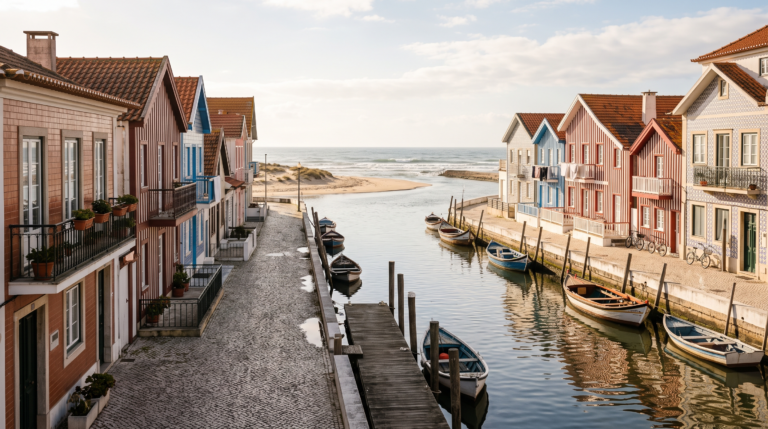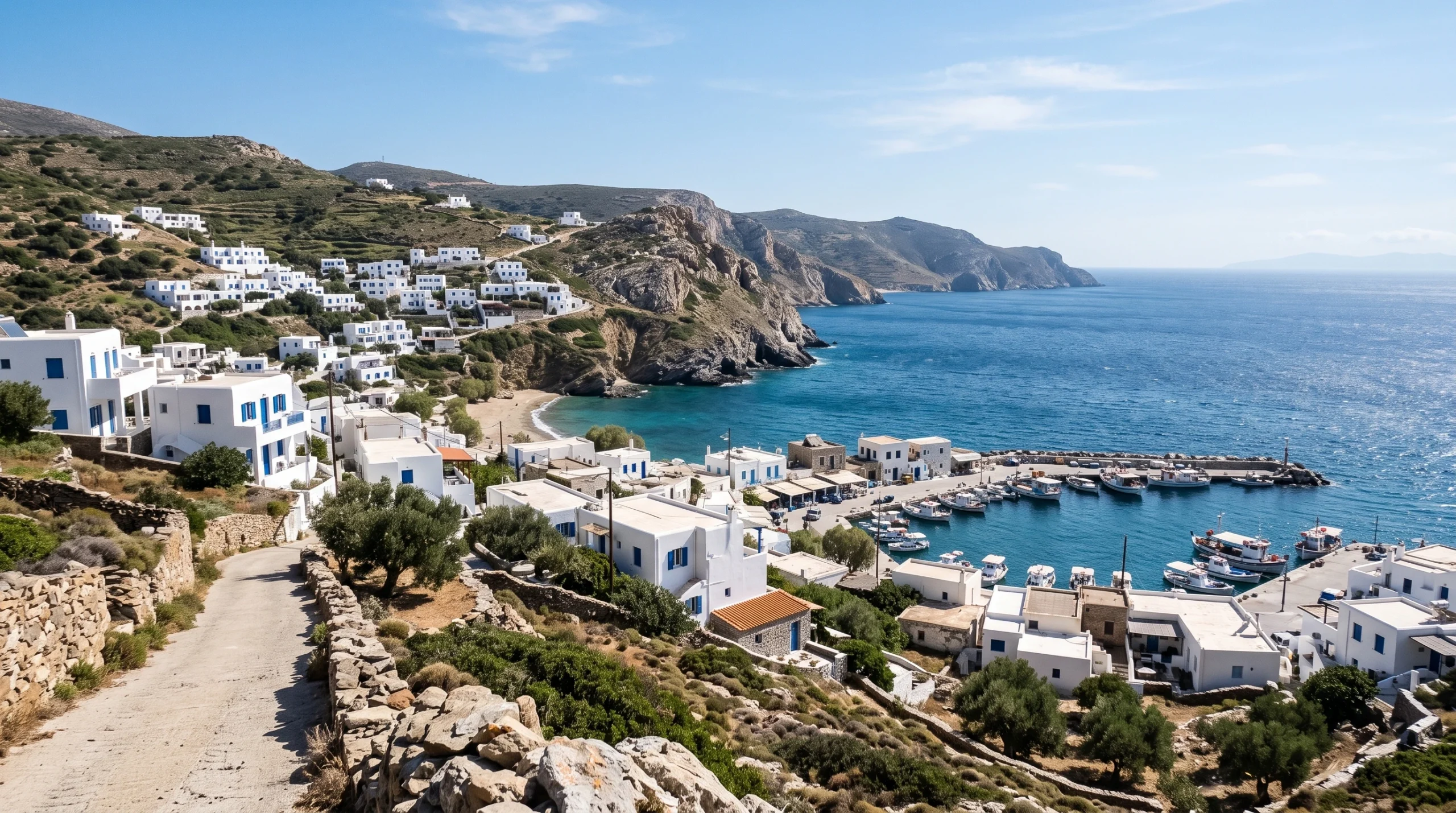
Your Greece trip cost can change a lot depending on where you go, when you visit, and how many islands you add. For example, a few days in Athens followed by a stay on Naxos can cost far less than the same trip built around Santorini or Mykonos. Ferries, hotel location, restaurant choices, and the season can also push the total higher than many first-time visitors expect.
This guide breaks down the real cost of visiting Greece, including hotels, food, transport, ferries, activities, and extra fees. You will also find realistic daily budgets, 7-day and 10-day trip examples, island comparisons, and simple ways to save money without turning your vacation into an extreme budget trip.
- Plan around €80–120 per person per day for a lean, value-focused trip.
- A comfortable Greece trip usually needs around €150–230 per person per day.
- Premium islands can push comfortable spending above €220–300 per day.
- International airfare is not included in these daily budgets.
- Santorini and Mykonos can raise costs quickly through hotels, dining, and transport.
- Every extra island adds more than a ferry ticket. Transfers and lost travel time also matter.
- Couples often spend less per person because they can share rooms, taxis, and rental cars.
How Much Does a Greece Trip Cost?
There is no single answer because Greece does not have one travel price.
Traveler-spending data from Budget Your Trip currently puts the average budget traveler in Greece at about €86 per person per day, while a mid-range traveler spends around €216 per day. Those figures are based on past traveler spending and include items such as accommodation, food, local transport, and sightseeing.
For this reason, I would use slightly wider planning ranges because your destination can make a major difference.
| Travel Style | Per Person, Per Day | What It Covers |
|---|---|---|
| Lean / value-focused | €80–120 | Simple shared room, cheaper meals, public transport, selected attractions |
| Comfortable | €150–230 | Mid-range hotel, restaurants, attractions, some taxis and tours |
| Premium-island comfortable | €220–300+ | Higher hotel and dining costs in places such as Santorini or Mykonos |
These are planning ranges, not fixed prices. Your actual Greece trip cost can be lower or higher.
Lean Greece Trip Cost
A lean trip does not mean staying in the cheapest hostel you can find.
For example, you can stay in a simple guesthouse or budget hotel, eat at bakeries and local tavernas, use buses and metro services, and still visit important attractions. Sharing a room with another traveler makes this budget much easier.
A reasonable target is around €80–120 per person per day, before international airfare.
The lower end is easier in Athens and during less expensive travel periods. It becomes harder on famous islands during peak summer.
Comfortable Greece Trip Cost
A comfortable budget gives you more freedom.
For example, you may stay in a well-rated mid-range hotel, eat at restaurants each day, visit major attractions, take some taxis, and pay for a few tours or boat trips.
For this style, around €150–230 per person per day is a safer planning range.
If your trip includes several nights in Santorini or Mykonos, you may need more.
Higher-End Greece Trip Cost
Luxury spending in Greece can rise very quickly.
Premium hotels with caldera views, private transfers, fine dining, beach clubs, private boats, and high-end island resorts can push the daily total far above €300.
Since this guide is focused on value-conscious travel, the rest of the article will focus mainly on lean and comfortable budgets.
Fixed Costs to Add to Your Greece Trip Budget
Daily spending is only part of your total.
For example, some costs happen once or only a few times during the trip. Keeping these separate makes your budget easier to understand.
International Flights
Flights from the United States can be one of the biggest parts of the total trip cost, but prices change too much to use one fixed number.
Your fare will depend on your departure airport, travel dates, number of stops, baggage, and how early you book.
For that reason, all 7-day and 10-day budgets in this guide exclude international airfare.
Add your actual flight quote after you calculate your Greece ground budget.
Travel Insurance
Travel insurance is another trip-level cost rather than a normal daily expense.
The price depends on your age, trip value, medical coverage, cancellation cover, and other factors. Compare the policy details rather than choosing only by price.
Greece’s Climate Crisis Resilience Fee
Greece charges a Climate Crisis Resilience Fee on tourist accommodation. It is charged per room or apartment per daily use, not separately to every person staying in the room.
Current hotel rates are higher from April through October:
| Accommodation | April–October | November–March |
|---|---|---|
| 1–2 star hotel | €2 | €0.50 |
| 3 star hotel | €5 | €1.50 |
| 4 star hotel | €10 | €3 |
| 5 star hotel | €15 | €4 |
| Standard short-term rental | €8 | €2 |
| Larger qualifying short-term house / villa | €15 | €4 |
The current rates and seasonal structure are set in Greek law.
This matters because the hotel price you first see may not be the full amount you finally pay.
If two travelers share one hotel room, they also share the effect of this room-based fee.
Greece Trip Cost by Destination
Greece does not have one travel price.
Where you go can affect your budget more than saving a few euros on breakfast or coffee.
Current traveler data shows this clearly. Average daily spending is around €154 in Athens, compared with about €250 in Santorini, €221 in Naxos, and €272 in Mykonos. These are traveler averages, not prices you are guaranteed to pay.
| Destination | Budget Advantage | Main Cost Risk | Best Fit |
|---|---|---|---|
| Athens | Public transport and many food options | Central hotels and attractions | History and city travel |
| Santorini | Can work as a shorter stay | Hotels, views, dining and transfers | Iconic island experience |
| Mykonos | Easy to combine with Cyclades trips | Hotels, nightlife and beach clubs | Nightlife and premium travel |
| Naxos | Often better value than premium Cyclades islands | Seasonal hotel and ferry prices | Beaches and slower island travel |
| Crete | Large range of accommodation | Rental car and longer distances | Longer island stays |
| Paros | Mix of villages and beaches | Popular areas can become expensive | Balanced island trip |
This is not a permanent cheapest-to-most-expensive ranking. Season, location, room type, and booking time can change prices.
Athens
Athens is one of the easiest places in Greece to control your daily costs.
You have a large choice of hotels, apartments, bakeries, tavernas, and public transport. In addition, many major areas can be explored on foot.
A rental car is usually unnecessary for a short central Athens stay.
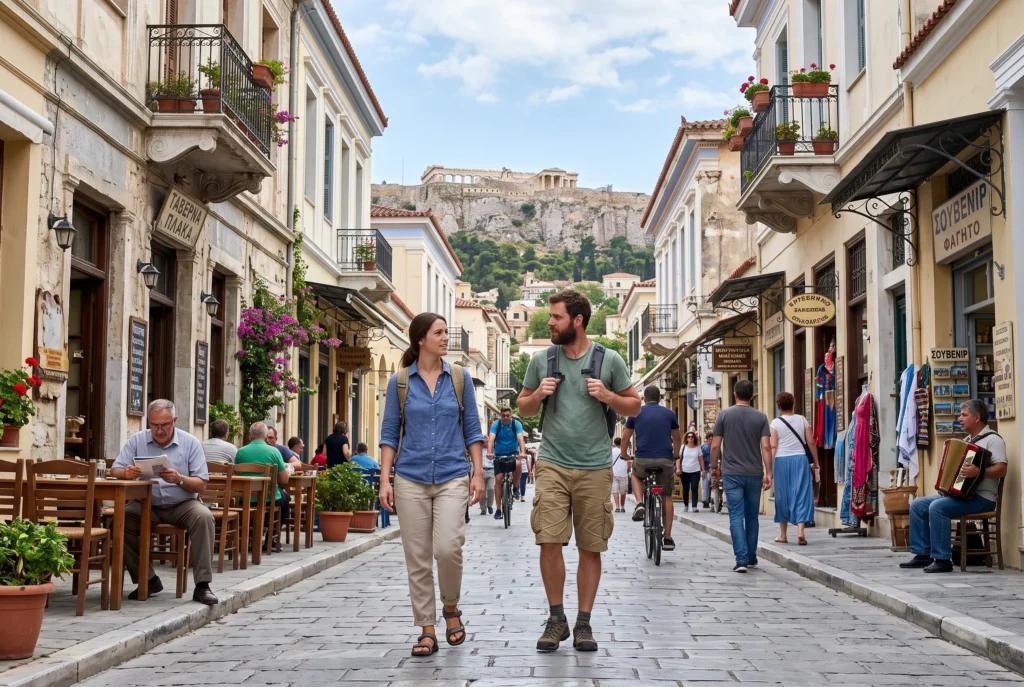
The main costs to watch are central accommodation and paid historical sites.
Santorini
Santorini can change your Greece trip cost very quickly.
The biggest difference often comes from accommodation. Current traveler data puts a typical double room at about €236, compared with around €126 in Athens.
You do not have to skip Santorini to save money.
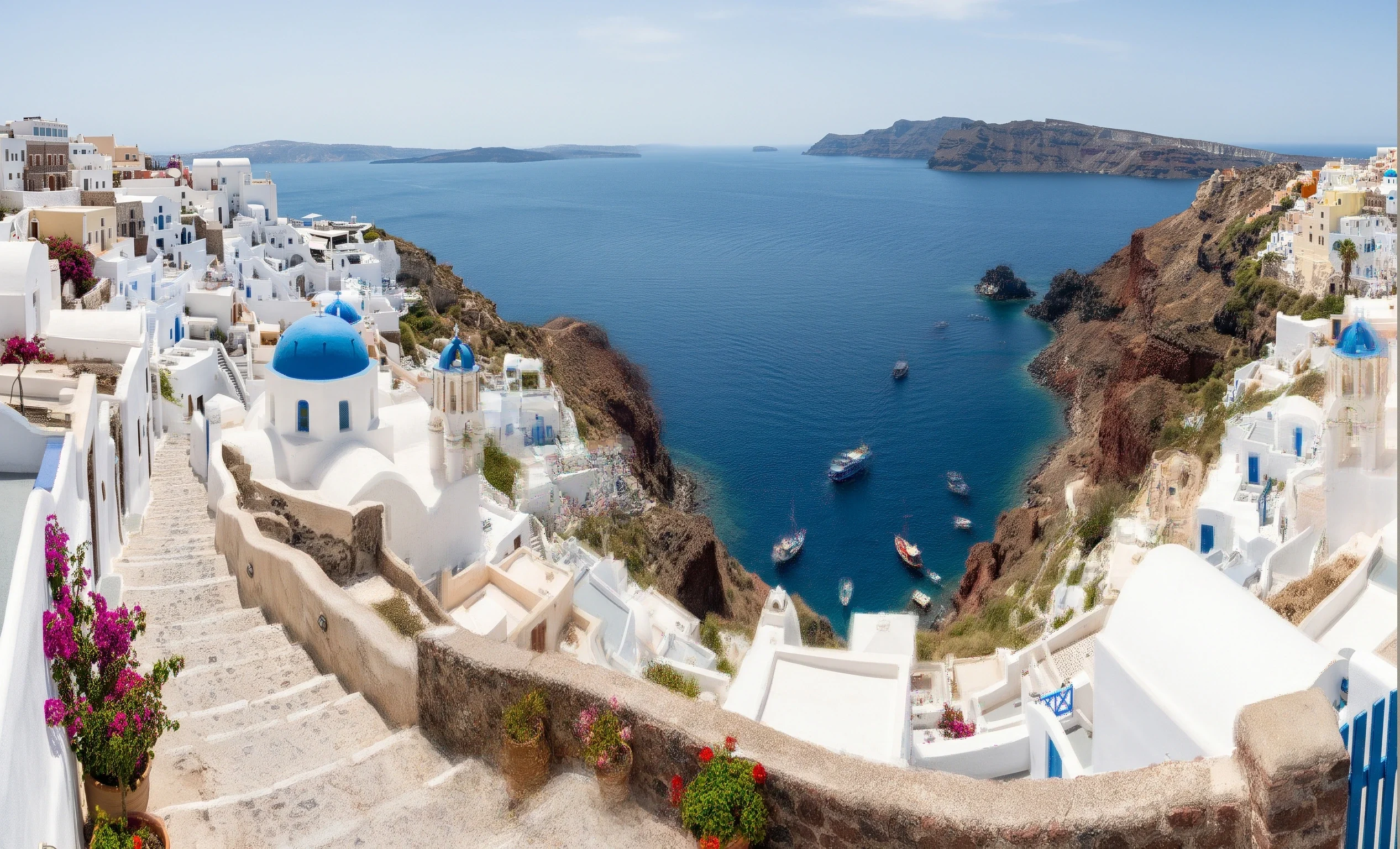
Instead, think carefully about what you are paying for. A caldera-view room every night may not be necessary. You could stay fewer nights, choose accommodation away from the most expensive views, and spend on one experience that matters to you.
Mykonos
Mykonos has some of the highest overall traveler spending among the popular destinations in this comparison.
Restaurants, nightlife, beach clubs, taxis, and high-demand accommodation can increase the total quickly.
If Mykonos matters to you, set a daily spending limit before arriving. As a result, small unplanned purchases can add up fast in premium tourist areas.
Naxos
Naxos is often discussed as a better-value choice than Santorini or Mykonos, but that does not mean it is always cheap.
Current traveler data still puts average spending around €221 per day, although your own budget can be much lower with simple accommodation and local meals.
Its main advantage is that you can get a classic Greek island experience without paying for Santorini’s caldera premium or Mykonos nightlife.
Crete
Crete works differently because it is much larger.
There are many towns, beaches, and accommodation styles. That gives you more choice, but transport can become an extra cost.
A rental car may be useful for some itineraries, especially if you want to explore several areas. This can add fuel, parking, and insurance costs.
Accommodation Costs in Greece
Accommodation is usually one of the biggest parts of a Greece travel budget.
Prices can change based on the island, season, distance from the center or beach, room type, and view.
A simple room outside a premium tourist zone may fit a lean budget. A well-rated central hotel or island property can cost much more.
For example, Santorini shows how strong this difference can be. Current traveler-paid data suggests a typical double room there costs about €236, compared with roughly €126 in Athens.
Always check whether a price is:
per room or per person.
This matters a lot when comparing solo and couple budgets.
Two people sharing a €140 room are effectively paying €70 each before taxes and fees. A solo traveler pays the full €140.
Also check the Climate Crisis Resilience Fee before you finish your budget.
How Much Does Food Cost in Greece?
Food can be one of the easier parts of your budget to control.
You do not need to cook every meal to save money. For example, Greece has bakeries, takeaway meals, casual restaurants, and traditional tavernas at different price levels.
For planning, a lean food budget of around €25–35 per person per day can work if you mix simple breakfasts, quick meals, and affordable local food.
A more comfortable food budget is around €45–65 per person per day.
Premium island restaurants, waterfront tables, cocktails, and beach clubs can push food and drink spending above €70–100 per day.
| Food Style | Budget Effect |
|---|---|
| Bakery breakfast or simple snack | Low-cost option |
| Gyros, souvlaki or quick meal | Budget-friendly |
| Local taverna meals | Moderate |
| Tourist-area restaurant | Higher |
| Drinks, beach clubs and premium dining | Can become expensive quickly |
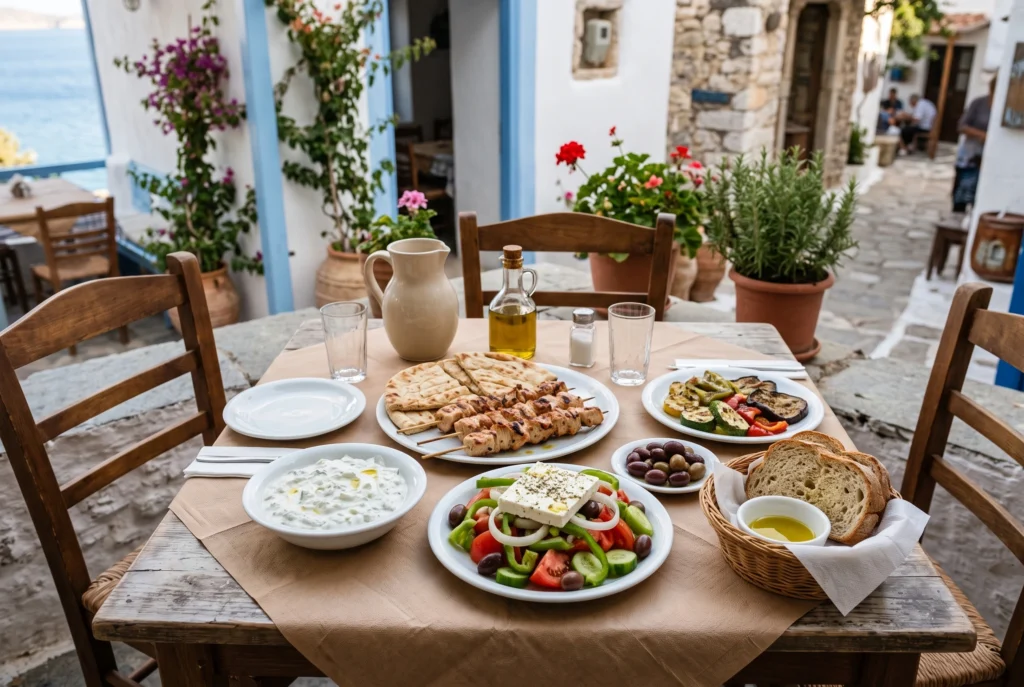
Bakeries and Quick Meals
A bakery breakfast can help keep your daily cost down.
Quick meals such as gyros and souvlaki are also useful when you do not want to pay for a full restaurant meal.
Mixing simple meals with one good dinner is often better than trying to eat as cheaply as possible all day.
Greek Tavernas
Local tavernas can offer a better balance between price and experience.
Look beyond the busiest tourist squares. Restaurants one or two streets away from the main attraction can sometimes offer better value.
Check the menu before sitting down so you know what you will spend.
Tourist Restaurants, Drinks and Beach Clubs
This is where food budgets often break.
A waterfront view, cocktails, premium seafood, or a popular beach club may cost far more than a simple local meal.
There is nothing wrong with spending on these experiences. Just choose them on purpose instead of letting them become your normal daily routine.
Transportation Costs in Greece
Transport costs depend on the type of Greece trip you are planning.
Athens is easy to explore with public transport. On the other hand, island trips may need buses, taxis, rental cars, ferries, or domestic flights.
Public Transport in Athens
Athens public transport is useful for keeping costs low.
Current official OASA fares include:
| Ticket | Current Fare |
|---|---|
| 90-minute ticket | €1.20 |
| 24-hour ticket | €4.10 |
| 5-day ticket | €8.20 |
| Airport Express bus | €5.50 |
| Airport Metro, one way | €9 |
| Airport Metro, return | €16 |
| 3-day tourist ticket | €20 |
The €20 tourist ticket includes three days of urban transport and an airport journey in each direction.
That makes Athens much easier to manage without frequent taxis.
Taxis and Transfers
Taxis become more important when you have early ferries, heavy luggage, distant hotels, or poor public transport connections.
On islands, the cost of getting from the port to your hotel can be easy to forget when planning.
Always count the transfer at both ends of a ferry trip.
Rental Cars
A rental car can make sense in a place such as Crete, where attractions and beaches are spread across a large area.
It usually makes less sense for a short central Athens visit.
When comparing car prices, include fuel, parking, insurance, and any extra driver or equipment fees.
How Island Hopping Affects Your Greece Trip Cost
Adding another island costs more than the ferry ticket.
You may also need transport to the departure port, another transfer when you arrive, food during the journey, and possibly an extra night near a port because of the schedule.
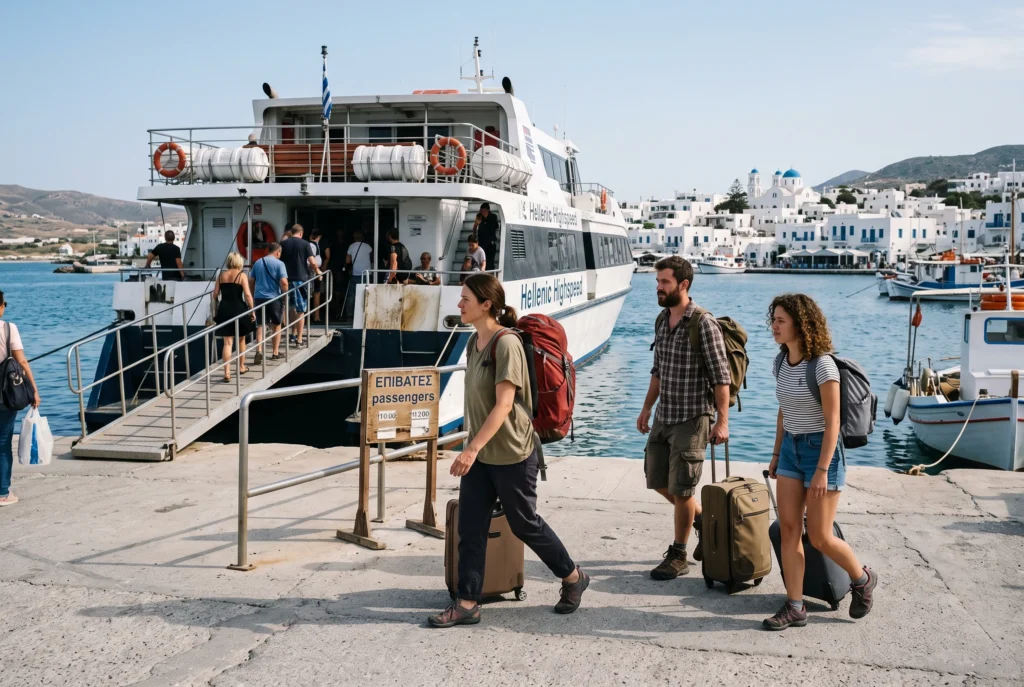
In addition, you lose part of a vacation day every time you pack, check out, travel, and check in again.
For many first-time travelers, visiting fewer islands can save both money and time.
Instead of trying to fit Athens plus three islands into one week, Athens plus one island may give you a better trip.
Ferry vs Flight: Which Is Cheaper in Greece?
There is no single answer.
Greece has conventional ferries, faster ferries, and domestic flights. The cheapest ticket is not always the cheapest full journey.
For example, current Piraeus–Naxos ferry listings start around €42, while August services shown for Blue Star are around €52.50 and faster Seajets services can be higher. Travel time can range from roughly three hours to more than five hours depending on the service.
Piraeus–Santorini services currently show fares around €46.50–59 on some conventional services, while faster options can rise to around €89.70.
Naxos–Santorini is a useful example too. A conventional Blue Star service can be around €31.50, while high-speed services can be around €59.70–68.70.
| Route | Conventional Example | Faster Option |
|---|---|---|
| Piraeus → Naxos | About €42–52.50 | Higher on faster services |
| Piraeus → Santorini | About €46.50–59 | Up to about €89.70 on some services |
| Naxos → Santorini | About €31.50 | About €59.70–68.70 |
| Option | Main Advantage | Main Cost Risk |
|---|---|---|
| Conventional ferry | Often lower fare | Longer journey |
| High-speed ferry | Saves travel time | Higher ticket price |
| Domestic flight | Fast for some longer routes | Baggage and airport-transfer costs |
Compare the full door-to-door trip.
A flight may look cheap until you add baggage and airport transport. A ferry may look cheap but use much more of your vacation day.
Activities and Attractions in Greece
Greece has a useful mix of paid and free things to do.
For example, you can spend money on museums, archaeological sites, boat tours, wine trips, guided walks, and beach clubs.
You can also enjoy beaches, neighborhoods, viewpoints, villages, and walking routes for little or no cost.
In Athens, the Acropolis currently costs €30 for full admission. The Acropolis Museum costs €20, and the Ancient Agora costs €20.
If you visit both the Acropolis and Acropolis Museum, that is already €50 per adult before any other paid attraction.
| Attraction | Adult Admission |
|---|---|
| Acropolis of Athens | €30 |
| Acropolis Museum | €20 |
| Ancient Agora | €20 |
Do not build your activity budget around only one ticket.
Choose the major sights you truly want to visit, then leave room for free experiences.
When You Visit Greece Can Change Your Budget
Season can change your Greece travel cost almost as much as destination choice.
Peak Summer
July and August bring strong demand to famous islands.
Popular hotels can become more expensive, and the best-value rooms may sell out early.
Ferries are frequent, but popular departure times can also fill.
If you travel during peak summer, book the parts of your trip that matter most before worrying about small daily savings.
Shoulder Season
Late spring and early fall can offer a useful balance.
You may still get warm weather and active island services without the same level of peak-summer demand.
However, this does not mean every hotel will be cheap. Compare actual dates before booking.
Lower Season
Lower-season travel may reduce accommodation pressure, but island travel can become less convenient.
Some tourist businesses may close, and ferry schedules can be less useful for island hopping.
A cheaper hotel is not always a better deal if the travel schedule becomes difficult.
Hidden Costs to Include in Your Greece Travel Budget
The most common surprise costs are often small by themselves but large when added together.
Airport and port transfers are easy to miss. In addition, checked-bag fees, ATM charges, rental-car extras, drinks, hotel fees, upgraded ferry seats, and last-minute taxis can add to the total.
If you plan to island hop, add a separate buffer instead of spending every euro of your main budget before the trip.
A 5–10% buffer can make the trip less stressful when a transfer costs more than expected or you decide to add an activity.
A Realistic 7-Day Greece Trip Cost
A “7-day trip” can mean different things, so the examples below assume 7 days and 6 nights.
International flights are separate. Accommodation assumes two travelers sharing one room, while totals are shown per person.
7 Days: Athens + Naxos
This example gives you a city stay plus an island without building the whole trip around one of Greece’s most expensive destinations.
| Expense | Lean | Comfortable |
|---|---|---|
| Accommodation | €230 | €440 |
| Food | €210 | €385 |
| Local transport | €60 | €100 |
| Return standard ferry | €84 | €84 |
| Attractions and activities | €100 | €160 |
| Climate fee share | €6 | €15 |
| Miscellaneous | €60 | €80 |
| Total per person | €750 | €1,264 |
This works out to about €107 per day on the lean plan and €181 per day on the comfortable plan.
The ferry estimate uses current base fares around €42 each way. Some summer sailings cost more, so check your exact date before using this number.
7 Days: Athens + Santorini
Now compare the same trip length with a premium island.
| Expense | Lean | Comfortable |
|---|---|---|
| Accommodation | €310 | €620 |
| Food | €245 | €420 |
| Local transport | €90 | €120 |
| Return standard ferry | €118 | €118 |
| Attractions and activities | €110 | €180 |
| Climate fee share | €6 | €15 |
| Miscellaneous | €70 | €100 |
| Total per person | €949 | €1,573 |
That is about €136 per day for the lean version and €225 per day for the comfortable version.
This is why destination choice matters so much.
Both trips last seven days, but Santorini adds pressure through accommodation, dining, and transport.
A Realistic 10-Day Greece Trip Cost
For a 10-day example, assume 10 days and 9 nights with:
3 nights in Athens + 3 nights in Naxos + 3 nights in Santorini.
Again, airfare is separate and two travelers share the accommodation.
| Expense | Lean | Comfortable |
|---|---|---|
| Accommodation | €405 | €795 |
| Food | €350 | €600 |
| Local transport | €120 | €180 |
| Three ferry legs | €133 | €133 |
| Attractions and activities | €160 | €260 |
| Climate fee share | €9 | €23 |
| Miscellaneous | €90 | €130 |
| Total per person | €1,267 | €2,121 |
That works out to around €127 per person per day for a lean trip and €212 per day for a comfortable trip.
The ferry budget uses representative standard fares for Piraeus–Naxos, Naxos–Santorini, and Santorini–Piraeus. Actual prices depend on the month and ferry company.
The bigger lesson is not the exact euro amount.
As a result, adding a second island increases transport costs and uses more travel time. Make sure the extra stop is worth it.
Greece Trip Cost for Solo Travelers vs Couples
Solo travelers often spend more per person even when they eat the same food and visit the same attractions.
The main reason is accommodation.
| Expense | Solo Traveler | Couple |
|---|---|---|
| Hotel room | Pays full room price | Splits room price |
| Food | Per person | Per person |
| Ferry ticket | Per person | Per person |
| Attraction ticket | Per person | Per person |
| Taxi | Pays full fare | Can split fare |
| Rental car | Pays full cost | Can split cost |
For example, a €140 hotel room costs €140 to a solo traveler but only €70 per person to a couple sharing.
That is why a €100 daily budget may be realistic for one traveler and difficult for another, even if their travel style looks similar.
Where to Save and Where to Spend in Greece
Saving money does not mean removing everything special from your trip.
| Save On | Consider Spending On |
|---|---|
| Premium-view hotel every night | One special-view night |
| High-speed ferry on every route | A faster ferry when it saves useful time |
| Tourist-square meals every day | One memorable dinner |
| Visiting too many islands | Fewer islands with more time in each |
| Daily taxis | Strategic airport or port transfer |
| Expensive hotel breakfast | Local bakery breakfast |
The best budget cuts remove spending you will barely remember.
Instead, keep the experiences that are the reason you wanted to visit Greece in the first place.
Is €100 a Day Enough for Greece?
Yes, €100 per day can be enough for Greece, but only under the right conditions.
For example, €100 works best when two travelers share accommodation, choose simple rooms, use public transport, eat at affordable local places, and limit expensive tours.
However, this budget is much harder for a solo traveler because one person carries the full room cost.
In addition, staying in Santorini or Mykonos during busy travel periods can make €100 a day difficult to maintain.
Current traveler data shows the difference clearly. Budget travelers average around €86 per day across Greece, but destination-level spending varies widely.
So €100 is a useful target, not a promise.
Is Greece Expensive to Visit?
Greece can be affordable, moderate, or expensive depending on how you build the trip.
For example, Athens offers strong public transport and many food choices. Islands such as Santorini and Mykonos can behave more like premium tourism markets.
The mistake is treating every part of Greece as if it has the same prices.
A trip with fewer islands, shared accommodation, local meals, and smart transport choices can offer good value. A trip filled with famous islands, premium hotels, private transfers, beach clubs, and constant tours can become expensive very quickly.
Greece Trip Cost FAQs
How much does a trip to Greece cost?
A useful planning range is around €80–120 per person per day for a lean trip and €150–230 per day for a comfortable trip. International flights are extra.
How much does Greece cost per day?
Budget travelers currently average around €86 per person per day, while mid-range travelers average about €216. Your destination and season can move the actual figure far above or below those averages.
How much does a 7-day trip to Greece cost?
For 7 days and 6 nights, our Athens + Naxos example comes to about €750 per person lean or €1,264 comfortable. Athens + Santorini is closer to €949 lean or €1,573 comfortable. International airfare is not included.
How much does a 10-day Greece trip cost?
Our 10-day Athens + Naxos + Santorini example comes to around €1,267 per person lean or €2,121 comfortable, excluding international flights.
Is €100 a day enough for Greece?
It can be. It is most realistic for a value-focused traveler sharing accommodation and limiting premium islands and paid tours.
Is Santorini expensive?
Santorini is generally more expensive than Athens and many other parts of Greece. Current traveler averages are around €250 per person per day in Santorini versus €154 in Athens.
How much does island hopping in Greece cost?
There is no fixed island-hopping price. Ferry fares depend on route, season, ferry type, and company. You must also include transfers to and from ports.
Are ferries expensive in Greece?
Some standard routes can be reasonable, while high-speed ferries can cost much more. For example, Naxos–Santorini can be around €31.50 on a conventional service and around €59.70 or more on faster services.
Is Greece cheaper for couples?
Usually, yes, on a per-person basis. Couples can split hotel rooms, taxis, rental cars, and some transfers. Food, attraction tickets, and ferry tickets remain mostly per person.
What is the cheapest way to get around Greece?
There is no single cheapest method for every trip. Public transport works well in Athens. Buses can work well in many other areas. Ferries are necessary for many island routes, while rental cars can make sense on larger islands such as Crete.
Final Thoughts: How Much Should You Budget for Greece?
The hardest part of planning a Greece trip cost is that the country has very different travel markets. Athens, Naxos, Crete, Santorini, and Mykonos do not cost the same, and every extra island adds transport, transfer, and travel-time costs. A budget that works easily in Athens may feel tight on a premium island.
Start by choosing your destinations and trip length, then calculate accommodation, food, local transport, ferries, and activities. Add the Climate Crisis Resilience Fee, international airfare, and a small emergency buffer at the end. For most value-focused travelers, planning around €80–120 per person per day is a sensible lean target, while €150–230 per day gives you much more comfort and flexibility.

WRITTEN BY
Maya Carter
Maya Carter is the pen name used by WanderClarity’s site owner. The site focuses on practical destination guides, trip budgeting, and affordable travel planning.