How much does a trip to Japan cost? For most travelers, there is no single correct answer. A one-week budget trip and a two-week trip with private hotels, Shinkansen rides, theme parks, and restaurants can have completely different totals.
Japan also has a reputation for being expensive, but that reputation can be misleading. Everyday meals and public transport can be manageable, while international flights, peak-season hotels, long-distance trains, and major attractions can push the total much higher. This guide breaks the cost down so you can estimate the trip you actually want to take, rather than relying on one generic daily budget.
Price note: Prices in this guide were last checked in August 2026. Hotel rates, airfare, exchange rates, and attraction prices can change. Yen figures are more reliable for fixed Japanese prices, while U.S. dollar amounts should be treated as approximate planning estimates.
Key Takeaways
- A one-week Japan trip can roughly cost $1,400–$3,500+ per person including U.S. airfare, depending on travel style.
- A two-week Japan trip can roughly cost $1,900–$5,200+.
- Budget travelers may spend around ¥10,000–¥15,000 per day on ground costs.
- Travelers who want private rooms and normal sightseeing may fit better in the ¥18,000–¥28,000 budget-comfort range.
- Major Shinkansen journeys should be budgeted separately from normal daily city spending.
- A national JR Pass is not automatically cheaper for a simple Tokyo–Kyoto–Osaka route.
- Peak-season hotels, theme parks, shopping, and frequent long-distance travel can raise the total quickly.
- Keep shopping separate from your core Japan trip budget so your travel-cost estimate stays realistic.
How Much Does a Trip to Japan Cost?
For a solo U.S. traveler, a realistic starting point is roughly:
| Travel Style | Daily Ground Budget | 1-Week Total With Airfare | 2-Week Total With Airfare |
|---|---|---|---|
| Budget | ¥10,000–¥15,000 | ~$1,400–$2,300 | ~$1,900–$3,000 |
| Budget Comfort | ¥18,000–¥28,000 | ~$1,800–$2,800 | ~$2,600–$3,900 |
| Mid-Range | ¥28,000–¥42,000 | ~$2,500–$3,500+ | ~$3,600–$5,200+ |
These are planning ranges, not official government averages. They combine current hotel, food, transport, attraction, and airfare benchmarks and assume a typical sightseeing trip rather than luxury travel.
The most important distinction is:
Ground cost = what you spend after arriving in Japan.
Total trip cost = ground cost + international airfare and other pre-trip expenses.
Round-trip economy flights from North America can vary widely depending on the U.S. departure city, season, airline, and how early you book.
How We Estimated These Japan Trip Costs
The figures in this guide are planning ranges built from current hotel, food, transport, attraction, and airfare benchmarks. Fixed Japanese prices such as JR Pass fares, Shinkansen fares, transport passes, and relevant taxes were checked against official sources. Dynamic costs such as flights and hotels can change significantly by city, season, availability, and booking date, so always check live prices for your actual trip.
Japan Trip Cost: What Should You Budget For?
A useful Japan budget includes more than hotels and food.
Think of the trip as:
International flight
- Accommodation
- Food
- Local transportation
- Intercity trains
- Attractions and experiences
- Internet and small fees
- Emergency buffer
= Real Japan trip cost
Shopping should normally stay outside that calculation because one traveler may spend almost nothing while another may spend hundreds of dollars on anime merchandise, cosmetics, electronics, fashion, or souvenirs.
Japan Trip Cost by Travel Style
Budget Traveler
A budget traveler might aim for around ¥10,000–¥15,000 per day before major intercity train journeys.
This usually means:
- hostel or basic accommodation
- inexpensive local meals
- convenience-store food sometimes
- public transport
- mostly free or inexpensive attractions
- careful route planning
- limited taxis and premium experiences
Japan can work surprisingly well at this level, especially if you keep accommodation costs low.
Budget-Comfort Traveler
This is likely the most useful category for many first-time visitors.
A budget-comfort traveler may spend around ¥18,000–¥28,000 per day, before major Shinkansen journeys.
That can allow for:
- a private business hotel
- local restaurants
- cafés and snacks
- normal subway and train use
- major sightseeing
- selected paid experiences
- Shinkansen travel where it makes sense
You are still watching your spending, but you are not trying to make every decision based on the cheapest option.
Mid-Range Traveler
A mid-range budget of roughly ¥28,000–¥42,000 per day gives much more flexibility.
You may choose:
- better or more central hotels
- regular restaurant meals
- more paid attractions
- occasional taxis
- more comfortable transportation
- fewer compromises around location and convenience
Luxury hotels, premium ryokan, fine dining, private tours, and heavy shopping can push the cost far above these ranges.
What Each Japan Travel Budget Actually Buys
This is why a daily number alone is not enough.
| Expense | Budget | Budget Comfort | Mid-Range |
|---|---|---|---|
| Accommodation | Hostel/basic stay | Private business hotel | Better hotel |
| Food | Cheap local/konbini | Local + restaurants | More dining flexibility |
| Local transport | Public transit | Public transit | Transit + some taxis |
| Intercity travel | Carefully selected | Shinkansen where useful | Flexible rail travel |
| Attractions | Mostly low-cost | Main highlights | More paid experiences |
| Flexibility | Limited | Good | High |
Two people can both say they spent “$100 a day in Japan” while taking very different trips.
How Much Does It Cost to Fly to Japan From the U.S.?
For many Americans, airfare is the largest single expense.
Round-trip economy fares can range widely depending on departure city, season, connections, baggage, and booking timing.
Instead of budgeting one fixed number, check:
- your actual departure airport
- Tokyo vs Osaka arrival options
- nonstop vs connecting flights
- checked baggage
- travel dates
- nearby departure airports
- an open-jaw ticket
An open-jaw itinerary can be especially useful in Japan.
For example:
Fly into Tokyo → travel through Kyoto and Osaka → fly home from Osaka
This may remove the need to pay for a return Shinkansen journey to Tokyo.
Airfare should therefore be calculated separately before you decide whether a Japan trip fits your budget.
Japan Travel Cost for Accommodation
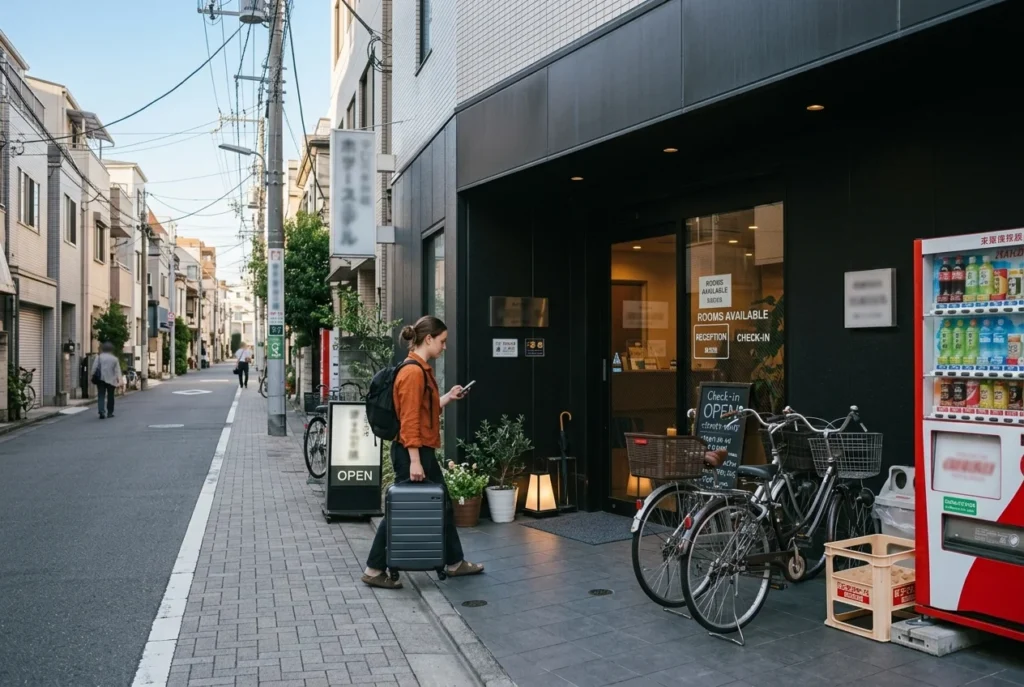
Accommodation can range from inexpensive hostels to very expensive ryokan and luxury hotels.
Useful planning ranges are:
| Accommodation | Typical Planning Range |
|---|---|
| Hostel / simple dorm | ¥4,000–¥7,000 |
| Basic private / business hotel | ¥9,500–¥19,000 |
| Mid-range hotel | Around ¥16,000–¥29,000+ |
| Ryokan | Often ¥24,000–¥60,000+ |
| Luxury hotel | Can be much higher |
Hotel prices can change dramatically depending on:
- city
- neighborhood
- season
- day of the week
- how early you book
Solo vs Couple Accommodation
This is where solo travelers can pay more per person.
If a room costs ¥16,000 per night:
- Solo traveler: ¥16,000 per person
- Couple sharing: ¥8,000 per person
Flights, meals, trains, and attractions usually remain per-person expenses, but hotel costs can often be shared.
That makes a couple’s per-person Japan budget different from a solo traveler’s budget.
Japan Travel Cost for Food
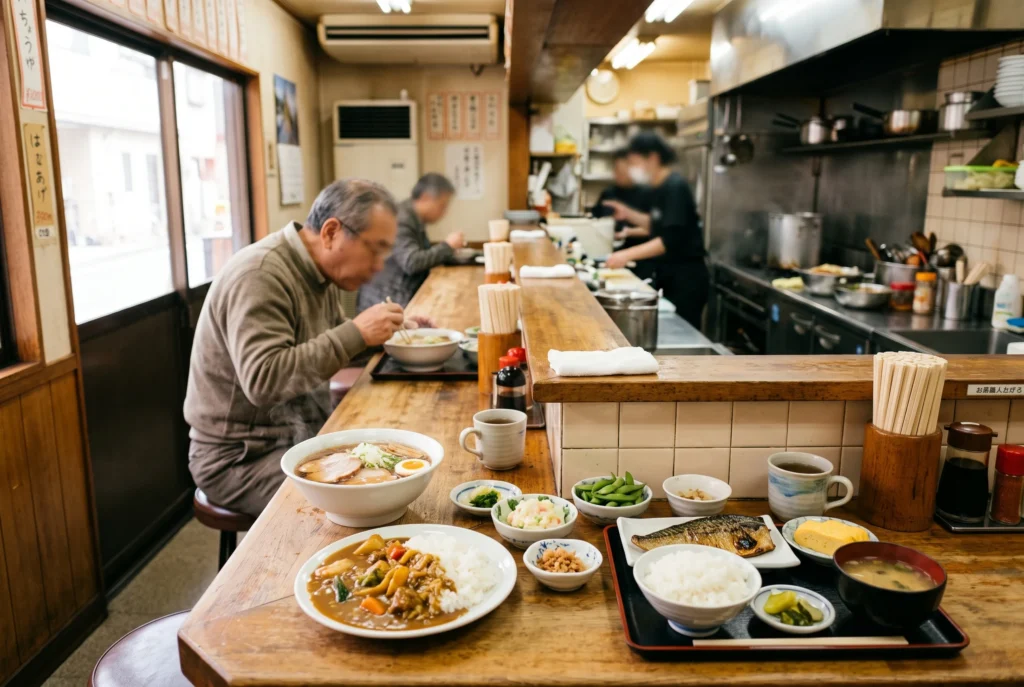
Food does not have to be one of the expensive parts of a Japan trip.
Useful meal-price ranges include:
- convenience-store meal: ¥650–¥1,000
- casual restaurant: ¥1,300–¥2,400
- mid-range meal: ¥3,200–¥6,400
A useful daily planning range is:
| Eating Style | Daily Food Budget |
|---|---|
| Budget | ¥3,000–¥5,000 |
| Budget Comfort | ¥5,000–¥8,000 |
| Mid-Range | ¥8,000–¥12,000 |
These are planning estimates rather than fixed national prices.
Budget-friendly choices can include:
- ramen
- curry
- rice bowls
- set meals
- casual sushi
- convenience-store meals
- supermarkets
The small extras still matter.
Coffee, vending-machine drinks, desserts, convenience-store snacks, and late-night food can quietly add thousands of yen over a two-week trip.
Japan Travel Cost For Transportation
Japan’s transportation costs need to be split into two categories:
Local transportation
and
Intercity transportation
They affect your budget very differently.
Local Transportation
Inside Tokyo, Kyoto, and Osaka, public transportation is usually much easier to budget than long-distance rail.
For example, the Tokyo Subway Ticket currently costs:
- ¥1,000 for 24 hours
- ¥1,500 for 48 hours
- ¥2,000 for 72 hours
You do not necessarily need a day pass every day. IC cards and individual fares may work better depending on your itinerary.
For budgeting, around ¥800–¥1,600 per day for normal local transport is a reasonable starting range for many sightseeing days.
Shinkansen and Intercity Transportation
Long-distance rail is where the numbers become much larger.
Current standard reserved-seat planning fares are roughly:
- Tokyo → Kyoto: ¥13,970
- Tokyo → Shin-Osaka: ¥14,520
- Kyoto → Shin-Osaka: ¥2,880
Fares can change slightly depending on season and ticket type.
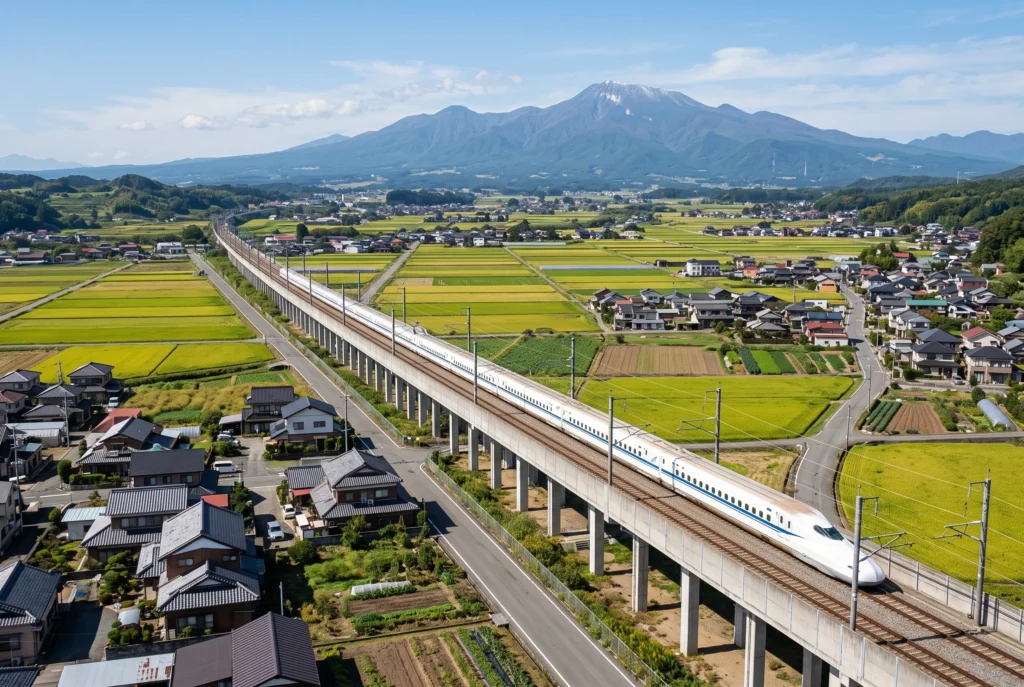
For a simple route such as:
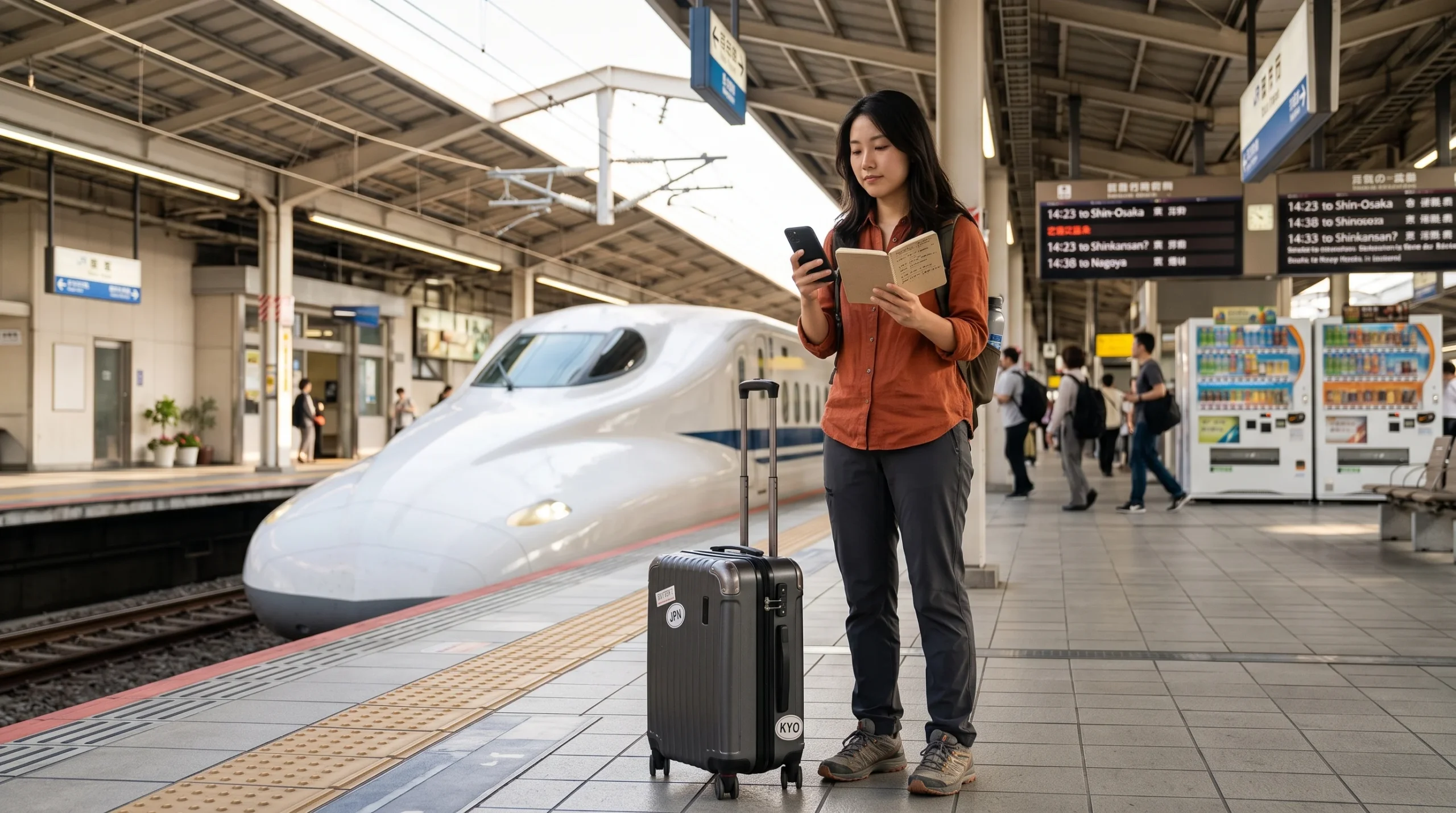
Tokyo → Kyoto → Osaka → Tokyo
the major intercity journeys can total roughly ¥31,000 before local transportation.
That is why intercity rail should be a separate budget line, not hidden inside a generic daily transport figure.
Is the JR Pass Worth It?
Do not automatically buy a Japan Rail Pass because an older travel guide says it will save money.
The current Ordinary Japan Rail Pass prices through the official web service are:
| Pass | Adult Price |
|---|---|
| 7 days | ¥50,000 |
| 14 days | ¥80,000 |
| 21 days | ¥100,000 |
Quick Verdict
For a simple Tokyo → Kyoto → Osaka → Tokyo itinerary, standard individual Shinkansen fares can total around ¥31,000, compared with ¥50,000 for the 7-day Ordinary national JR Pass. For this route alone, individual tickets can therefore be cheaper. Always price your actual itinerary before buying a rail pass.
Compare that with roughly ¥31,000 in standard fares for a simple:
Tokyo → Kyoto → Osaka → Tokyo
route.
For that itinerary alone, a 7-day national JR Pass would cost more than the main Shinkansen tickets.
That does not mean the pass is never worthwhile. It may make sense if your itinerary includes enough additional long-distance JR travel.
The better rule is:
Price your actual route before buying a rail pass.
Regional rail passes may also make more sense for some itineraries.
Another important detail: Japan Rail Pass holders need an additional special ticket to use certain Nozomi and Mizuho services.
So the JR Pass should be treated as a calculation, not an automatic travel essential.
Activities and Sightseeing Costs
Japan is useful for budget travelers because many experiences cost little or nothing.
You can explore:
- neighborhoods
- parks
- markets
- some shrines
- shopping districts
- public spaces
without buying an expensive ticket every day.
Paid attractions vary much more.
Useful planning examples include:
- temples and shrines: free to around ¥1,000
- digital-art attractions and museums: roughly ¥3,000–¥4,500
- major observation decks: around ¥2,000–¥4,000
- major theme parks: often roughly ¥8,500–¥11,000+ depending on date and ticket type
Theme-park upgrades and express passes can make the total much higher.
The best method is:
Daily sightseeing allowance + expensive experiences separately
rather than pretending every day has the same attraction cost.
Where Japan Is Expensive — and Where It Can Be Affordable
Japan is not uniformly expensive.
Costs That Can Pressure Your Budget
- U.S.–Japan airfare
- peak-season hotels
- Shinkansen travel
- premium ryokan
- theme parks
- fine dining
- shopping
Costs That Can Be Easier to Control
- casual Japanese meals
- convenience stores
- public transit
- hostels
- business hotels
- many parks and neighborhoods
- many temples and shrines
This is why “Japan is expensive” is not a very useful budgeting statement.
A traveler who stays in business hotels, eats mostly casual food, and plans their rail route carefully can have a completely different cost from someone booking central hotels, multiple Shinkansen rides, theme parks, premium meals, and heavy shopping.
Tokyo vs Kyoto vs Osaka: Which Costs More?
There is no perfect city ranking because hotel prices can change dramatically by neighborhood and date.
A useful planning view is:
| City | Main Budget Pressure |
|---|---|
| Tokyo | Central accommodation, attractions, shopping |
| Kyoto | Peak-season accommodation and hotel taxes |
| Osaka | Entertainment, dining, nightlife |
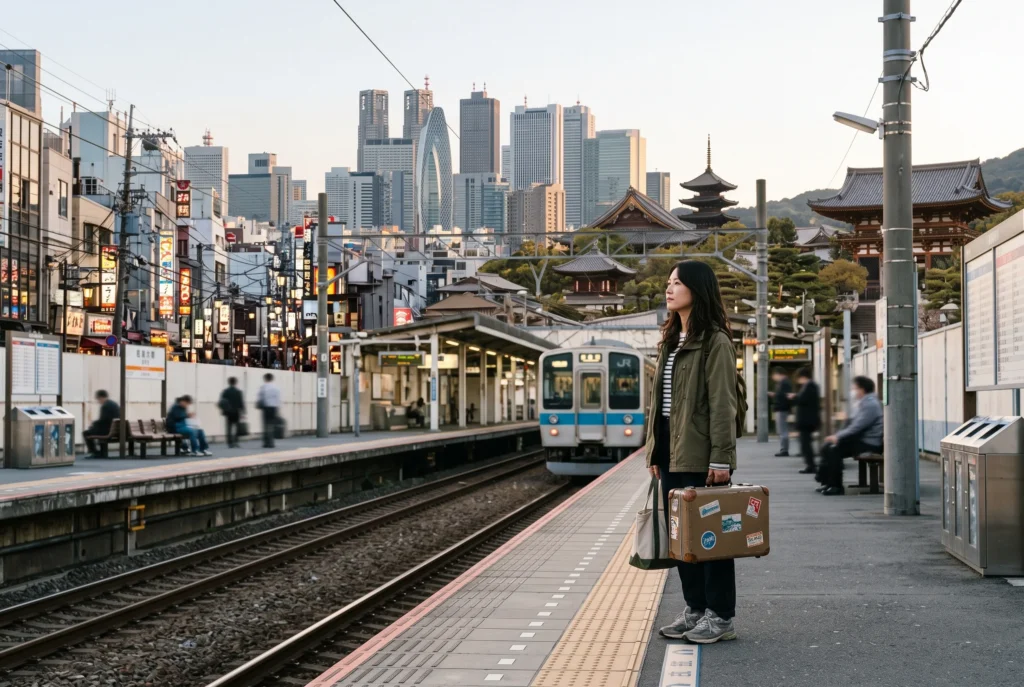
Tokyo
Tokyo offers accommodation at almost every level, but central and popular neighborhoods can be expensive.
Public transport is efficient and comparatively easy to control.
Kyoto
Kyoto deserves special attention because accommodation prices can rise during periods such as cherry blossom season and autumn foliage.
Kyoto also has an accommodation tax.
Since March 1, 2026, the city uses a tiered tax system. For example:
- under ¥6,000 per person per night → ¥200
- ¥6,000 to under ¥20,000 → ¥400
- ¥20,000 to under ¥50,000 → ¥1,000
Higher-priced accommodation can face considerably larger taxes.
This date should remain in the article because it identifies when the current tax system took effect.
Osaka
Osaka can offer good food and accommodation value, but nightlife, entertainment, Universal Studios Japan, and shopping can increase spending quickly.
How Much Does a 1-Week Trip to Japan Cost?
For a solo U.S. traveler, useful planning ranges are:
| Travel Style | Japan Ground Cost | Total With Typical U.S. Airfare |
|---|---|---|
| Budget | ¥100,000–¥150,000 | ~$1,400–$2,300 |
| Budget Comfort | ¥160,000–¥230,000 | ~$1,800–$2,800 |
| Mid-Range | ¥240,000–¥340,000 | ~$2,500–$3,500+ |
These are editorial planning ranges rather than fixed package prices.
For one week, avoid trying to cover too much of the country.
A route such as:
Tokyo + Kyoto
or
Tokyo + Kyoto + Osaka
is much easier to budget than constantly moving between distant cities.
The more long-distance trips you add, the less useful a simple daily budget becomes.
How Much Does a 2-Week Trip to Japan Cost?
For many first-time visitors, two weeks is where a proper category-by-category budget becomes much more useful than multiplying one daily number by 14.
For a solo U.S. traveler taking a typical multi-city trip such as Tokyo, Kyoto, and Osaka:
| Travel Style | 14-Day Ground Cost | Total With U.S. Airfare |
|---|---|---|
| Budget | ¥180,000–¥250,000 | ~$1,900–$3,000 |
| Budget Comfort | ¥280,000–¥400,000 | ~$2,600–$3,900 |
| Mid-Range | ¥420,000–¥600,000 | ~$3,600–$5,200+ |
The wide range exists because hotels, flights, food, activities, and transport choices differ significantly between travelers.
A Better Way to Build Your 2-Week Budget
Instead of starting with one daily number, calculate:
| Category | What to Estimate |
|---|---|
| U.S. airfare | Your actual flight dates |
| Accommodation | 14 nights |
| Food | Daily budget × 14 |
| Local transport | Daily city travel |
| Intercity rail | Each major route |
| Attractions | Planned paid experiences |
| Internet/data | One-time cost |
| Hotel/tourist taxes | Where applicable |
| Buffer | Separate |
| Shopping | Optional and separate |
This gives a far more realistic answer.
Example: Budget-Comfort Traveler
Imagine someone who wants:
- private business hotels
- local meals plus restaurants
- Tokyo, Kyoto, and Osaka
- Shinkansen between major cities
- normal sightseeing
- a few paid attractions
- no luxury hotels
That traveler should probably focus closer to the budget-comfort range than the lowest backpacker estimate.
That is why the question is not:
“What is the cheapest possible Japan trip?”
It is:
“What does the Japan trip I want actually cost?”
Japan Trip Cost for Solo Travelers vs Couples
Do not automatically double a solo budget to estimate a couple’s trip.
Some expenses are usually per person:
- airfare
- Shinkansen tickets
- local transport
- meals
- attraction tickets
Other expenses may be shared:
- hotel room
- some taxis
- some fixed travel costs
For example, a ¥20,000 hotel room costs:
- ¥20,000 per night for one solo traveler
- ¥10,000 per person when shared by two
This means a couple’s total trip will obviously cost more, but its per-person cost can be lower.
When Is Japan More Expensive to Visit?
Your travel dates can have a major effect on flights and accommodation.
Higher-demand periods commonly include:
- cherry blossom season
- Golden Week
- popular autumn foliage periods
- New Year
During these periods:
- flight prices may rise
- hotel availability may tighten
- accommodation rates can increase
- popular experiences may sell out earlier
That does not mean you should avoid them completely.
It means a traveler visiting Kyoto during peak blossom season should not expect the same accommodation budget as someone visiting during a quieter period.
Hidden Costs to Include in Your Japan Trip Budget
The biggest budget mistakes are often not the obvious expenses.
Hidden Japan Trip Costs to Remember
These expenses may look small individually, but several of them together can noticeably increase the final cost of a one- or two-week Japan trip.
Remember to consider:
- airport transfers
- accommodation taxes
- Japan departure tax
- checked baggage
- luggage storage
- luggage forwarding
- eSIM/mobile data
- ATM and card fees
- seat reservations
- theme-park upgrades
- cafés and snacks
- shopping
Japan Departure Tax
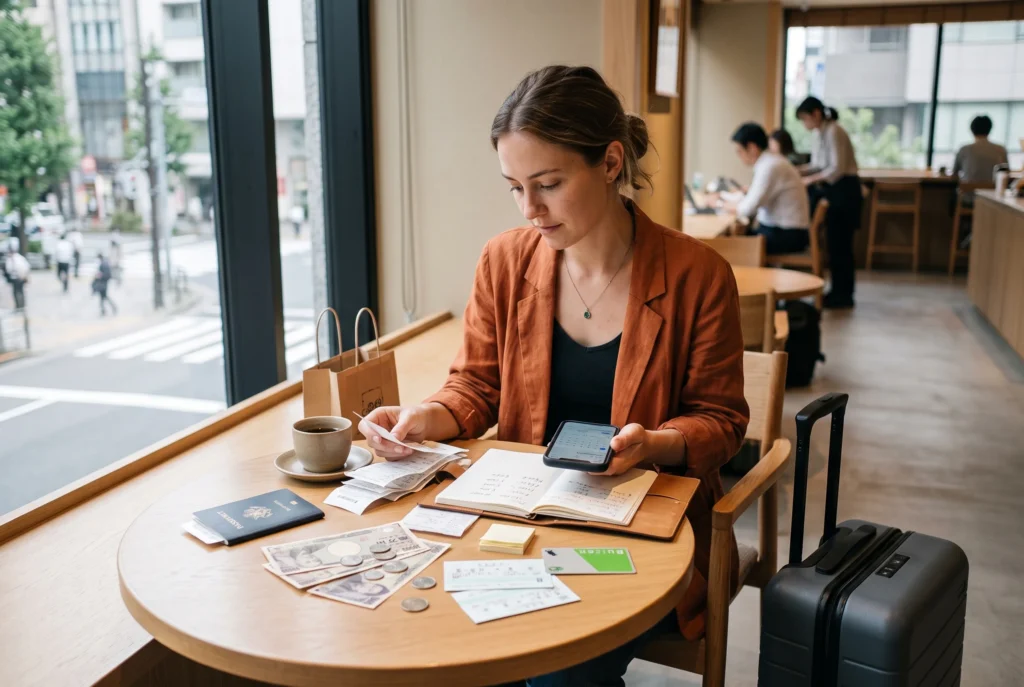
Japan’s International Tourist Tax increased to ¥3,000 per departure on July 1, 2026.
This date should remain because older articles may still show the previous ¥1,000 rate.
The tax is generally collected through the airline or other international carrier.
Tokyo Accommodation Tax
Tokyo currently charges:
- no tax below ¥10,000 per person per night
- ¥100 from ¥10,000 to under ¥15,000
- ¥200 at ¥15,000 or more
A new system is planned for 2027, so travelers should check current rules if reading this article later.
Visa Cost for U.S. Tourists
For ordinary short tourist visits, eligible U.S. passport holders are currently included in Japan’s visa-exemption arrangements.
Always check Japan’s Ministry of Foreign Affairs before travel because entry rules can change.
Shopping: Keep It Outside Your Core Japan Budget
Japan is an easy place to overspend on shopping.
Common temptations include:
- anime and character merchandise
- cosmetics
- electronics
- fashion
- stationery
- souvenirs
- Japanese snacks and gifts
There is nothing wrong with budgeting for shopping.
The mistake is including an undefined shopping allowance inside a “daily Japan cost” and then comparing that total with someone who bought nothing.
Keep two numbers:
Core Japan trip cost
and
Optional shopping budget
That makes your budget much easier to understand.
How Much Extra Money Should You Keep?
Do not plan your trip so tightly that every dollar is already committed.
Unexpected spending can come from:
- a higher hotel rate
- an unplanned attraction
- a taxi
- baggage
- changing train plans
- extra food
- an additional night
- medical needs
Even $10 more per day for 14 days adds $140.
Build your expected trip first, then keep a separate contingency amount instead of treating your planned total as your absolute spending limit.
How to Lower Your Japan Travel Cost
Choose Your Dates Carefully
If your dates are flexible, compare hotel and flight prices outside the busiest periods.
Use Business Hotels
For travelers who want privacy without luxury, Japanese business hotels can offer a useful middle ground between hostels and expensive international hotels.
Eat Local and Casual
You do not need to live on convenience-store food to save money.
Ramen shops, curry restaurants, set meals, and casual chains can keep food costs reasonable.
Check the JR Pass Before Buying
Calculate your major journeys individually first.
The national JR Pass is not automatically the cheapest option.
Build an Efficient Route
A Tokyo → Kyoto → Osaka itinerary is easier to budget than repeatedly crossing the country.
Consider Open-Jaw Flights
Entering through Tokyo and leaving through Osaka can sometimes remove a long return journey.
Separate Shopping
Set a separate shopping allowance before the trip.
Track Your Spending
If your daily target is ¥20,000 and you keep spending ¥30,000, adjust early rather than discovering the problem on your final days.
Japan Trip Cost FAQs
How much does a trip to Japan cost on average?
For a solo U.S. traveler, a useful planning range is roughly $1,400–$3,500+ for one week and $1,900–$5,200+ for two weeks, depending on airfare, accommodation, transport, activities, season, and travel style.
How much does a 2-week trip to Japan cost?
A budget two-week trip may cost around $1,900–$3,000 including U.S. airfare, while a budget-comfort trip may be closer to $2,600–$3,900.
A more flexible mid-range trip can reach roughly $3,600–$5,200 or more.
These are planning ranges rather than fixed package prices.
Is $5,000 enough for a trip to Japan?
For many travelers, yes.
A $5,000 per-person budget can support a comfortable one- or two-week trip if airfare, hotels, transport, activities, and shopping are managed sensibly.
Premium hotels, peak-season flights, theme parks, ryokan stays, and heavy shopping can push the total higher.
Is $100 a day enough in Japan?
It can be enough for day-to-day ground spending if you use affordable accommodation, casual meals, and public transport.
However, $100 per day should not automatically include international airfare or major Shinkansen journeys.
How much should I budget per day in Japan?
A useful starting point is around:
- ¥10,000–¥15,000 for budget travel
- ¥18,000–¥28,000 for budget-comfort travel
- ¥28,000–¥42,000 for mid-range travel
Add major intercity rail separately.
Is Japan expensive to visit?
Japan can be expensive in categories such as airfare, Shinkansen travel, peak-season accommodation, premium ryokan, theme parks, and shopping.
Everyday food, local public transport, and basic accommodation can be much easier to control.
How much does it cost to travel to Japan from the U.S.?
Airfare varies heavily based on your U.S. departure airport, season, airline, baggage, and booking timing.
Check live fares for your actual dates instead of relying on one national average.
Is the JR Pass worth it?
It depends on your route.
The current 7-day Ordinary Japan Rail Pass costs ¥50,000, while a simple Tokyo → Kyoto → Osaka → Tokyo itinerary can cost substantially less in individual standard Shinkansen tickets.
Calculate your actual journeys before buying.
Is Japan cheaper for couples than solo travelers?
The total cost is higher for two people, but the per-person cost can be lower because hotel rooms and some other expenses can be shared.
Sources and Methodology
This guide does not rely on one travel website.
Fixed facts such as:
- Japan Rail Pass prices
- Shinkansen fares
- Tokyo subway passes
- accommodation taxes
- Japan departure tax
- U.S. visa-exemption status
should be checked against official Japanese government or transport sources.
Dynamic expenses such as:
- hotels
- food
- flights
- activities
are better treated as ranges because prices change by date, city, availability, and travel style.
The daily, one-week, and two-week totals in this article are editorial planning ranges built from current cost benchmarks. They are not official Japanese government averages and should not be treated as guaranteed prices.
Airfare, hotels, exchange rates, and seasonal pricing can change quickly. Check live prices for your actual travel dates before booking.
Last fact-checked: August 27, 2026.
Final Thoughts
So, how much does a trip to Japan cost? The useful answer is not one daily number. Your real total depends on airfare, hotel level, season, how often you use the Shinkansen, which attractions you choose, and how much optional spending you add.
Start with your actual flight. Add every night of accommodation, a realistic food allowance, local transit, and each major intercity train journey. Then add your paid experiences, hidden costs, and a buffer. Keep shopping separate. Japan can be more affordable than its reputation suggests, but the best budget is the one built around your actual itinerary rather than somebody else’s cheapest possible trip.

WRITTEN BY
Maya Carter
Maya Carter is the pen name used by WanderClarity’s site owner. The site focuses on practical destination guides, trip budgeting, and affordable travel planning.