Planning a trip to Switzerland can feel financially intimidating before you even arrive. Hotels can be expensive, restaurant meals add up quickly, train tickets are confusing, and famous mountain excursions can cost far more than travelers expect. The biggest problem is that many budget guides tell you to “buy a rail pass†or “eat at supermarkets†without explaining whether the Swiss Travel Pass, Half Fare Card, Saver Day Pass, or individual tickets actually make sense for your itinerary—or what a realistic week in Switzerland will cost.
The good news is that Switzerland on a budget is possible without hitchhiking, Couchsurfing, or giving up the Alpine experiences you came for. The key is deciding where to save aggressively and where spending is actually worth it. This guide breaks down realistic daily costs, compares Switzerland’s main transport options, explains how to reduce accommodation and food expenses, shows how expensive mountain trips can affect your budget, and gives you a practical seven-day planning estimate.
Quick Takeaways
- Illustrative lean allowance: CHF135–180 per person per day.
- Illustrative comfortable allowance: CHF235–315 per person per day.
- Solo travelers wanting private rooms should budget more.
- Do not automatically buy the Swiss Travel Pass; compare it with the Half Fare Card and saver tickets first.
- The Swiss Half Fare Card currently costs CHF150.
- Mountain railways can be one of the biggest expenses, so choose paid peaks carefully.
- Supermarkets, guest cards, tap water, and free hiking can significantly reduce costs.
- International airfare is not included in these budgets.
The visitor Swiss Half Fare Card costs CHF150; SBB lists Saver Day Passes from CHF29 with a Half Fare Travelcard and CHF52 without one in 2nd class. Visitors with a Swiss Half Fare Card can also buy Saver Day Passes at a half or reduced price under the Swiss Half Fare Card terms. See SBB visitor-card terms and Saver Day Pass prices and conditions.
How Much Does Switzerland on a Budget Cost?
Switzerland is expensive, but the final cost depends heavily on how you travel.
A lean traveler might use hostels or split a budget private room, buy breakfast and some meals from supermarkets, use second-class public transport strategically, prioritize free hiking and scenery, and pay for only one or two premium mountain experiences.
A comfortable budget traveler might share a modest private room, eat some restaurant meals, travel more frequently by train, and include several paid attractions or mountain excursions.
| Travel Style | Illustrative Daily Ground Budget |
|---|---|
| Lean budget | CHF135–180 per person |
| Comfortable budget | CHF235–315 per person |
| BudgetYourTrip reported mid-range estimate | About CHF296 per person/day |
These are planning estimates, not guaranteed prices.
BudgetYourTrip reports traveler-reported estimates of about CHF123 per person per day for budget travelers and CHF296 for mid-range travelers, based on reported traveler expenses. These are not official Swiss averages. The daily ranges in this guide are separate illustrative planning allowances.
Switzerland Tourism publishes from-price references: a double room with breakfast from CHF120, coffee from CHF4, and a main course from CHF20. The double-room and main-course prices are marked low on the source page; all three are from-price references, not representative averages; prices vary by location and urban prices are often higher.
Accommodation and transportation will usually determine whether your trip stays near the lower or upper end of these ranges.
Swiss Travel Pass vs Half Fare Card for Switzerland on a Budget
This is one of the easiest places for a first-time visitor to overspend.
There is no universally cheapest Swiss transport product. The right option depends on how often you travel, whether you cross several regions, how many mountain excursions you plan, and how much flexibility you want.
Swiss Travel Pass
For adults aged 25 and over, current second-class Swiss Travel Pass prices are shown below. SBB lists these prices through December 31, 2026; check SBB current Swiss Travel Pass prices and conditions when booking.
| Duration | Price |
|---|---|
| 3 days | CHF254 |
| 4 days | CHF309 |
| 6 days | CHF399 |
| 8 days | CHF439 |
| 15 days | CHF499 |
There is no 7-day Swiss Travel Pass, which makes comparison particularly important for a one-week trip.
The Swiss Travel Pass is most attractive when you expect to travel frequently across several regions and value flexibility. It covers extensive train, bus, and boat travel, includes local transport in many towns and cities, provides free entry to more than 500 museums, and offers discounts on many mountain excursions.
Swiss Half Fare Card
The Swiss Half Fare Card for visitors costs CHF150 and is valid for one month. It is for visitors whose permanent residence is outside Switzerland and Liechtenstein; the discount applies to 1st and 2nd class. It can be purchased up to 11 months ahead online or at a staffed public-transport sales point. Carry a passport or official ID with the card when traveling. See SBB eligibility and product terms.
It gives reduced fares on eligible trains, buses, boats, local transport, and many mountain railways and gondolas. The discount can be less than exactly 50% for some tickets; check the fare for the specific service in SBB Half Fare Card terms.
This option can work particularly well if you have several expensive journeys or mountain excursions but not enough regular travel to justify the full Swiss Travel Pass.
Saver Day Pass
Saver Day Passes currently start at:
- CHF29 starting price in 2nd class with a Half Fare Travelcard
- CHF52 starting price in 2nd class without a Half Fare Travelcard
The listed starting prices are for 2nd class; SBB also lists 1st class from CHF49 with a Half Fare Travelcard and CHF88 without. Saver Day Passes are advance-purchase, quota-controlled offers available from one day up to six months ahead; availability and price vary. A pass is valid in the GA Travelcard area on the selected date until 5 a.m. the following day. Visitors with the Swiss Half Fare Card may buy Saver Day Passes at a half or reduced price under its terms. See SBB Saver Day Pass conditions and visitor Half Fare Card terms.
This can be useful when your itinerary contains only a few heavy travel days.
Supersaver Tickets
Supersaver Tickets offer discounts of up to 50% on selected routes and can be purchased up to six months ahead.
Unlike a standard flexible point-to-point ticket, a regular Supersaver Ticket is tied to the selected connection, and availability is limited.
They work best for travelers with a fairly fixed itinerary who can book early.
Best Transport Options for Switzerland on a Budget
| Transport Option | Current Price | Best For |
|---|---|---|
| Swiss Travel Pass | From CHF254 | Frequent multi-region travel |
| 8-Day Swiss Travel Pass | CHF439 | Heavy transport during a week-long trip |
| Swiss Half Fare Card | CHF150 / month | Multiple journeys + mountain excursions |
| Saver Day Pass | From CHF52 in 2nd class without Half Fare Travelcard | Selected high-travel days |
| Saver Day Pass + Half Fare Travelcard | From CHF29 in 2nd class with Half Fare Travelcard | Quota-limited price; visitor Half Fare Card terms differ |
| Supersaver Tickets | Up to 50% off | Fixed journeys booked early |
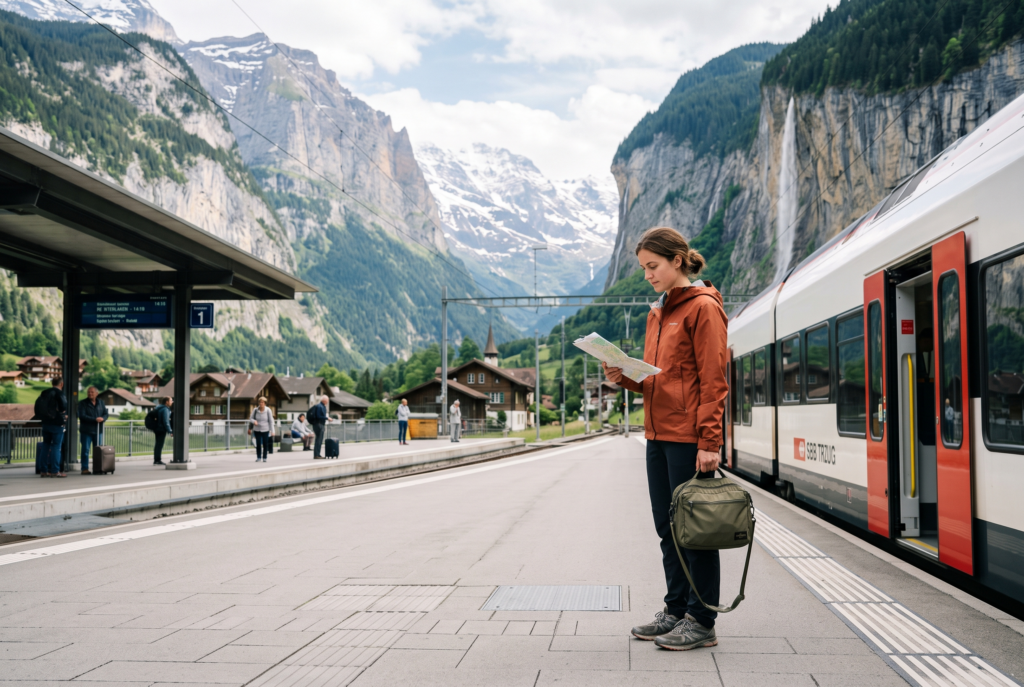
The best approach is to sketch your itinerary before buying anything.
Write down the journeys you realistically expect to take—for example:
Zurich → Lucerne → Interlaken → Zermatt → Zurich
Then compare the available tickets and pass options.
The most expensive pass is not automatically the best value simply because it is the most convenient.
How to Travel Switzerland on a Budget for Less
Book Long-Distance Travel Early
Switzerland’s standard public-transport system is highly flexible, but budget travelers with fixed plans should check Saver Day Passes and Supersaver Tickets before paying standard fares.
SBB makes saver products available months ahead, although the lowest prices depend on availability.
Stay Longer in Fewer Bases
Changing hotels constantly can increase both transportation costs and the temptation to book whatever accommodation or restaurant is most convenient.
Rather than rushing across five or six destinations in one week, consider using fewer bases and taking carefully chosen day trips.
Slower travel can reduce:
- train spending
- repeated hotel changes
- luggage storage
- rushed convenience meals
- time spent checking in and out
Check Your Guest Card Before Buying Local Transport
Some Swiss destinations provide overnight visitors with guest cards offering free local public transport, attraction discounts, or both.
Always ask your accommodation what is included before purchasing a separate local pass.
Where to Stay in Switzerland on a Budget
Accommodation is one of the biggest challenges for travelers trying to keep Switzerland affordable.
Switzerland Tourism lists a double room with breakfast from CHF120 (marked low); this is a low-end reference price, and prices can be substantially higher in cities and major tourist areas.
Use Hostels Strategically
Hostels can be especially useful for solo travelers because a private hotel room cannot be split between two people.
Do not judge a hostel only by the cheapest advertised dorm bed. Also consider:
- public-transport connections
- kitchen access
- breakfast inclusion
- luggage storage
- realistic distance from attractions
Paying slightly more for a practical location can reduce transportation and food costs.
Stay Outside the Most Famous Center
You often pay a premium for being directly inside Switzerland’s most famous tourist areas.
A nearby town may offer better accommodation value while remaining connected by public transport.
But calculate the trade-off first.
A room that saves CHF25 per night is not a bargain if reaching the attractions you want adds CHF30 per day in transportation.
Look for Kitchen Access
A kitchen can make a large difference without forcing you to cook every dinner.
Preparing breakfast, coffee, sandwiches, snacks, and occasional simple meals can leave more money for experiences.
This strategy is particularly useful for couples and families.
Compare the Final Price
Before booking, check:
- tourist or city taxes
- breakfast
- cancellation terms
- transport from the station
- kitchen access
- cleaning or booking charges
Compare the total stay rather than only the first nightly price displayed.
How to Eat in Switzerland on a Budget
Restaurant meals are one of the fastest ways to push your daily spending upward.
Switzerland Tourism lists a main course from CHF20 (marked low); this is a low-end reference, while many restaurant dishes cost considerably more.
A practical strategy is to combine supermarkets and casual food with a few restaurant meals you genuinely want.
Use Coop and Migros
Swiss supermarkets are extremely useful for budget travelers.
You can find sandwiches, salads, bread, cheese, yogurt, fruit, snacks, and ready-made meals for less than a full sit-down restaurant meal.
Switzerland Tourism itself recommends supermarkets, snack bars, and similar casual options for travelers looking to reduce food spending.
Look for Lunch Specials
If you want a restaurant experience, lunch can provide better value than dinner.
Many restaurants offer a daily menu, so check lunch options before automatically saving your restaurant meal for the evening.
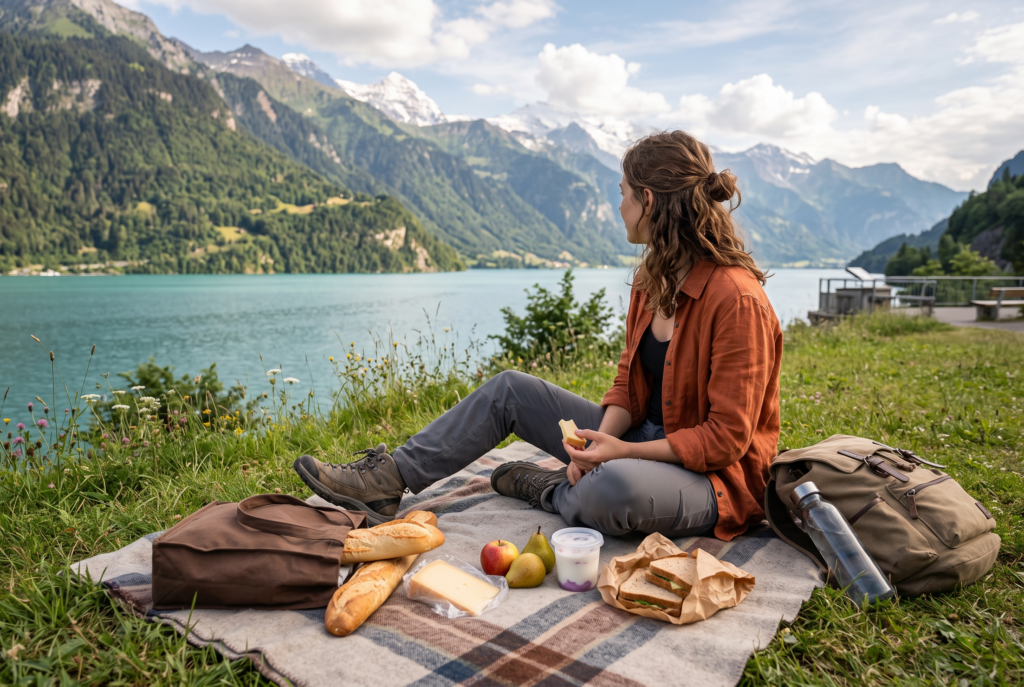
Picnic With a View
Switzerland is particularly well suited to inexpensive picnic meals.
Bread, cheese, fruit, and other supermarket food beside a lake or mountain viewpoint can provide a memorable experience without restaurant prices.
Drink Tap Water
Swiss tap water meets very high quality standards and can be safely consumed. Carrying a reusable bottle is an easy way to avoid repeatedly buying bottled water.
Mountain Costs to Plan for in Switzerland on a Budget
One of the biggest mistakes in a Switzerland travel budget is focusing heavily on saving CHF5–10 on everyday expenses while failing to account for mountain railways and cable cars.
Some mountain experiences are free once you reach the trail.
Others are major paid attractions.
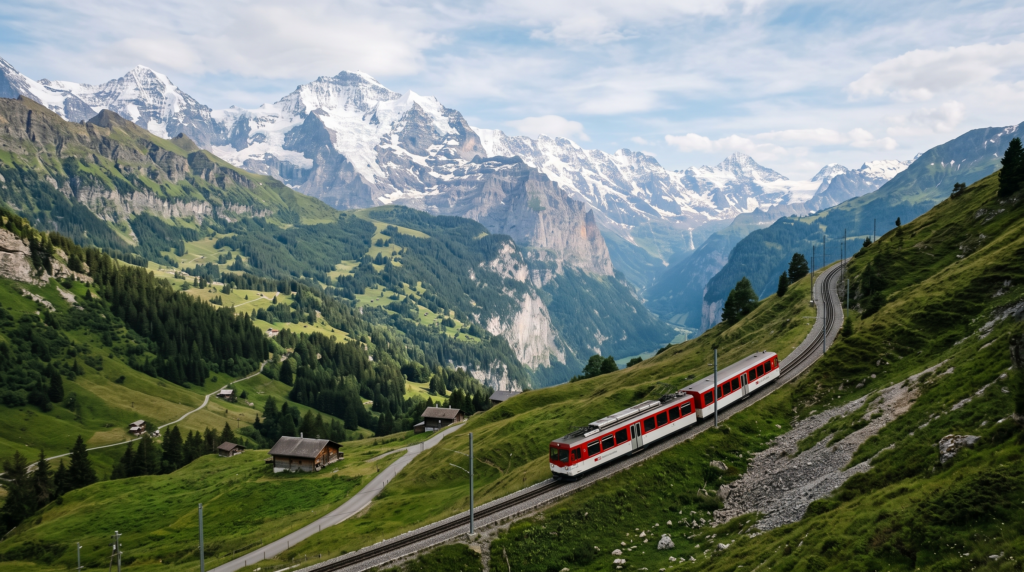
Mount Pilatus
For 2026, Pilatus lists CHF84 adult return fares for Kriens–Pilatus Kulm–Kriens, Kriens–Pilatus Kulm–Alpnachstad, Alpnachstad–Pilatus Kulm–Kriens, and Alpnachstad–Pilatus Kulm–Alpnachstad when those routes operate. The Alpnachstad cogwheel railway runs May 11–November 29; the Kriens gondolas and aerial cableway have a maintenance closure October 19–November 27. Check the 2026 Pilatus timetable and rate sheet for operating dates.
The CHF42 reduced return fare is listed for holders of a Half Fare Travelcard; eligible visitor-card discounts are subject to the Swiss Half Fare Card terms. The linked 2026 Pilatus rate sheet lists route-specific fares and operating dates; check the SBB visitor-card terms before relying on the reduced fare.
Gornergrat
The operator currently advertises tickets from CHF66; this starting fare should not be read as a guaranteed full Zermatt return fare. Holders of a Half Fare Card, GA, or Swiss Travel Pass receive a 50% discount on the ticket price. Compare the Gornergrat route and ticket options, since fares depend on the selected route and ticket.
Jungfraujoch
Jungfraujoch fares depend on the selected route, travel date, and discount eligibility. Check the official Jungfraujoch ticket page for the fare that applies to your itinerary before budgeting.
This is why one universal claim such as “Switzerland costs CHF150 per day†can be misleading.
One premium mountain excursion can consume a large portion of a lean daily budget.
Choose One or Two Paid Peaks
You do not need to buy tickets for every famous mountain.
If Jungfraujoch is the experience you care about most, budget for it deliberately.
Then balance that expense with free hikes, lake walks, old towns, scenic viewpoints, and lower-cost days.
The goal is to protect the experiences that matter rather than cutting every category equally.
Free Things to Do in Switzerland on a Budget
Switzerland’s strongest budget advantage is that much of its appeal is outdoors.
Travelers can enjoy hiking, lakefront walks, historic old towns, mountain villages, viewpoints, riverside paths, architecture, and parks without paying for a major attraction every day.
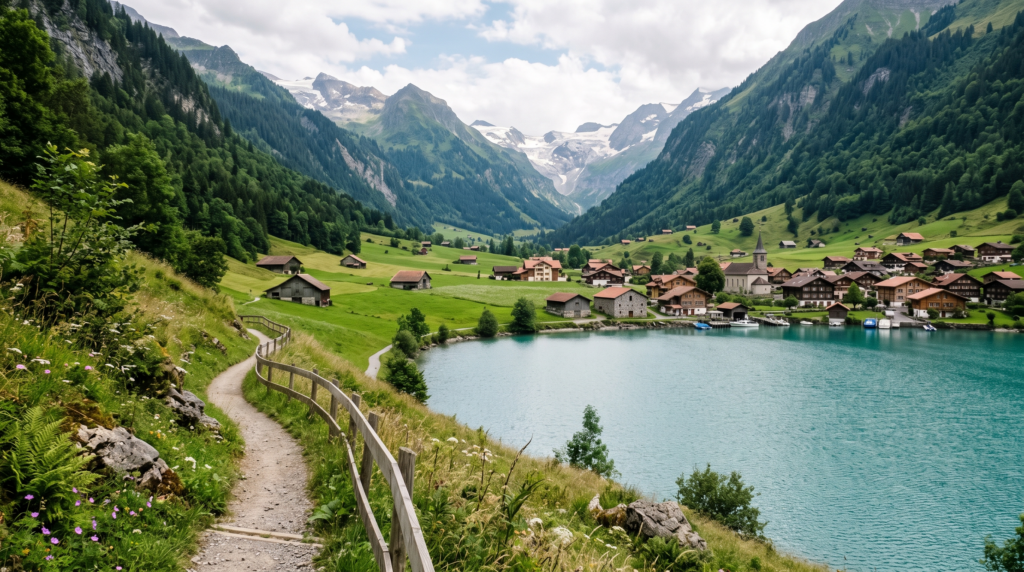
The important distinction is between:
the mountain itself
and
the expensive railway or cable car used to reach a particular summit.
A day of hiking from an accessible village can cost very little. A premium mountain railway can cost many times more.
Paid mountain experiences can still be worthwhile. The point is to choose them deliberately instead of assuming you need several.
Use Guest Cards Before Buying More Transport
Guest cards are one of the most useful Switzerland budget tools because some destinations provide benefits to overnight visitors.
Lucerne
Eligible overnight guests staying in Lucerne or Kriens can use buses and trains in Zone 10 free of charge. Boats are not included in that free local-transport benefit.
Interlaken
The Interlaken Guest Card provides free public transport within its defined validity area. Boat trips are not free, although discounts are available.
Basel
The BaselCard is provided to overnight guests and includes free local public transport plus 25% discounts on many museums and attractions.
Guest-card benefits vary, so do not assume every destination provides the same inclusions.
Before buying another local pass, ask your accommodation:
Does my stay include a guest card?
Best Time to Visit Switzerland on a Budget
There is no permanently cheapest month.
Accommodation prices, tourist demand, mountain operations, weather, school holidays, and events all affect the final cost.
Peak summer, major winter holidays, and popular ski periods can create more expensive conditions in many destinations. Shoulder periods can sometimes provide better accommodation value, but the cheapest dates are not necessarily the best dates for every itinerary.
This matters particularly for mountain travel because lifts, hiking routes, and seasonal transport may not operate identically throughout the year.
Before choosing a cheaper date, check whether the experiences you want will actually be available.
Illustrative 7-Day Switzerland Ground-Budget Scenario
This hypothetical scenario shows cost per person for 7 days and 7 nights, with two adults sharing one room equally. International airfare is excluded. These are editorial assumptions for an illustration, not original trip facts or verified market quotes.
Accommodation: The CHF420 lean amount is one traveler share of the CHF120-per-night low-end double-room from-price for 7 nights; Switzerland Tourism says breakfast is included. CHF770 comfortable is a hypothetical per-person share of a room for 7 nights, with no breakfast assumed. Food: CHF245 lean covers 7 days of lunch, dinner, snacks, and nonalcoholic drinks because the cited lean room includes breakfast; CHF420 comfortable covers meals, snacks, and drinks including breakfast. Transport: CHF250 lean is an illustrative allowance for local and intercity public transport; CHF439 comfortable is the listed price for one adult 25+ second-class 8-day Swiss Travel Pass per person, usable for this 7-day scenario. Activities: CHF110 and CHF250 are illustrative per-person allowances for tickets or admission to selected paid attractions or mountain experiences; transport not covered by the pass is not included. The former Miscellaneous / Local Charges row is removed because its included costs could not be established. Tax and fee treatment is not specified in the sourced room or fare figures and no allowance row covers mandatory charges. Do not treat any illustrative allowance as a tax- or fee-inclusive quote; add charges not already included in actual checkout amounts. Check the full accommodation total and mandatory fees before booking. All amounts without the cited room or pass source are hypothetical allowances, not market quotes.
| Expense | Lean Example (per person) | Comfortable Example (per person) |
|---|---|---|
| Accommodation | CHF420 | CHF770 |
| Food | CHF245 | CHF420 |
| Transport | CHF250 | CHF439 |
| Activities / Mountain Trips | CHF110 | CHF250 |
| 7-Day Ground Total per person | CHF1,025 | CHF1,879 |
| Daily equivalent per person | CHF146.43 | CHF268.43 |
| International airfare | Excluded; add separately | Excluded; add separately |
Hypothetical per-person result: Lean: CHF1,025 for 7 days (CHF146.43/day). Comfortable: CHF1,879 for 7 days (CHF268.43/day). These totals fall within the separate illustrative ranges below; they are not verified market quotes.
The lean room input is calculated as CHF120 per double room per night x 7 nights / 2 adults = CHF420 per person. The Switzerland Tourism low-end from-price reference states that breakfast is included but does not state how taxes or mandatory charges are treated; those charges are excluded from this example and must be checked in the actual booking total. CHF770 for comfortable accommodation is an illustrative allowance, not a sourced room quote.
The CHF439 transport input is the listed adult age 25+ second-class 8-day Swiss Travel Pass price per person, usable for a 7-day trip and valid through December 31, 2026; confirm the price and age category in SBB prices and conditions. The CHF250 lean transport amount is an illustrative allowance, not a quoted fare.
The following are separate illustrative weekly planning ranges, not market quotes:
Illustrative lean 7-day ground range: approximately CHF950-1,260 per person.
Illustrative comfortable 7-day ground range: approximately CHF1,650-2,200 per person.
Dividing the weekly ranges by seven gives about CHF135.71-180.00 and CHF235.71-314.29 per person per day (approximately CHF136-180 and CHF236-314).
Solo travelers choosing private rooms should generally budget more per person.
Where to Save and Where to Spend
Switzerland is not a destination where choosing the cheapest possible option every time necessarily produces the best trip.
| Save On | Worth Spending On |
|---|---|
| Restaurant breakfast every morning | One memorable Swiss meal |
| Full-price last-minute train fares | Transport option that fits your itinerary |
| Premium room location | Practical accommodation with good connections |
| Several expensive mountain peaks | One high-priority mountain experience |
| Bottled water and convenience snacks | A unique local experience |
| Moving hotels every night | More time in fewer bases |
The goal is not to make Switzerland artificially cheap.
It is to stop unnecessary costs from consuming the money you want to spend on the Alps, lakes, trains, and experiences that made you choose Switzerland.
Can You Visit Switzerland Without a Swiss Travel Pass?
Yes.
The Swiss Travel Pass is convenient, but it is neither mandatory nor automatically the cheapest option.
A traveler spending most of a week in one region may do better with some combination of:
- Swiss Half Fare Card
- Saver Day Passes
- Supersaver Tickets
- guest-card benefits
- ordinary point-to-point tickets
A traveler crossing Switzerland almost every day may find the Swiss Travel Pass more useful.
For a seven-day trip, the fact that there is no 7-day Swiss Travel Pass makes itinerary-based comparison especially important.
Calculate your expected journeys before buying the most famous pass by default.
Switzerland on a Budget FAQs
Is Switzerland expensive to visit?
Yes. Accommodation, restaurant meals, transportation, and mountain excursions can all be expensive compared with many European destinations. However, careful transport planning, supermarkets, guest cards, shared accommodation, and free outdoor experiences can make the trip considerably more manageable.
How much money do you need per day in Switzerland?
A practical lean planning range is around CHF135–180 per person per day. A more comfortable budget is approximately CHF235–315 per person per day, with accommodation, transportation, and mountain excursions creating the biggest differences.
Can You Visit Switzerland on a Budget for CHF100 a Day?
Experienced backpackers may occasionally achieve this using dorm accommodation, supermarket meals, limited transport, and mostly free activities. However, CHF100 per day is too restrictive as a general first-time planning budget, particularly if you want intercity trains and paid mountain experiences.
Is the Swiss Travel Pass Worth It for Switzerland on a Budget?
It can be worthwhile for travelers taking frequent trains, buses, and boats across several regions and who value flexibility. For slower or more fixed itineraries, a Half Fare Card, Saver Day Passes, Supersaver Tickets, or ordinary tickets may cost less.
Swiss Travel Pass or Half Fare Card: which is better?
The Swiss Travel Pass prioritizes convenient, frequent travel. The Swiss Half Fare Card can work particularly well when you want discounted individual journeys and mountain tickets. The better option depends on the trips you actually plan to take.
Is the Swiss Travel Pass Worth It for Switzerland on a Budget?
A lean seven-day ground budget is approximately CHF950–1,260 per person, while a comfortable budget is roughly CHF1,650–2,200 per person, excluding international airfare.
What Is the Cheapest Way to Travel Around Switzerland on a Budget?
There is no single cheapest method for every itinerary. Depending on how frequently and how far you travel, Saver Day Passes, Supersaver Tickets, a Half Fare Card, local guest cards, or a Swiss Travel Pass may provide the best value.
Are Swiss Trains Expensive When Visiting Switzerland on a Budget?
Standard fares can add up quickly when you take several long-distance journeys. Booking saver products early or choosing the right discount product can materially reduce transportation costs.
How Can Families Visit Switzerland on a Budget?
Parents buying a Swiss Travel Pass, Swiss Travel Pass Flex, or Swiss Half Fare Card can receive the Swiss Family Card free of charge for their own children aged 6 to under 16. When traveling with the parent under the qualifying conditions, those children can travel free on a large part of Switzerland’s public-transport network. Children under 6 travel free.
Final Thoughts: Is Switzerland on a Budget Really Possible?
Switzerland can become expensive very quickly if you book premium hotels in the most famous destinations, eat every meal in restaurants, buy full-price train tickets without comparing alternatives, change cities constantly, and pay for several mountain railways without checking discounts. The confusing part is that the biggest costs are not always obvious: saving CHF10 on lunch matters far less if you choose the wrong transport strategy or add several expensive mountain experiences you never included in your original budget.
But traveling Switzerland on a budget does not mean skipping the Alps, eating supermarket sandwiches for every meal, or turning the trip into an exercise in deprivation. Build your itinerary first, choose the transport option that genuinely fits it, stay in practical rather than premium locations, mix inexpensive meals with restaurants, use free hikes and guest-card benefits, and choose the paid mountain experiences you care about most. Save aggressively on expenses that add little to your trip so you have more room in your budget for the Swiss experiences you will actually remember.
Selected Switzerland price claims checked October 21, 2026: BudgetYourTrip traveler-reported ranges, Switzerland Tourism from-price references, SBB visitor-pass products, Pilatus 2026 fares, and Gornergrat ticket terms. The Jungfraujoch operator page displays a starting fare but does not identify its fare category here; no Jungfraujoch ticket amount is stated in this article. Check the fare for the selected route, date, and discount eligibility on the official ticket page. A CHF10 seat reservation is mandatory from May 1 through October 31, 2026; see the operator prices and tickets information. The composition and traveler basis of the illustrative budget allowances remain unverified; in particular, the article does not establish whether the non-room amounts and table total apply per traveler or to the two-person party.

WRITTEN BY
Maya Carter
Maya Carter is the pen name used by WanderClarity’s site owner. The site focuses on practical destination guides, trip budgeting, and affordable travel planning.