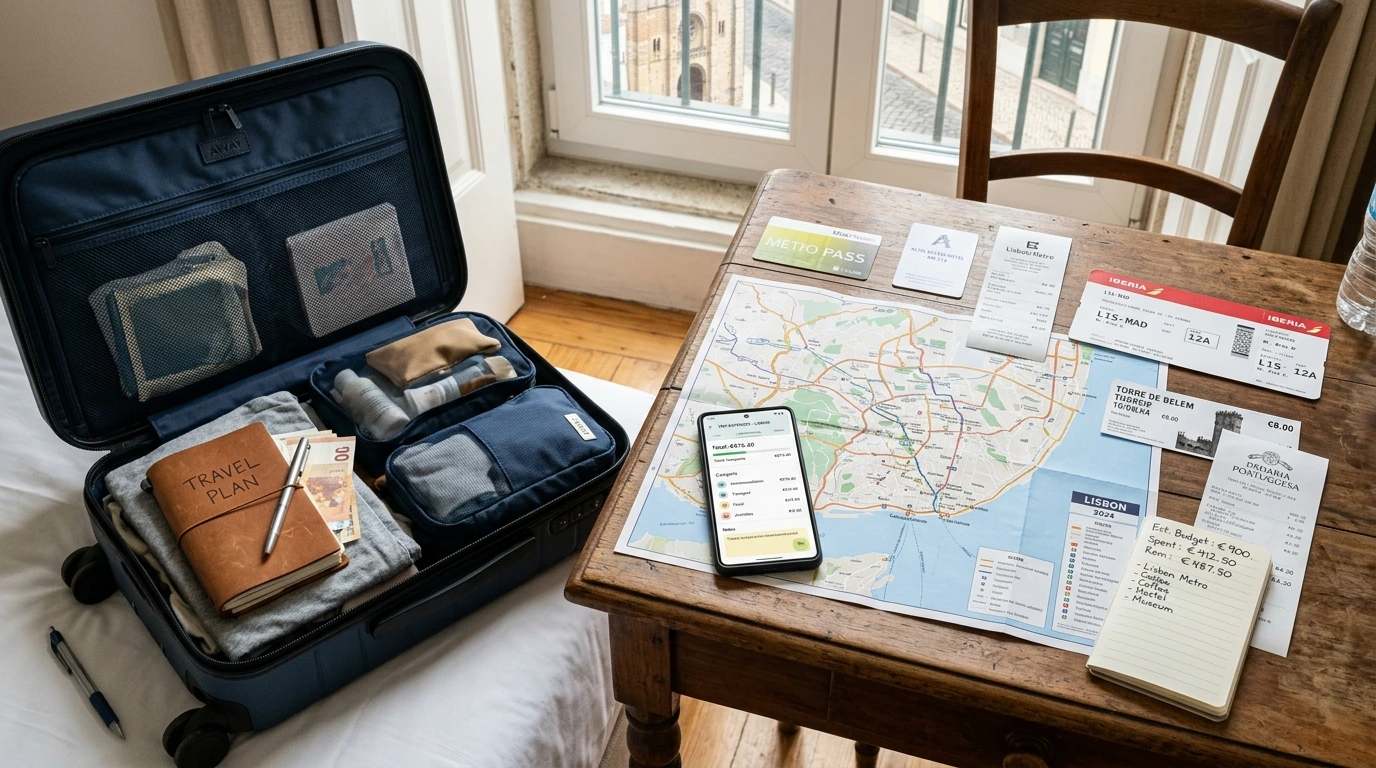
Learning how to create a travel budget can feel simple until the smaller costs start to add up. You estimate the flight and hotel, decide the trip looks affordable, and start planning. Then baggage fees, airport transfers, meals, local transport, attraction tickets, tips, and everyday purchases appear. These costs may seem small individually, but together they can push total spending above the plan.
To budget for travel effectively, start with the trip you will actually take: research realistic costs, separate fixed expenses from daily spending, leave room for costs you cannot predict perfectly, and replace estimates with real booking prices as you book. In this guide, you will learn how to create a travel budget that shows what your trip may really cost, how much you can spend each day, whether the trip fits your available money, and how to keep the budget useful after you start booking.
- Build your budget around the trip you will actually take.
- Research real prices instead of relying only on averages.
- Separate fixed costs from daily travel expenses.
- Include pre-trip costs, hidden fees, and emergency money.
- Compare your estimated trip cost with the money you actually have.
- Replace estimates with confirmed and actual costs as your trip progresses.
Quick answer: To create a travel budget, define your destination, trip length, number of travelers, and travel style. Research realistic prices, list every expense category, separate fixed and daily costs, add forgotten expenses and an emergency buffer, calculate the total, compare it with your available funds, and update the numbers as you book and spend.
What Is a Travel Budget?
A travel budget is an estimate of how much money you expect to spend before and during a trip.
It should cover more than flights and accommodation. A useful budget also includes food, local transportation, activities, insurance, travel documents, fees, personal spending, and money for unexpected costs.
The purpose is not to predict every dollar perfectly.
Instead, a good travel budget should answer three questions:
How much is this trip likely to cost?
Can I comfortably afford it?
How much can I spend while I am there?
If your budget can answer those questions, it is doing its job.
How to Create a Travel Budget Before Booking Anything
Creating your budget before making major bookings gives you more control.
A cheap flight may make a destination look affordable. However, expensive accommodation, airport transfers, meals, and attractions can change the total quickly.
A travel budget lets you test the trip before committing to it.
If your first estimate is too high, you still have options. You can change your dates, shorten the trip, choose different accommodation, reduce optional activities, or compare another destination.
It is much easier to adjust a budget before you have paid for non-refundable bookings.
Step 1: Define Your Trip Style Before Calculating Costs
Start by describing the trip you actually want to take.
Do not create a hostel-level budget if you know you prefer private hotel rooms. Do not assume you will cook every meal if trying local restaurants is an important part of your trip.
Start with the basic details:
| Trip Detail | Example |
|---|---|
| Destination | Italy |
| Travelers | 2 |
| Trip length | 7 nights |
| Accommodation | Private room |
| Food style | Casual meals + some restaurants |
| Transportation | Mostly public transit |
| Activities | Several paid attractions |
| Travel style | Budget-conscious but comfortable |
These choices affect almost every number that comes later.
Research the Trip You Will Actually Take
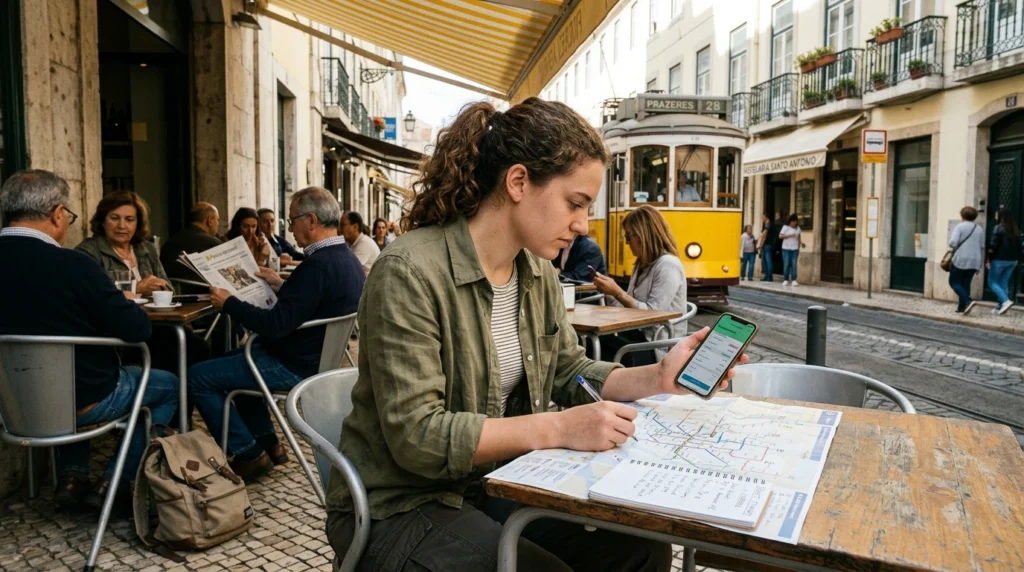
Avoid building your budget from random averages alone.
Check prices that match your destination, dates, and travel style.
For flights, search dates you could realistically travel. For accommodation, look at the final price for the type of room you would actually choose. Check restaurant menus, official transit fares, and attraction prices where possible.
You do not need perfect information.
You need estimates that are realistic enough to make a good decision.
This is an important part of learning how to create a travel budget that you can actually follow.
Step 2: List Every Major Expense Category
Now divide your trip into clear cost categories.
| Budget Category | What to Include |
|---|---|
| Main transportation | Flights, trains, gas, long-distance buses |
| Accommodation | Room price, taxes, cleaning or resort fees |
| Food | Meals, coffee, snacks, groceries |
| Local transport | Metro, buses, taxis, rideshares |
| Activities | Tours, museums, tickets, attractions |
| Documents | Passport, visa, permits |
| Insurance | Travel or travel medical insurance |
| Connectivity | SIM, eSIM, roaming |
| Personal spending | Shopping, souvenirs |
| Pre-trip costs | Gear, parking, pet care |
| Extra fees | Baggage, ATM fees, tips |
| Emergency buffer | Unexpected expenses |
Listing the categories before calculating them reduces the risk of forgetting costs that appear later.
Pre-Trip Costs vs During-Trip Costs
Some travel expenses happen before you leave home.
Others happen during the trip.
| Before the Trip | During the Trip |
|---|---|
| Passport or visa costs | Meals |
| Insurance | Local transportation |
| Luggage or travel gear | Activities |
| Airport parking | Shopping |
| Pet or house care | Tips |
| Pre-booked tours | Laundry |
Separating the two helps you understand how much money you need before departure and how much should remain available during the trip.
Separate Shared Costs From Per-Person Costs
If you are traveling with a partner, family, or group, not every expense should simply be multiplied by the number of travelers.
| Often Shared | Usually Per Person |
|---|---|
| Hotel room | Flight |
| Rental car | Attraction ticket |
| Parking | Food |
| Fuel | Insurance |
For example, a $180 hotel room for two people is usually a shared $180 cost, not $180 for each traveler.
Flights, tickets, meals, and insurance are more often charged per person.
Step 3: Separate Fixed Costs From Daily Costs
Next, divide expenses into fixed costs and daily costs.
Fixed Travel Costs
Fixed costs are usually known before the trip or do not change much from day to day.
They can include:
- Flights
- Accommodation
- Insurance
- Visas
- Pre-booked activities
Knowing these costs shows you how much of your total budget remains for flexible spending.
Daily Travel Costs
Daily expenses happen throughout the trip.
They can include:
- Food
- Local transportation
- Coffee and snacks
- Flexible activities
- Personal spending
These costs will not be identical every day.
That is normal.
A realistic travel budget should allow some days to cost more than others.
Step 4: How to Create a Travel Budget With a Simple Formula
One simple formula can turn your estimates into a total.
Suppose you estimate:
Fixed costs: $1,300
Daily costs: $120
Trip length: 7 days
Trip-specific extras: $160
Emergency buffer: $200
Your estimate becomes:
$1,300 + ($120 × 7) + $160 + $200 = $2,500
Your estimated trip cost is $2,500.
This gives you a clear number to compare with the money you actually have available.
Step 5: Estimate Your Transportation Costs
Start with the main transportation needed to reach your destination.
This may include flights, trains, buses, gas, rental vehicles, or a combination of them.
Do not record only the first advertised price.
Include related costs when they apply, such as:
- Baggage
- Seat selection
- Airport parking
- Airport transfers
- Connections between stations or airports
For example:
Flight: $420
Checked bag: $60
Airport train: $25
Your realistic transportation estimate is:
$505
not $420.

When learning how to create a travel budget, always compare the amount you are likely to pay rather than only the headline price.
Step 6: Estimate Accommodation Costs Correctly
Accommodation is another category where the first price you see may not be the final amount.
Check:
- Room rate
- Taxes
- Cleaning fees
- Resort fees
- Parking
- Breakfast
- Location
Location matters because a cheaper room far from the places you want to visit may increase transportation costs.
Use the final checkout price when possible.
If you estimated $600 for accommodation but the room you actually want costs $685 after taxes and fees, your budget should eventually show $685.
Step 7: Estimate Food Costs Based on Real Eating Habits
Food budgets often fail because people plan around the cheapest version of themselves.
Think about how you actually eat while traveling.
Will you:
- Buy breakfast at a café?
- Eat restaurant dinners?
- Buy coffee every morning?
- Try local food?
- Cook some meals?
Your food budget should reflect those habits.
For example:
Breakfast: $10
Lunch: $15
Dinner: $25
Coffee and snacks: $10
Estimated daily food spending:
$60
You may spend $45 one day and $75 the next.
The average matters more than matching the number perfectly each day.
Step 8: Include Local Transport and Airport Transfers
Do not stop your transportation budget at the flight.
Think about how you will move after arriving.
Include expenses such as:
- Airport train or taxi
- Metro passes
- Local buses
- Rideshares
- Rental vehicles
- Parking
- Fuel
- Tolls
Airport transfers deserve special attention because arrival and departure days can have different transportation costs from normal sightseeing days.
Research the options available at your destination before deciding on an amount.
Step 9: Budget for Activities Before You Arrive
List the main experiences you expect to pay for.
These may include:
- Museums
- Tours
- Attractions
- Day trips
- Events
- Special activities
Separate them into must-do activities and optional activities.
This helps if the total budget becomes too high.
You may prefer to protect one experience you really care about while reducing less important spending elsewhere.
That is more realistic than removing every paid activity.
Step 10: Add Documents, Insurance, and Health Costs
International trips can include costs that do not feel like part of the vacation but still belong in your budget.
Depending on the destination and traveler, these may include:
- Passport-related costs
- Visas
- Electronic travel authorizations
- Travel insurance
- Travel medical insurance
- Required health documents
- Other entry-related expenses
For U.S. international travelers, official State Department destination guidance can help you check current entry, visa, passport-validity, and health requirements.
Insurance policies also differ, so check the specific policy’s coverage, limits, and exclusions before including it in your plan.
Add the Costs Everyone Forgets
Small costs can create surprisingly large differences between your estimate and your actual spending.
Common forgotten expenses can include:
- Baggage fees
- Seat selection
- Airport transfers
- Hotel taxes
- Resort fees
- Tourist taxes
- ATM charges
- Foreign transaction fees
- SIM or eSIM costs
- Tips
- Laundry
- Luggage storage
- Parking
- Tolls
- Deposits
Not every cost will apply to every trip.
Check which ones are relevant to yours.
You can also create a small miscellaneous category for costs that are difficult to estimate in advance.
Add a Real Emergency Buffer
Do not plan to spend every dollar available for the trip.
Keep some money aside for unexpected expenses.
The amount depends on factors such as your destination, trip length, transportation, health needs, insurance, and how much of the trip is already prepaid.
The purpose matters more than choosing one universal percentage.
Your buffer can help with unexpected transportation, replacement items, urgent purchases, or other unplanned costs.
Treat it as backup money, not extra shopping money.
How to Create a Travel Budget With Realistic Daily Costs
Once you know your fixed costs, calculate how much remains for daily spending.
Use:
Total Available Budget − Fixed Costs − Emergency Buffer = Available Daily-Spending Money
Then:
Available Daily-Spending Money ÷ Travel Days = Average Daily Budget
Suppose you have:
Total funds: $2,500
Fixed costs: $1,450
Emergency buffer: $210
That leaves:
$2,500 − $1,450 − $210 = $840
For seven days:
$840 ÷ 7 = $120 per day
Your average daily travel budget is $120.
However, that does not mean you need to spend exactly $120 every day.
Apply Your Daily Budget Across Different Travel Days
Different travel days often have different spending patterns.
| Day Type | Why Spending May Change |
|---|---|
| Arrival day | Airport transfer, easy meal, luggage storage |
| Sightseeing day | Tickets, transportation, restaurant meals |
| Slow day | Walking, free activities, fewer purchases |
| Departure day | Transfer, airport food, baggage costs |
Your plan could look like this:
| Day | Planned Spending |
|---|---|
| Arrival | $140 |
| Sightseeing | $150 |
| Slow day | $85 |
| Sightseeing | $145 |
| Slow day | $90 |
| Sightseeing | $140 |
| Departure | $90 |
| Average | $120 |
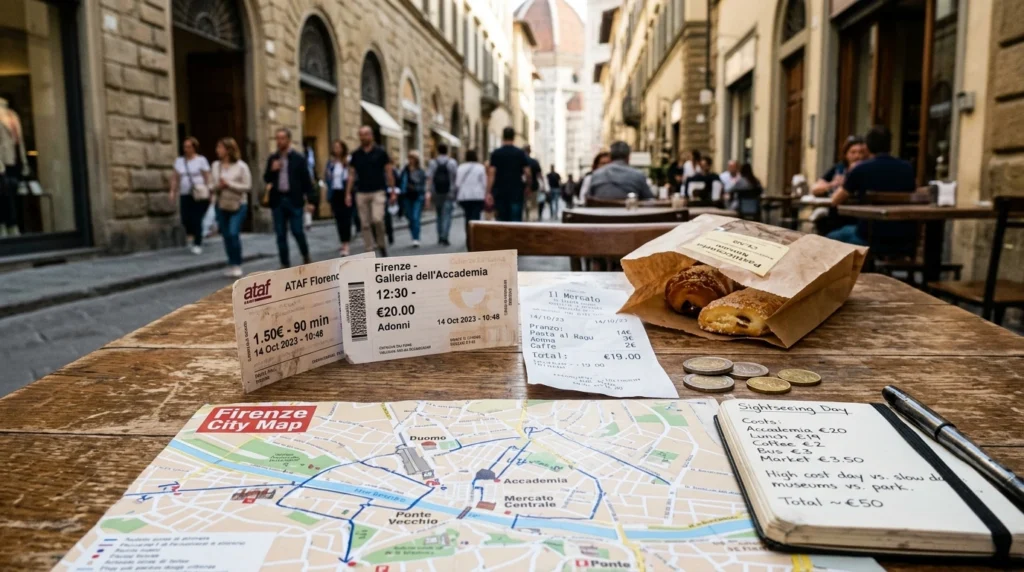
The daily plan keeps the $120 average while allowing higher- and lower-spending days.
Review Your Estimated Trip Cost
Once every major category has an estimate, add everything together.
Check the total before making major bookings.
Ask whether anything obvious is missing.
At this point, you should know:
- Your fixed costs
- Your daily costs
- Your extra expenses
- Your emergency buffer
- Your estimated total
This is where how to create a travel budget becomes more than listing prices. The budget now becomes a tool for deciding whether the trip works financially.
Update Estimated Costs as You Start Booking
Your budget should change as your information improves.
Use three stages:
| Stage | What It Means | Accommodation Example |
|---|---|---|
| Estimated | What you expect before booking | $600 |
| Confirmed | What you actually booked | $675 |
| Actual | What you finally spent | $690 |
For example:
| Stage | Accommodation |
|---|---|
| Estimated | $600 |
| Confirmed | $675 |
| Actual | $690 |
Once you book the room for $675, stop using the $600 estimate.
Your budget should reflect the best information you currently have.
How to Create a Travel Budget That Fits Your Available Funds
Now compare the estimated trip cost with the money you actually have.
Available funds: $2,500
Estimated trip cost: $2,750
$2,500 − $2,750 = −$250
Use:
Available Travel Funds − Estimated Trip Cost = Surplus or Shortfall
Example:
Available funds: $2,500
Estimated trip cost: $2,750
$2,500 − $2,750 = −$250
You are $250 over budget.
That is useful information.
You have found the problem before the trip, while you still have time to change the plan.
Adjust Your Budget If Needed
If your trip costs too much, do not immediately remove emergency money or essential expenses.
Knowing how to create a travel budget makes this easier because you can see which costs are flexible and which ones should stay protected.
Start with flexible parts of the plan.
| Consider Changing First | Why |
|---|---|
| Travel dates | Can affect several costs at once |
| Trip length | Reduces recurring daily expenses |
| Accommodation level | Often one of the largest trip costs |
| Optional activities | Easy to reduce or replace |
| Food style | Flexible from day to day |
| Destination | Largest change if the total still does not work |
Try to protect:
- Transportation home
- Safe accommodation
- Required documents
- Important insurance
- Emergency money
The goal is not simply to make the numbers balance.
The trip still needs to be realistic and safe.
Choose How You’ll Track the Budget Before You Go
Decide how you will manage your budget during the trip.
You do not need complicated software.
A spreadsheet, notes app, spending tracker, or simple paper list can work.
The best system is one you will actually use.
At minimum, track:
- Estimated amount
- Confirmed amount
- Actual spending
- Remaining budget
This makes it easier to identify problems early.
Track Your Travel Budget While You Travel
A budget should not disappear after departure.
Check your spending regularly.
For example:
| Category | Planned | Actual | Difference |
|---|---|---|---|
| Food | $350 | $375 | +$25 |
| Transport | $170 | $150 | −$20 |
| Activities | $250 | $220 | −$30 |
Food is over budget in this example.
However, transportation and activities are below budget.
The overall plan may still be working.
Look at your total spending rather than worrying about one category alone.
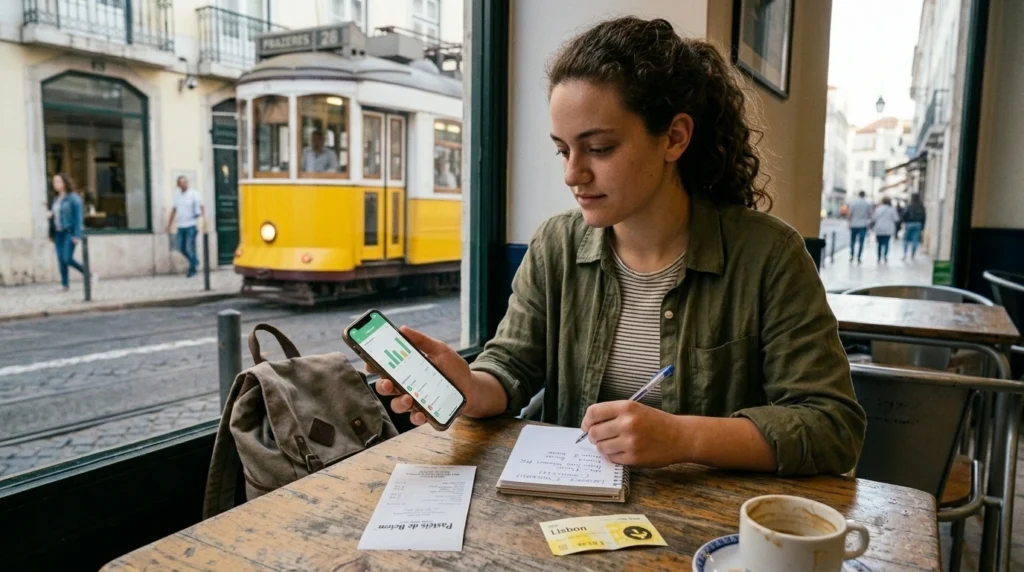
For a more detailed trip-by-trip workflow, see the Trip Budget Planner.
Travel Budget Template for Estimated, Confirmed, and Actual Costs
A simple travel budget can use these columns:
| Category | Estimated | Confirmed | Actual |
|---|---|---|---|
| Transportation | $ | $ | $ |
| Accommodation | $ | $ | $ |
| Food | $ | $ | $ |
| Local transport | $ | $ | $ |
| Activities | $ | $ | $ |
| Documents | $ | $ | $ |
| Insurance | $ | $ | $ |
| Extra costs | $ | $ | $ |
| Emergency buffer | $ | $ | $ |
| Total | $ | $ | $ |
This format captures the full life of your budget.
Start with estimates, replace them with confirmed bookings, and finally record what you actually spent.
Use the shared Travel Budget Template to record these stages; its forecast uses actual when entered, otherwise confirmed, otherwise estimated.
Common Travel Budget Mistakes to Avoid
Using Old Prices
Travel prices change.
Research the destination and dates you are actually considering instead of relying only on what something cost on an earlier trip.
Forgetting Taxes and Fees
Check the final price where possible.
Hotel taxes, cleaning fees, baggage fees, and other charges can change your estimate.
Ignoring Exchange Rates
For international travel, keeping your master budget in one base currency can make the total easier to understand.
For a U.S.-focused budget, that may be USD.
Convert foreign expenses into the same base currency when updating your master total.
Assuming Cash Is Always Cheaper
Cash and cards can both involve costs depending on the destination and provider.
Check card foreign transaction fees, ATM charges, and local payment options before traveling.
Booking Non-Refundable Options Too Early
A low non-refundable price may look attractive, but flexibility can matter when your plans are not final.
Read the booking conditions before paying.
Planning Around Best-Case Behavior
Do not assume you will suddenly stop buying coffee, walk everywhere, skip every paid attraction, and cook every meal if that is not how you normally travel.
Create your budget for the person who will actually take the trip.
Frequently Asked Questions
How much should I budget for a trip?
There is no single amount that works for every traveler. Your budget depends on the destination, dates, number of travelers, trip length, accommodation, food, activities, transportation, and travel style. Research those categories and calculate your own total rather than relying on one general average.
What percentage of my trip budget should be a buffer?
There is no universal percentage that fits every trip. A short domestic trip may need a different amount of backup money from a complex international trip. Consider your trip length, destination, insurance, transportation, health needs, and how much of the trip is already prepaid.
Should I budget in my home currency or the local currency?
Using one base currency for your master budget can make the total easier to follow. A U.S. traveler can keep the main budget in USD and convert foreign expenses into dollars when updating the total.
How do I budget for a trip when prices keep changing?
Start with estimates and replace them when better information becomes available. When you book a hotel or flight, update the budget with the confirmed price. During the trip, record your actual spending.
Should flights be included in a daily travel budget?
Flights are usually easier to treat as a fixed trip cost. Your daily travel budget can then focus on food, local transportation, activities, and other flexible spending.
How do I create a travel budget for a group trip?
Separate shared expenses from per-person expenses. Accommodation, rental cars, parking, and fuel may be shared, while flights, meals, attraction tickets, and insurance are often charged per person.
Final Thoughts on How to Create a Travel Budget
The first estimate is rarely the final number. Include costs beyond flights and accommodation, research the trip you plan to take, and replace estimates with real booking prices. These steps make a travel budget more useful as plans and bookings develop.
My approach now is simple: build the budget around realistic behavior, not perfect behavior. Calculate the full trip, compare it with the money you actually have, protect some money for unexpected costs, and keep updating your numbers as the trip moves from planning to booking to actual spending. A good travel budget does not force you to choose the cheapest version of everything. It gives you enough information to make better choices before money becomes a source of stress during your trip.

WRITTEN BY
Maya Carter
Maya Carter is the pen name used by WanderClarity’s site owner. The site focuses on practical destination guides, trip budgeting, and affordable travel planning.